Which lilies are toxic to cats, and what should I do if my cat chews one or licks the pollen?
Find out which lilies can damage your cat’s kidneys, what to do about pollen on the coat or a drink from the vase, and what to tell the emergency vet.
In this guide (8 sections)
Get urgent help
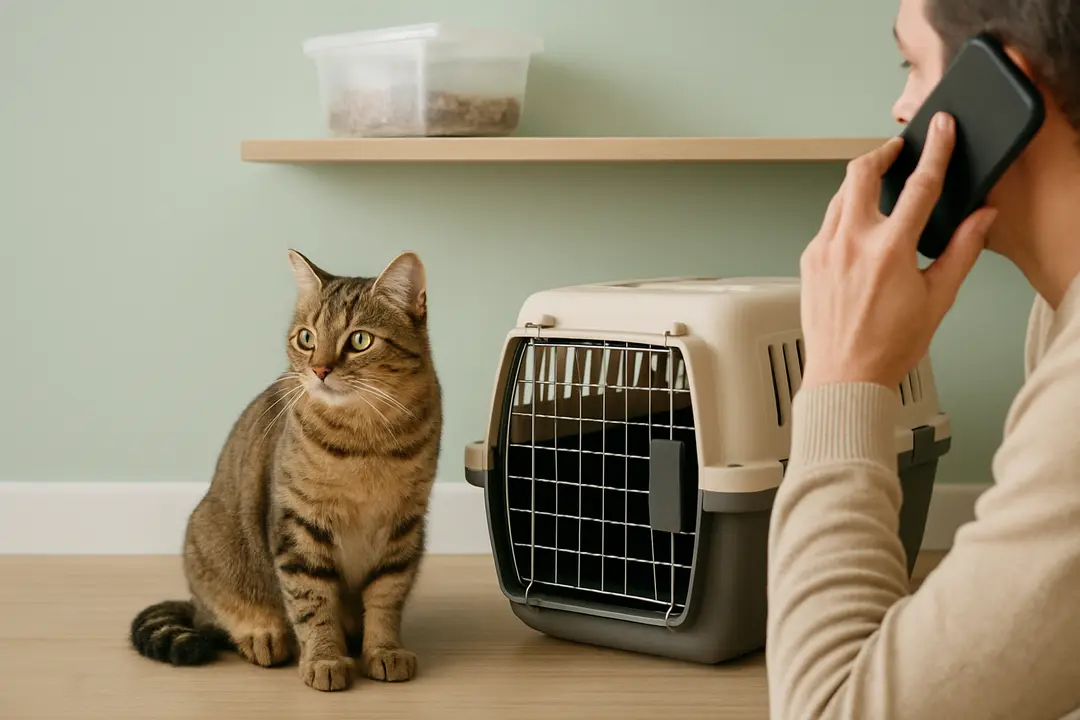
Call an emergency veterinarian and go now if your cat may have chewed a true lily or daylily, licked its pollen, or drunk water from its vase. Even a small amount can cause kidney failure, and your cat may still look well when treatment needs to start. If you don’t know which lily your cat touched or chewed, treat it as a possible exposure rather than waiting to identify it.
- Move your cat away from the plant and vase. If you see pollen on the nose, paws, or coat, keep your cat from grooming if you can do so safely. Tell the clinic where the pollen is and ask how to remove it. Don’t delay the trip for a bath.
- Don’t try to make your cat vomit or give a home remedy. The RSPCA’s poisoning guidance recommends calling with the substance, timing, amount if known, and any symptoms. “I don’t know how much” is a useful answer; you don’t need an estimate before you call.
- Take a photo if the plant is right there. Include the flower, the leaves on that stem, and any label. Purdue’s veterinary guide to lily exposure recommends bringing the plant or a photo to help with identification. Leave without it if getting it would take time.
In the US, ASPCA Poison Control and Pet Poison Helpline can also advise you or your veterinarian. The FDA’s pet emergency contact guide lists both services. Don’t wait for a second opinion before heading to the emergency clinic.
Which lilies can damage a cat’s kidneys?
Two plant groups are the main concern: all true lilies, whose botanical name starts with Lilium, and all daylilies, whose name starts with Hemerocallis. A daylily isn’t a true lily, but a bite of either needs the same emergency response.
| Name to look for | Common names you might see |
|---|---|
| Lilium | Easter lily, Asiatic lily, Oriental lily, Stargazer lily, tiger lily, Japanese show lily, Rubrum lily, wood lily |
| Hemerocallis | Daylily, regardless of the flower’s color or variety |
The FDA’s guide to lilies and cats explains why an intact flower doesn’t rule out poisoning. The leaves, stems, petals, and pollen are dangerous, and so is water that has held the flowers. A cat can nibble the edge of a leaf without leaving much of a mark. A cat that drinks from the vase or swallows pollen while washing a paw may leave no mark on the plant at all.
Peace lily, calla lily, and other plants called lilies
The full plant name can change what the vet needs to watch for. Some plants called lilies hurt the mouth rather than the kidneys. Others can cause life-threatening poisoning in a different way. Here’s what the distinction means if you know which plant your cat reached:
| Plant | Main concern and what to do |
|---|---|
| Peace lily or calla lily | Tiny crystals in the plant can cause mouth pain and drooling when chewed. This is different from true lily kidney poisoning. Call your vet for advice; if your cat has trouble breathing, go to an emergency clinic now. |
| Peruvian lily (Alstroemeria) | Chewing it can cause an upset stomach rather than the kidney injury linked to true lilies. Give your vet the plant name and describe any signs. |
| Lily of the valley | It can disrupt the heartbeat. Call an emergency veterinarian immediately if your cat may have swallowed any. |
| Gloriosa or flame lily | It can harm several organs. Suspected ingestion needs immediate emergency veterinary contact, not a routine appointment. |
Use this comparison to explain a known exposure, not to identify an unknown plant by symptoms. Drooling, for instance, doesn’t prove your cat chewed a peace lily. If a gift tag says only “lilies,” tell the clinic exactly that rather than picking the name that seems to fit best.
What to tell the clinic if you didn’t see a bite
Suppose you find yellow dust on your cat’s muzzle beside an open bouquet. You saw the dust, but you didn’t see your cat chew a petal or lick their nose. Tell the clinic both parts. You don’t have to witness a lick for pollen on the face to matter: it’s where your cat can reach it while grooming, as MSPCA-Angell’s guide to lily toxicity explains.
These details are worth sharing on the call:
- When contact was possible: Give the time you saw it happen or the range when your cat had access. If you found pollen this morning but the bouquet arrived last night, mention both times.
- What your cat could reach: Say whether you saw tooth marks, pollen on fur, or your cat drinking from the vase. If you already wiped away pollen, tell the team where you found it.
- How your cat is acting: Report vomiting, drooling, refusing food, or unusual tiredness. Say if your cat is eating and acting normally, too. That’s useful information for the vet, but not a reason to stay home.
Why you shouldn’t wait for symptoms
Early signs such as vomiting and poor appetite can start within hours. They don’t tell you how well the kidneys are working. If your cat vomited once and is now asking for breakfast, report both observations; neither the vomiting nor the return of appetite tells you that the danger has passed.
Kidney failure can develop within 24 to 72 hours after exposure. That describes how the illness can progress, not how long you can wait for care. The decision to go is based on what your cat may have swallowed, not how sick your cat looks. If you discover the exposure late, give the clinic your best timeline and go now rather than assuming it’s too late to help.
What the emergency vet can do
There’s no antidote that cancels out lily poisoning. There is treatment, though: the team can give fluids directly into a vein, called IV fluids, and monitor kidney function. Prompt treatment can be lifesaving. Pet Poison Helpline’s guidance on Easter lilies explains why fluids and kidney checks matter even when the exposure seemed small.
Your cat may need to stay at the clinic for fluids and repeat checks. When you get an update, three useful questions are: “What do the kidney blood tests show so far?”, “Is my cat making urine?”, and “When will you check again?” Those answers help the team explain whether kidney function is changing and what that means for your cat’s recovery. The number of hours since contact matters, but on its own it can’t predict the outcome.
How to keep lilies away from your cat
A gift bouquet can bring lilies into even a careful owner’s home. For future arrangements, ask the florist to leave out both true lilies and daylilies and to check every stem in a mixed bunch. Avoid planting either group in parts of the garden or on a patio your cat can reach.
A high shelf protects the vase better than it protects the cat. A leaf or pollen can fall within reach even if your cat never jumps up to the flowers. Preventive Vet’s guide to lilies in the home explains why choosing a bouquet without these plants is more reliable than trying to find an out-of-reach spot.
Talk it through with Vicky
If exposure is possible, contact the emergency clinic and get on your way first. Once care is underway, you can tell Vicky what you’re seeing right now. Vicky will bring in Dr. Nora (Virtual DVM, DABT), our veterinary toxicologist, to help you understand the plant risk and prepare questions for your clinic.
Common questions
Is smelling a lily the same as getting pollen on the face?
Noticing the scent in a room is different from putting the nose into a flower. If your cat sniffed the bloom up close, describe that contact to an emergency vet now: you may not have seen pollen transfer to the muzzle or your cat lick it off.
I already wiped the pollen off my cat. Do I still need to go?
Yes, if the pollen came from a true lily, a daylily, or a lily you can’t identify. Wiping the coat can’t undo an earlier lick. Tell the emergency clinic when you found the pollen and where it was.
How can I tell a true lily from a Peruvian lily in a mixed bouquet?
Look for a label that identifies the particular stem: Lilium means true lily, while Alstroemeria means Peruvian lily. A list on the bouquet wrapper may name both without telling you which one your cat chewed. Take a photo for the clinic rather than waiting for the florist to identify it.
Are pollen-free lilies safe, or can I cut off the pollen-bearing parts?
Neither makes a true lily safe for a cat. Removing the pollen-bearing parts, called anthers, still leaves toxic petals, stems, and leaves, and the vase water is a risk too.
Sources
- Lovely Lilies and Curious Cats: A Dangerous Combination — U.S. Food and Drug Administration
- Why You Should Not Induce Vomiting in Cats — Pet Poison Helpline
- Who Do You Call if You Have a Pet Emergency? — U.S. Food and Drug Administration
- Which Lilies Are Toxic to Pets? — ASPCA Poison Control
- Lily Toxicity: The Potentially Fatal Danger to Cats — MSPCA-Angell
- Is Your Easter Basket Pet-Safe? The Holiday Hazards Every Pet Owner Should Know — Pet Poison Helpline
- Lily Poisoning in Cats: What To Do If Your Cat Ingests a Lily Flower — PetMD
- Lilies Are Toxic to Cats & Dogs — Preventive Vet
- Purdue University College of Veterinary Medicine — Beautiful Spring Lilies Pose Serious Danger to Cats
- RSPCA — Poisoning in Cats
- ASPCA Poison Control — What to Do if Your Pet Is Poisoned
- Pet Poison Helpline — Can You Induce Vomiting in Cats?