
Is pothos toxic to dogs, and what signs should I watch for if my dog chews a leaf or stem?
Pothos can hurt your dog’s mouth even if the leaf is spat out. Learn which signs to report, when to call poison control, and when to go to an emergency vet.
In this guide (7 sections)
Get urgent help
Go straight to the nearest emergency veterinary hospital if your dog is struggling to breathe, makes a new wheezing or whistling sound, or has to work harder for each breath. If your dog has difficulty swallowing, seek urgent veterinary assessment even if breathing still sounds normal. Don’t wait for breathing trouble before getting help for swallowing trouble.
Yes, pothos is toxic to dogs. Chewing a leaf or stem releases tiny crystals that can cause a sore, swollen mouth, drooling, pawing at the face, gagging, or vomiting—even if your dog spits out every piece. If your dog is breathing and swallowing comfortably, move the plant out of reach and call your veterinarian or an animal poison control service now for advice; you don’t need to wait for symptoms.
Why a pothos bite hurts even when nothing goes down
Pothos, also called golden pothos or devil’s ivy, contains needle-shaped crystals called insoluble calcium oxalates. When teeth break a leaf or stem, the crystals press against the soft lining of the lips, tongue, and mouth. They can irritate the throat, too. It’s contact with the chewed plant that hurts, not a process that starts only after the plant reaches the stomach.
Say you find a torn leaf under a hanging pot. Your dog drops the last piece, and you can account for what looks like the whole leaf. That’s useful information: you saw chewing, but you didn’t see your dog swallow the leaf. It doesn’t rule out mouth pain. The reverse is also true: a missing piece doesn’t tell you how uncomfortable your dog is. Look at your dog before spending time matching pieces together.
Most pothos bites cause local irritation. Pet Poison Helpline’s golden pothos guide explains that throat swelling severe enough to affect breathing is rare. That distinction matters: drool can come from a painful mouth, but a dog who is struggling for air needs emergency care.
What to watch for after your dog chews pothos
- Listen to breathing. A gag is different from a whistle or wheeze as your dog breathes in and out. Look at the effort of breathing as well as the sound: does each breath look harder than usual? If so, leave for the emergency hospital rather than staying to count breaths or record a video. Cornell’s guide to breathing distress in dogs explains what that extra effort can look and sound like.
- Notice whether swallowing looks comfortable. Extra saliva on the chin is one observation; seeing your dog struggle when trying to swallow is another. Describe what you actually see. If swallowing looks difficult, your dog needs veterinary attention, not a period of watching to see whether more signs develop. The ASPCA’s guide to irritating houseplants identifies swallowing trouble as a reason to take a pet to a veterinary hospital.
- Look for signs of a sore mouth. Your dog may suddenly paw at the muzzle, start drooling, or have a visibly swollen lip or tongue. Signs can begin with the bite because that’s when the crystals are released. You don’t have to find a cut or see the crystals themselves to report that your dog seems uncomfortable. The ASPCA’s devil’s ivy entry describes the parts of the mouth that may be affected.
- Notice gagging or vomiting. Tell the clinic whether your dog retched without bringing anything up or actually vomited, and whether it happened once or more than once. If you’re unsure whether a noise was a gag or a breathing change, say what you heard and whether your dog is breathing comfortably now.
What you can do while getting advice
Separate your dog from the vine and any loose pieces. If the plant has a label, keep it handy for the call. If you’re not sure it’s pothos, tell the clinic that instead of guessing from the drooling alone. PDSA’s advice on poisonous plants is to contact a veterinarian after a suspected exposure rather than waiting for your pet to look sick.
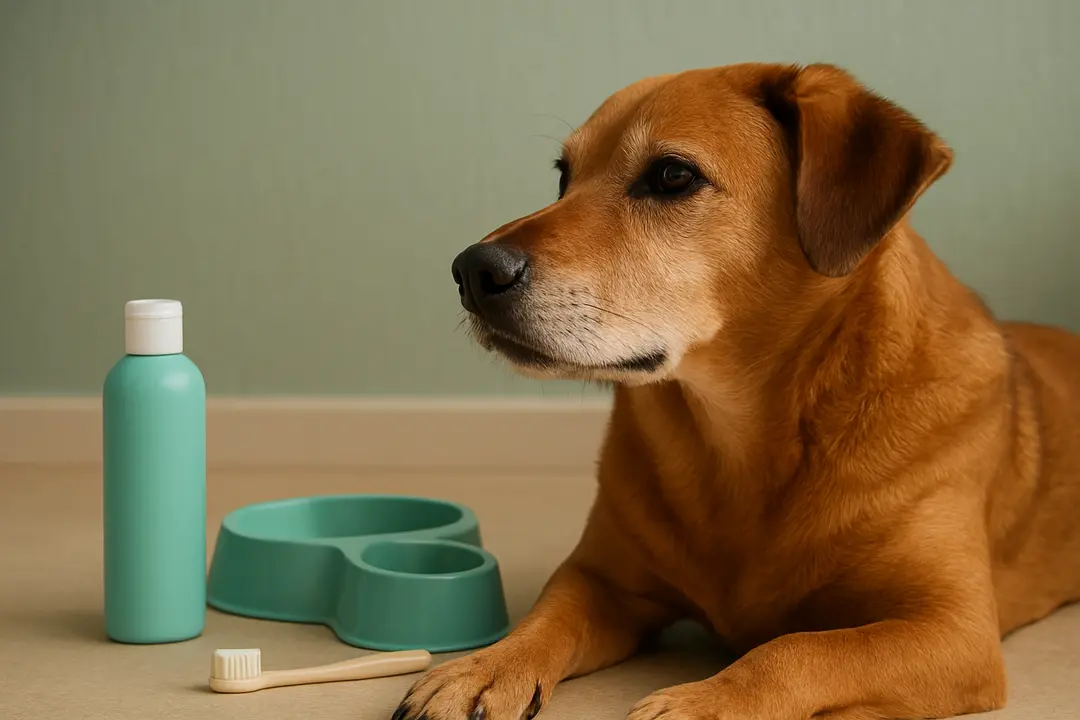
If breathing and swallowing are comfortable, leave fresh water available so your dog can choose to drink. Don’t force water into your dog’s mouth. The bowl is there for ordinary access to water, not as a treatment your dog has to finish. Dogs Trust’s drinking-water guidance notes that mouth or throat discomfort can put a dog off drinking. Do not try to make your dog vomit unless a veterinarian specifically directs you to. Bringing up a piece of leaf would not undo the contact that has already happened in the mouth.
What to tell your veterinarian or poison control
You can make the call even if all you have is a damaged plant and a dog who looks comfortable. Start with breathing and swallowing, then describe the bite. These details help you give a clear account without having to guess:
- What plant and which part? Read the label if you have one. Say whether you found a torn leaf, tooth marks on a stem, or a chewed end on a vine.
- When did it happen? Give the time of the bite if you saw it. If not, distinguish the time you found the damage from the last time you saw the plant intact.
- What might be missing? Separate what you found from what you saw your dog swallow. An uncertain amount is worth reporting as uncertain.
- What has changed? Describe the first sign you noticed and what your dog is doing now. Mention any mouth swelling, vomiting, or change in drinking, along with any trouble breathing or swallowing.
The question for the clinic is whether your dog needs an examination now or can be watched at home. Both the exposure history and your dog’s current condition matter. If you’re heading to the hospital, take the information you already have; don’t delay the trip to work out the size of the missing piece.
If your veterinarian recommends watching at home
Ask how long to watch, what improvement should look like for your dog, and which changes mean you should call back. Write down what you see at the start. For example, if your dog was pawing at the mouth and drooling when you called, you can later report whether the pawing stopped and whether the drooling eased. That’s more useful than trying to decide whether your dog looks completely back to normal.
Watch whether your dog chooses to drink when water is available. If your dog won’t drink or seems worse, contact your veterinarian rather than trying to give fluids yourself. VCA’s guide to caring for a sick dog recommends keeping track of drinking and reporting a worsening condition. An earlier plan to monitor at home no longer applies if swallowing becomes difficult or breathing changes.
Once your dog’s care is arranged, check the end of the vine, not only the height of the pot. A hanging pothos can be out of reach at one end and within easy biting distance at the other. Pick up fallen leaves and stem cuttings, too. A trailing vine is easy to overlook, even in a carefully kept home.
Talk it through with Vicky
After contacting your veterinarian or poison control, you can tell Vicky what you’re seeing right now. Vicky will bring in Dr. Nora (Virtual DVM, DABT), our virtual veterinary toxicologist, for questions about pothos exposure. For urgent assessment or treatment, go to your own veterinary clinic or an emergency animal hospital.
Common questions
My puppy nibbled a pothos vine and seems normal. Is there a set time when I’ll know my puppy is in the clear?
There isn’t a single observation period to rely on for your puppy. The crystals can hurt as soon as the vine is bitten, so report the exposure now and ask your veterinarian how long to monitor based on the timing, amount, and signs.
Does one bite of pothos automatically mean an emergency vet visit?
Not automatically. If breathing and swallowing are comfortable, call your veterinarian or animal poison control for guidance, even for one bite. Difficulty swallowing needs urgent veterinary assessment, and breathing distress means going straight to the emergency hospital.
Is a leafless pothos cutting risky for a dog?
Yes. The stem also releases irritating crystals when chewed, so a bare cutting left on the floor or in a reachable container poses a risk even without leaves.
Should I report a whole leaf as eaten if my dog spat most of it out?
Report it as a chewed leaf and describe how much you found. That tells the clinic there was contact with the mouth without suggesting you saw your dog swallow an amount you can’t confirm.
Does vomiting mean my dog swallowed some pothos?
Vomiting is a possible sign after chewing pothos, but it doesn’t tell you how much plant material, if any, went down. Report the vomiting separately from what you know about the missing leaf or stem.
Sources
- ASPCA Poison Control — Devils Ivy
- ASPCA Poison Control — These Houseplants Can Cause Trouble for Your Pets
- Pet Poison Helpline — Golden Pothos
- Cornell University College of Veterinary Medicine — Recognizing and Responding to Canine Respiratory Distress
- VCA Animal Hospitals — Caring for Your Sick Dog
- Pet Poison Helpline — What to Expect When You Call PPH
- PDSA — Poisonous Plants
- PetMD — Are Lilies Poisonous to Dogs?
- Dogs Trust — How Much Water Should a Dog Drink?


