
Which succulents are poisonous to cats, and what should I do if my cat chews one?
Find out which succulents can harm cats, when to call about a chewed leaf or sap in an eye, and which signs mean your cat needs an emergency clinic now.
In this guide (7 sections)
Get urgent help
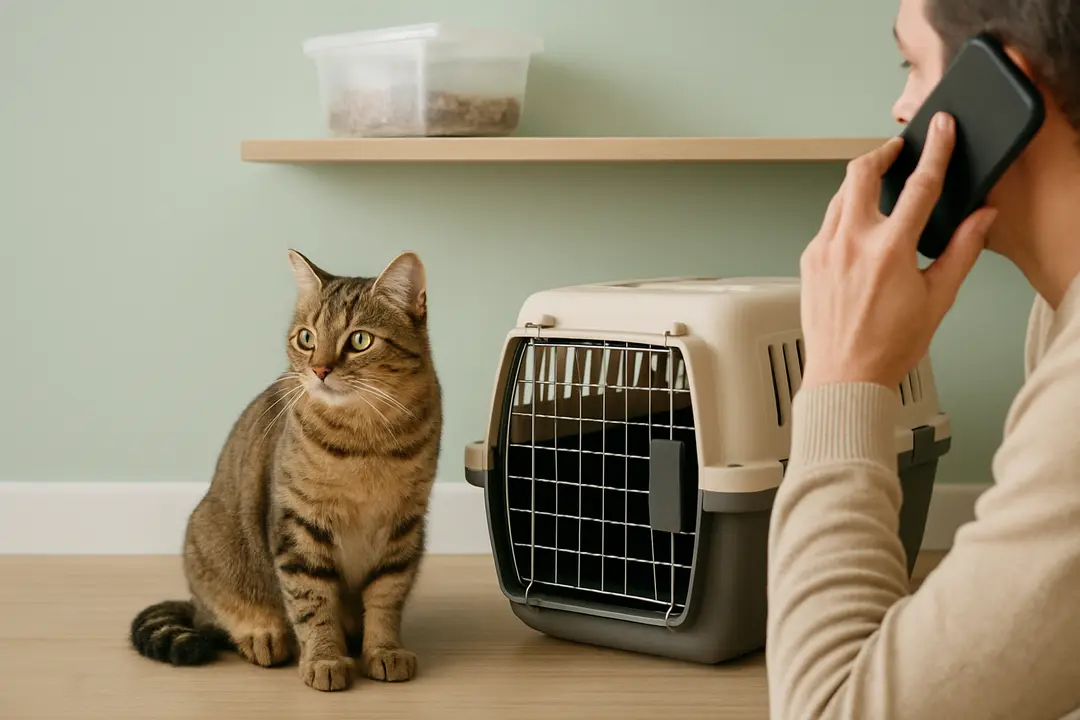
Move your cat away from the plant. If your cat is struggling to breathe, having a seizure, or unconscious, go straight to an emergency veterinary clinic. Otherwise, if your cat chewed aloe vera, jade, snake plant, kalanchoe, pencil cactus, or a succulent you can’t identify, call your veterinarian or an animal poison service now, even if your cat looks well.
You don’t have to prove that your cat swallowed a piece before calling. Tooth marks on a leaf are enough to report a possible exposure. If pencil cactus sap may have reached an eye, say that first: the sap can hurt the eye without your cat eating any of the plant.
In the US, ASPCA Poison Control and Pet Poison Helpline are options for poison advice. The ASPCA’s poisoning first-aid guide advises calling even before signs appear. The Virginia–Maryland College of Veterinary Medicine’s emergency guide also identifies breathing difficulty, seizures, and loss of consciousness as emergencies. If you see those signs, don’t spend time identifying the plant before leaving.
Which succulents are harmful to cats?
Succulent isn’t a plant name that tells you the risk. A bite from an aloe leaf raises a different concern from a splash of pencil cactus sap. Look for the specific name on the pot or nursery tag if it’s handy. These five are among the plants Cats Protection advises keeping away from cats; the list isn’t exhaustive.
| Name you may see on the tag | What matters if your cat had contact |
|---|---|
| Aloe vera | Chewing a leaf exposes your cat to its sap. Vomiting, diarrhea, and low energy are possible. Tell your vet whether you found punctures in the leaf or part of it is missing. |
| Jade (Crassula ovata) | Report a chewed jade leaf even if your cat is behaving normally. If you’ve seen vomiting or noticed a change in how your cat walks, describe what you saw. |
| Snake plant, also called mother-in-law’s tongue | The tag may say Dracaena trifasciata or use the older name Sansevieria trifasciata. Both refer to snake plant. Report any drooling, vomiting, or diarrhea along with the possible bite. |
| Kalanchoe, including mother of thousands | Stomach upset is the more common concern, but larger amounts can affect the heart’s rhythm. Tell the clinic how much of the plant you can account for rather than guessing how much your cat ate. |
| Pencil cactus (Euphorbia tirucalli) | A broken stem can release irritating milky sap. Where the sap landed matters, especially if it may have touched an eye. A missing piece isn’t the only clue to exposure. |
VCA’s guide to plants that are toxic to cats distinguishes aloe’s digestive effects from the possible heart effects of a larger kalanchoe exposure. If the tag says mother of millions, read that name to the clinic, too; it’s listed in Pet Poison Helpline’s kalanchoe guide. Don’t use the size of a tooth mark to decide that a bite was harmless. It tells you where your cat bit, not how much went down.
What if pencil cactus sap got in your cat’s eye?
Call your veterinarian promptly and explain that the concern is eye contact with sap, not necessarily a swallowed plant. Mention which eye may have been splashed and whether your cat is squinting or the area looks swollen. If you saw a stem break close to your cat’s face but didn’t see where the sap went, explain it that way rather than assuming the eye was or wasn’t touched.
Pet Poison Helpline’s pencil cactus guide and the ASPCA’s guide to succulents both flag the sap as an eye hazard. Even if you can fit every broken piece back onto the stem, that only helps answer the swallowing question. Ask your vet what to do for the eye, and don’t put a home remedy on it.
What to tell the vet if you found a chewed leaf
Suppose you find a torn leaf beside a planter labeled “assorted succulents.” Your cat is sitting nearby, but you didn’t see the bite. You can make a useful call with that information. The RSPCA’s advice on poisoning in cats focuses on four details: what the substance was, the possible amount, when it happened, and how your cat is acting. Here’s how to describe each without guessing:
- Identify the damaged plant as far as you can. Read the label as written. For a mixed planter, a photo of the whole pot shows which plants share it; a close-up shows which one has the torn leaf. Include the tag in a photo if you have it. Someone else can take pictures while you call. If there’s no label, say the plant is unidentified rather than picking a look-alike.
- Describe what’s missing and what you found. Two punctures in an otherwise intact leaf are different observations from half a leaf missing. If you found a loose piece on the floor, mention it. If you saw chewing but not swallowing, say so. An honest description is more useful than a precise-sounding estimate you can’t support.
- Give a time or a window. If you saw the bite, use that time. If not, give the time you found the damage and, if you know it, when you last saw the plant intact. For example, finding a broken stem at noon doesn’t mean your cat broke it at noon.
- Describe your cat right now. Start with any breathing trouble, seizure, or loss of consciousness if you’re calling on the way to emergency care. Otherwise, describe what you can see, such as vomit beside the pot or one eye held shut after a stem broke. If your cat is alert and acting as usual, say that, too.
Don’t try to make your cat vomit
Do not give hydrogen peroxide, salt or salt water, oil, or medication as a remedy. Don’t put a finger down your cat’s throat or otherwise try to cause vomiting. Ask your veterinarian or the poison service before giving your cat anything for the exposure.
If you’re waiting to speak with someone, the useful things you can do are keep your cat away from the plant and have the label or your observations ready. There’s no need to try a treatment first. With possible eye contact in particular, trying to get your cat to bring up a leaf doesn’t address what happened to the eye.
What happens after the call?
The first decision is whether your cat needs an examination or whether your clinic advises watching at home. The plant, the possible amount, and the kind of contact help guide that decision. For a damaged kalanchoe, the clinic will want your best account of what might have been eaten. For pencil cactus, knowing that a stem snapped near your cat’s eye may be more useful than knowing the size of the broken piece.
If your clinic recommends home observation, leave the call with three answers: What should I watch for with this plant? How long should I watch? What change means my cat needs to come in? That’s different from deciding on your own to wait for symptoms. Use the plan for your cat rather than a waiting period you’ve heard about for a different plant.
Before your cat goes back into the room, remove the damaged plant and fallen pieces from reach. Check where the leaves hang, not only where the pot sits. Covering the soil won’t stop a cat from biting a leaf that trails over the edge. If you’d like to replace the plant, Cats Protection lists Christmas cactus, Sedum, and zebra Haworthia as safer choices. Keep the individual plant tags if you arrange several in one pot.
Talk it through with Vicky
After you’ve contacted your vet or an animal poison service, you can tell Vicky what you’re seeing right now, including the plant name and the advice you received. Vicky will bring in Dr. Nora (Virtual DVM, DABT), our virtual veterinary toxicologist, to help you understand the plan. Don’t wait for that conversation to call or go to the emergency clinic.
Common questions
My cat chewed jade eight hours ago and seems fine. Does that rule out poisoning?
No. Eight hours without visible signs isn’t a reliable way to clear a suspected jade exposure. If you haven’t called yet, tell your vet or an animal poison service when the bite happened and how your cat is acting now.
Is one bite of mother of thousands enough to worry about?
Call about a suspected bite, but a bite mark alone doesn’t mean your cat has heart poisoning. Mother of thousands is a kalanchoe; larger amounts are the concern for heart effects. Describe the missing portion, if any, so your vet can advise you.
Do I need to take the whole planter to the emergency clinic?
Don’t delay an emergency trip to collect the planter. Take a tag or photo if it’s already handy, or ask someone at home to send a picture of the damaged plant.
Is Christmas cactus as dangerous to cats as pencil cactus?
No. Cats Protection lists Christmas cactus as a safer houseplant for cats, while pencil cactus has irritating sap that can harm the eyes. A tag that says only “cactus” doesn’t distinguish between them.
Can my vet identify the succulent from my cat’s vomiting?
Vomiting alone doesn’t identify the plant. More than one succulent can cause stomach upset, so the tag or a photo of the damaged leaf is useful even when you can describe your cat’s signs clearly.
Sources
- ASPCA — What to Do if Your Pet Is Poisoned
- RSPCA — Poisoning in Cats
- ASPCA — Is It Ever Safe to Induce Vomiting?
- VCA Animal Hospitals — Plants That Are Toxic to Cats
- Pet Poison Helpline — Mother-in-Law’s Tongue
- Pet Poison Helpline — Kalanchoe
- Pet Poison Helpline — Pencil Cactus
- ASPCA — Are Succulents Safe to Have Around Pets?
- Virginia–Maryland College of Veterinary Medicine — Small Animal Emergency and Critical Care
- Cats Protection — Cats and Indoor Plants
- ASPCA — Aloe
- Pet Poison Helpline — Jade Plant



