
When is a bland diet appropriate for a dog with diarrhea, and how does that advice change for puppies?
Find out when to offer small bland meals to an adult dog with diarrhea, when to call your vet, and how to choose food that meets a puppy’s growth needs.
In this guide (7 sections)
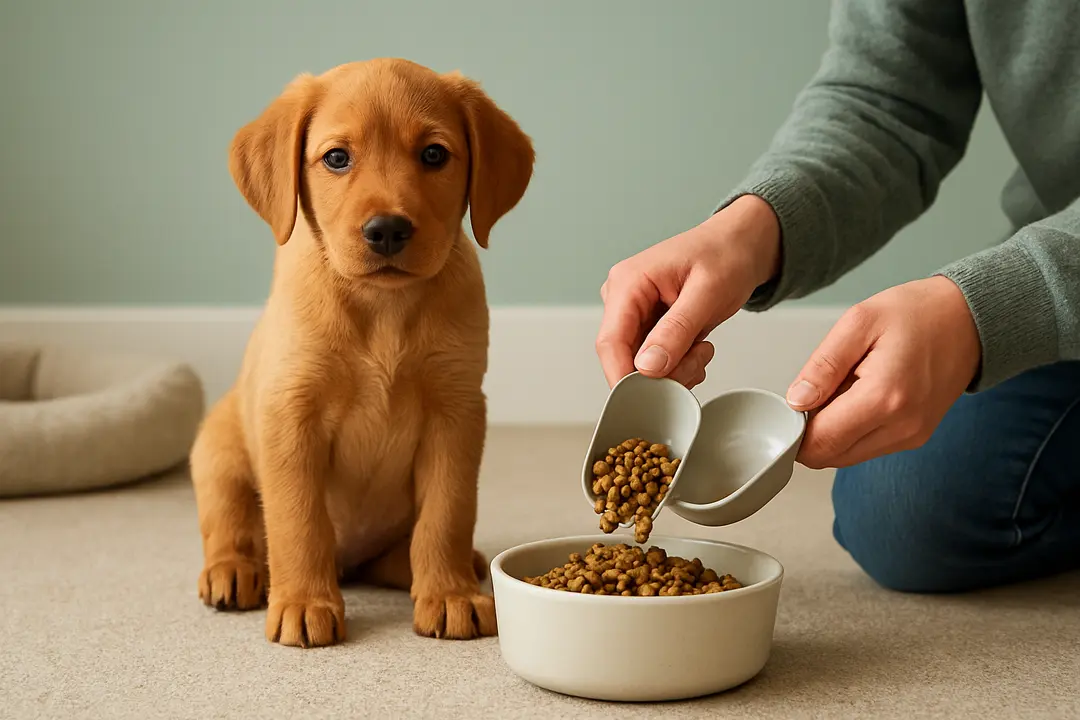
A short trial of small, easily digested meals is reasonable for an otherwise healthy adult dog with recent, mild diarrhea who is alert, eating, drinking, and not vomiting, passing blood, or showing pain. For a puppy, call your veterinarian for feeding advice before starting a bland diet. Puppies can dehydrate more quickly, and chicken and rice alone does not meet their needs for growth.
Is your dog well enough for a food trial?
Look at your dog as well as the stool. An adult dog who passes a loose stool, eats breakfast willingly, drinks, and goes about the morning as usual may be a good candidate for home feeding. If that same dog leaves breakfast untouched or vomits after drinking, the feeding decision changes. That difference matters more than finding the perfect recipe.
| What you notice | What to do |
|---|---|
| Your dog collapses, is severely weak, or appears very ill. | Go to an emergency veterinarian now. Don't wait to see how your dog responds to food. |
| Your dog has diarrhea with vomiting, blood or black, tarry stool, marked tiredness, or signs of pain. | Call your veterinarian promptly and describe the signs together. If your dog is in severe pain or cannot keep water down, seek urgent veterinary advice rather than attempting a meal. |
| You think your dog swallowed an object that could block the intestine. | Call a veterinarian now, even if your dog still wants food. Don't use a meal to test whether the object is a problem. |
| Your dog is a puppy, is very old, or takes medication. | Check with your clinic before trying a diet change. Give your dog's age and the names of any medicines when you call. |
Texas A&M's guide to stomach upset in dogs explains why appetite, drinking, behavior, and age matter in this decision. Cornell's emergency-care guide and Preventive Vet's diarrhea guidance both distinguish a severely weak or collapsed dog from one with loose stool who otherwise feels well.
What to feed an adult dog with mild diarrhea
“Bland” means the meal is easy to digest, not that it will fix whatever caused the diarrhea. If your adult dog fits the home-care criteria, you have two options: a veterinary gastrointestinal food, often called a GI diet, or a brief trial of plain chicken and white rice. VCA's guide to feeding a dog with diarrhea describes both options. Here's how to put that advice into practice:
- Choose a food your dog tolerates. For a homemade meal, thoroughly cook boneless, skinless chicken breast and serve it with cooked white rice. Leave out butter, oil, sauces, and seasonings. If chicken is a known trigger for your dog, don't use it because it's part of a bland-diet recipe.
- Offer small meals across the day. Rather than setting down a full bowl, offer a small serving and notice whether your dog wants it and keeps it down. If your dog begins refusing food or vomiting, stop the home trial and call your clinic rather than trying to tempt your dog with a different dish.
- Keep fresh water available. A full bowl tells you water is there, not whether your dog has been drinking. Notice when your dog drinks and whether the water stays down. That's useful information if you need to call.
Why the advice changes for puppies
A playful puppy with diarrhea and a quiet puppy who won't eat need different advice, but neither should automatically start an adult dog's chicken-and-rice trial. For the playful, hungry puppy, contact your clinic and ask whether a food change is needed at all. For a puppy who is vomiting, unusually tired, refusing meals, or passing bloody stool, call promptly to arrange an examination. Don't wait for another bowel movement to decide whether to call.
Tell the clinic whether your puppy has started or finished the vaccine series. An unvaccinated puppy with digestive symptoms should be examined. There are concerns beyond what went into the food bowl: parvovirus, often called parvo, is one possible cause of diarrhea, as are intestinal parasites such as Giardia and worms. A puppy can develop diarrhea even when you've been careful about feeding. You don't need to identify the cause before asking for help.
Mention it if yours is a toy-breed puppy who has missed meals. Too little food can lead to low blood sugar in toy-breed puppies. Tell the clinic when your puppy last actually ate, rather than when you last put food out. Don't start a fast on your own.
How to choose a food that still supports growth
If your veterinarian advises home feeding, ask what to offer at the next meal. VCA's puppy diarrhea guidance favors a balanced veterinary diet over routine homemade chicken and rice when a change is needed. Ask for the specific food, the amount per meal, how often to offer it, and when to check back. That gives you a plan you can follow without guessing from an adult dog's portion.
For a food that will be your puppy's whole diet, turn the package over and find the nutritional adequacy statement. This tells you whether the food is complete and balanced and which life stage it feeds. Look for wording that covers growth. A food labeled for adult maintenance meets a different set of requirements. “GI” describes the food's purpose; it doesn't tell you on its own that the food is suitable for a growing puppy. The FDA's guide to complete and balanced pet food explains that distinction.
What to track and when to call back
Write down when the first loose stool occurred. Many mild episodes in adult dogs settle within a day or two, but PDSA's guidance on diarrhea in dogs advises calling if diarrhea lasts beyond 24 hours. For an adult who otherwise feels well, that's a call for advice, not an automatic emergency visit. Count from the start of the diarrhea, not from the first bland meal. Call sooner if your dog seems unwell; don't apply that waiting period to a puppy.
When you speak to the clinic, have three details ready:
- The stool pattern: When did it start, how many loose stools have you seen, and was there blood or a black, tarry appearance?
- How your dog feels between stools: Is your dog interested in meals, drinking and keeping water down, and as active as usual? Mention vomiting or discomfort even if the latest stool looks better.
- What changed with feeding: What was your dog eating before the diarrhea, what have you offered since, and did the loose stool return when you went back to the usual food?
These observations help your vet decide whether feeding advice is enough or your dog needs an examination. Particularly for a puppy, the clinic may also discuss checking for parasites. Ask whether they want you to bring a fresh stool sample; don't delay an urgent visit to collect one.
When can your dog go back to regular food?
Once stools return to normal, the goal is a complete diet, not an indefinite stretch of homemade meals. If your clinic recommended a temporary diet, ask how to mix the regular food back in, when to increase it, and what to do if a stool loosens again. If the temporary food is a complete veterinary diet, confirm how long your vet wants your dog to eat it rather than assuming it has the same stopping point as chicken and rice.
If diarrhea returns each time kibble goes back in the bowl, report that pattern. A firmer stool on chicken and rice doesn't prove the original food caused the diarrhea or that your dog has a food allergy. For a growing puppy especially, ask the clinic to address both questions: why the diarrhea keeps coming back and what complete food to use in the meantime.
Talk it through with Vicky
You can tell Vicky what you're seeing right now, including your dog's age, appetite, and what happened after the last meal. Vicky will bring in Dr. Andy (Virtual DVM), our general practice veterinarian, to help you work through your feeding questions. If your dog has urgent signs, seek veterinary care directly rather than waiting for a feeding discussion.
Common questions
Should I skip my adult dog's next meal to rest the stomach?
Fasting isn't a prerequisite for a bland diet. If your otherwise healthy adult dog has mild diarrhea, still wants to eat, and isn't vomiting or showing other signs of illness, you can offer a small, easily digested meal.
How many cups of chicken and rice should I give per meal?
The home-care guidance calls for small meals, not a fixed cup measure. If you need an exact amount, tell your clinic what you plan to feed and ask for a portion per meal and a check-in time.
What if my dog can't tolerate chicken? Should I try pumpkin or a probiotic?
Avoid the known trigger and ask about a veterinary GI food that does not contain it. Ask your vet whether pumpkin or a probiotic has a role for your dog rather than assuming you need either as a substitute for chicken.
Should I wait for blood in my puppy's stool before asking about parvo?
No. An unvaccinated puppy with digestive symptoms should be examined; blood in the stool isn't a requirement for making that call. If your puppy has started but not finished the vaccine series, tell the clinic which vaccines have been given.
Sources
- When To See A Veterinarian For A Dog’s Stomach Ache — Texas A&M Veterinary Medicine & Biomedical Sciences
- “Complete and Balanced” Pet Food — U.S. Food and Drug Administration
- When to Go to the ER — Cornell Riney Canine Health Center
- Eight Home Remedies for Diarrhea and Two That Could Be Dangerous for Your Pet — VCA Animal Hospitals
- Dog Diarrhoea — PDSA
- Best Foods to Soothe Your Dog’s Upset Stomach — American Kennel Club
- Your Dog Has Diarrhea: What to Do and NOT Do — Preventive Vet
- What to Do When Your Puppy Has Diarrhea — VCA Animal Hospitals
- Testing for Low Blood Sugar — VCA Animal Hospitals


