Why is there blood in my cat's urine, and how can I tell if it's an emergency?
Learn when a pink litter clump needs a prompt exam, when straining means an emergency, and what to tell the vet if several cats share a litter box.
In this guide (7 sections)
Go to an emergency vet now if your cat keeps trying to pee and passes only drops or nothing, or if you can’t tell whether urine is coming out. Blood can come from bladder inflammation, stones, a plug that blocks urine flow, or a bacterial infection. If the only change is a mild pink tint and you saw your comfortable cat pass a usual amount without straining, call your vet today to arrange a prompt exam.
A few bloody drops do not rule out a blockage
The first question is not “How red is the litter?” It’s “What came out the last time my cat tried to pee?” The urethra is the tube that carries urine out of the bladder. If it’s partly blocked, your cat may still pass a few bloody drops. A wet spot tells you that some urine came out, not that the bladder emptied.
For example, you might see your cat make a normal-sized puddle in the morning, then squat four times in the afternoon and leave only tiny spots. Act on what’s happening now. The earlier puddle is useful information for the emergency vet, but it doesn’t make the afternoon attempts safe to watch at home.
A blockage is a particular risk for male cats. The University of Illinois guide to blocked cats explains that a blockage can affect the kidneys and upset the level of potassium in the blood. Vomiting, marked weakness, collapse, or severe pain along with urinary trouble are also reasons to go directly to an emergency clinic. As PDSA’s blocked bladder guide explains, you should not wait for the cat to get worse. Repeated attempts with little or no urine are enough to act on, even if your cat still looks alert.
What if you find one pink clump?
There’s a difference between seeing your cat pass a normal amount with ease and finding a clump that looks normal in size. If you witnessed an easy pee, your cat is comfortable, and the urine is mildly pink, the next step is a prompt veterinary exam. You don’t need to wait for a second pink clump before you call.
That advice is specific to a mild pink tint. If the urine is dark red or contains a visible blood clot, describe it to an emergency clinic for guidance rather than using the size of the puddle to decide it can wait. The Animal Medical Center’s guide to blood in urine distinguishes those findings from a mild change in color.
Why a cat’s urine can look bloody
The medical term for blood in urine is hematuria. It’s a sign rather than a diagnosis. You may also hear your vet say feline lower urinary tract disease. That’s a group of conditions affecting the bladder or urethra, not another name for a urinary infection.
- Bladder inflammation. A common cause is feline idiopathic cystitis, a painful, inflamed bladder without a clear underlying cause. Stress can trigger a flare even when there are no bacteria in the urine. A cat that cries or pees outside the box may be showing discomfort, not misbehaving. This can happen even in a carefully managed home.
- Stones or a plug. A bladder stone can cause irritation and bleeding. A stone or a plug of material in the urethra can also stop urine from flowing. The urgent question is whether the bladder can empty; the vet can then investigate what interfered with it.
- Bacterial infection. An infection can cause blood and frequent trips to the box, but it’s uncommon in otherwise healthy adult cats. As VCA’s guide to cystitis and urinary tract disease explains, several conditions look alike. Blood alone doesn’t tell you an antibiotic will help.
What to tell the clinic, especially if cats share a box
Use what you’ve already noticed. These details help the clinic understand the problem; they aren’t checks to finish before leaving for emergency care.
- Start with the most recent attempt. Say whether you saw a usual amount, a few drops, nothing, or couldn’t see the result. Then give the last time you actually saw this cat pass a normal amount. An approximate time is more useful than a guess about who made a clump.
- Describe the attempts as well as the urine. How often did your cat return to the box? Did they cry, lick around their genitals, or pee elsewhere? Mention vomiting, weakness, or obvious pain right away. If your cat looked as though they were trying to poop, say that. As Tufts explains about litter box signs, urinary straining can look like constipation.
- Separate what you saw from what you found. In a shared box, a large clump and a bloody spot might be from different cats. Tell the clinic if you don’t know whose urine it is. If you saw one cat squat repeatedly, identify that cat; don’t wait to sort out which cat made every clump.
- Mention earlier urinary problems. Tell the vet if your cat has had a blockage, bladder stones, a recent catheter, or treatment for an infection. If you know what a previous urine test showed, share that too. “Took an antibiotic” and “had bacteria in the urine” are different pieces of history.
What the vet will check and how treatment differs
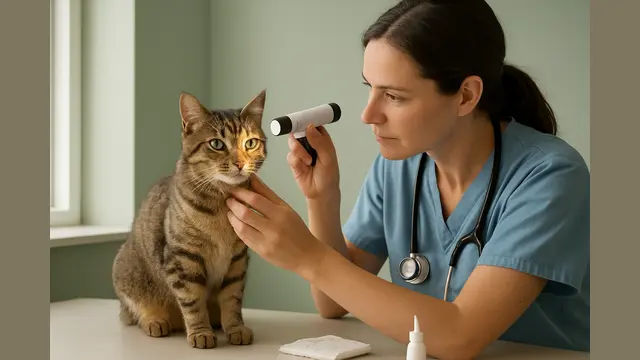
The vet’s first decision is whether urine can leave the bladder. They’ll examine your cat, including the bladder, and use your account of the last few litter box trips. You don’t need to work out at home whether a blockage is partial or complete.
If your cat is blocked, restoring flow comes first. A vet usually places a urinary catheter, a small tube that allows urine to drain. Blood tests help assess kidney function and check minerals such as potassium. Your cat may need fluids and a hospital stay. Getting urine through the catheter is one milestone; being able to pee independently after it comes out is another. The Animal Medical Center’s guide to urethral obstruction explains why monitoring may continue after urine starts flowing again.
If the bladder is emptying, the focus shifts to the bleeding. A urinalysis is a test of a urine sample. Your vet can look for blood, signs of inflammation, bacteria, and crystals, as described in the Merck Veterinary Manual’s guide to urinary exams. The findings help guide treatment. Bladder inflammation may call for pain relief, while a confirmed bacterial infection calls for an antibiotic. Certain stones can dissolve with a prescribed diet; others may need to be removed.
What to watch for once your cat is home
Before leaving the clinic, ask what the tests showed, which results are still pending, and what changes to report. At home, pay attention to both the amount passed and the effort it takes. A less pink spot isn’t an improvement if your cat is now straining to produce it. Let the treating clinic know if blood continues or returns, and go back to emergency care if repeated attempts produce only drops or nothing.
Ask your vet before giving any medicine, including a pain reliever or medicine left over from another pet. Human pain medicines can harm cats, and acetaminophen can be fatal. If your cat still seems sore, tell the clinic what you’re seeing so they can advise you about pain relief.
For longer-term care, Texas A&M’s guide to feline urinary tract disease recommends fresh water, clean litter boxes, and reducing stress to help limit repeat episodes. Ask whether a particular diet fits the cause your vet found. These steps are for prevention; changing food or offering more water is not a way to relieve a blockage.
Talk it through with Vicky
If your cat is passing urine comfortably and you want help organizing what to report, tell Vicky what you’re seeing right now. Vicky will bring in Dr. Ravi (Virtual DVM), our feline-friendly general practice veterinarian. If your cat keeps trying with little, no, or uncertain output, go directly to an in-person emergency vet rather than waiting for an online answer.
Common questions
My cat is eating and playing. Can one pink clump wait until morning?
Eating and playing don’t tell you whether the bladder is emptying. If you saw an easy, normal-sized pee with only a mild pink tint, call your clinic or its after-hours service to arrange a prompt exam. If your cat is now making repeated attempts with little, no, or uncertain output, go to an emergency vet now.
Can a female cat have a urinary blockage too?
Yes. Blockage is a particular concern in males, but the same emergency rule applies to a female cat: if she repeatedly strains and you see only drops or can’t confirm she’s passing urine, go now.
Could stress cause bleeding even if the urine culture shows no bacteria?
Yes. Stress can trigger painful bladder inflammation without a bacterial infection. A negative culture doesn’t mean your cat isn’t in pain, and it doesn’t prove stress was the cause; stones can cause similar signs.
My cat had a catheter removed. Which signs mean we should go straight back to the ER?
Go straight back if your cat keeps squatting and produces only drops or nothing, or you can’t tell whether urine is coming out. Having passed urine at the hospital doesn’t rule out a new blockage. If your cat is passing a usual amount easily but you see blood again, contact the treating clinic and describe its appearance.
Sources
- University of Illinois College of Veterinary Medicine — Blocked Cats: An Emergency for Male Cats
- Tufts Cummings School of Veterinary Medicine — More cats with lower urinary tract disease seen at the Foster Hospital during the pandemic
- Schwarzman Animal Medical Center — Blood in Urine in Pets
- VCA Animal Hospitals — Cystitis and Lower Urinary Tract Disease in Cats
- Schwarzman Animal Medical Center — Urethral Obstruction in Cats
- Texas A&M Veterinary Medicine and Biomedical Sciences — The Facts of Feline Lower Urinary Tract Disease
- Blocked Bladder in Cats — PDSA
- Urethral Obstruction in Cats — MSPCA-Angell
- Feline Idiopathic Cystitis — MSPCA-Angell
- Detecting Disorders of the Kidneys and Urinary Tract of Cats — Merck Veterinary Manual
- Feline Lower Urinary Tract Disease (FLUTD) — Schwarzman Animal Medical Center
- Potentially Dangerous Items for Your Pet — U.S. Food and Drug Administration