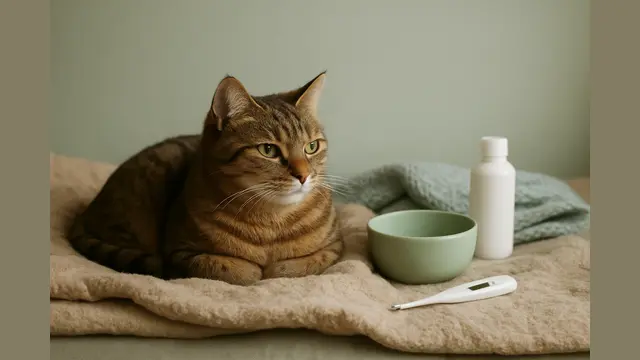
Can my cat catch my cold, or are a cat's sneezing and runny nose usually caused by something else?
An ordinary human cold is unlikely to cause your cat's sniffles. Learn what to check, when COVID-19 or flu matters, and when your cat needs a vet.

In this guide (7 sections)
Your cat is unlikely to have caught your ordinary cold. Sneezing, a runny nose, and watery eyes more often point to a feline upper respiratory infection (URI), even if you and your cat started sneezing on the same day. COVID-19 and seasonal flu are exceptions: people can pass those viruses to cats.
Check how your cat breathes between sneezes
If your cat is breathing with an open mouth at rest or is working hard to breathe, go to an emergency veterinary clinic now. A cat who cannot be woken also needs immediate care. Don't wait to see whether wiping the nose helps. The ASPCA's guide to feline upper respiratory infections distinguishes these emergency signs from the sneezing you might notice with a cat cold.
If your cat is breathing comfortably, look at the pattern. Did your cat sneeze once, then go back to breakfast with a clean nose? Or do you keep finding fresh discharge, even between sneezes? Check how much breakfast your cat actually ate, too. Those observations are more useful for deciding what to do next than working out which of you sneezed first.
Why an indoor cat can get a cold while you're sick
The nose and eyes can respond in much the same way to different infections. The viruses that cause ordinary human colds differ from the feline viruses that commonly cause a runny nose, sneezing, and watery eyes. Two common causes in cats are feline herpesvirus and feline calicivirus. You may hear the illness called a cat cold or cat flu. Neither name means your cat caught the virus you have.
Imagine a cat who has recently come home from a shelter. You develop a sore throat, spend the afternoon together on the couch, and notice the next morning that the cat is sneezing. The time on the couch is easy to remember, but the cat's earlier contact with other cats may explain more. A move can matter, too: feline herpesvirus can stay inactive after an earlier infection and flare up during stress.
That distinction also helps if your cat has lived indoors for years. A herpesvirus flare doesn't require a new encounter with a sick cat. This can happen in a carefully kept home. A flare is one possible explanation, though, not a reason to assume that every new bout of sneezing has the same cause.
What changes if you have COVID-19 or seasonal flu?
If you have or suspect COVID-19, limit close contact with your cat while you're sick. If your cat develops signs but is breathing comfortably, phone your veterinarian rather than arriving at the clinic unannounced. Tell the clinic about your illness so they can advise you and arrange a visit if needed. If another person can take your cat, ask them to do so. The CDC's guidance on COVID-19 and pets explains why the clinic needs to know about the exposure.
If your cat is struggling to breathe, don't delay emergency care to find another driver. If no one else is available, take your cat to the emergency clinic yourself. Have someone phone ahead if possible, or notify the clinic of your COVID-19 status as soon as you can safely do so. You don't need to wait for a callback before leaving.
If you have seasonal influenza, mention it when you call about your sick cat. The CDC's guide to flu in cats distinguishes influenza that cats can acquire from people from the much more common feline illness nicknamed cat flu. If all you know is that you have cold-like symptoms, say that. You don't need your own test result before seeking care for your cat.
How to care for a stuffy cat at home
For a cat who's alert, eating, and breathing comfortably, focus on comfort and on what changes from one meal or rest period to the next.
- Look before you wipe. Notice whether one nostril is wet or both are. Check for watery eyes and any blood in the nasal discharge. If the discharge comes and goes, a photo before you clean it away can show your vet something that might not be visible at the appointment.
- Clean around the nose and eyes gently. Use a soft, damp cloth to lift discharge from the outside. The aim is to clean the skin and fur, not to clean inside the nostrils.
- Offer fresh water and slightly warmed food. Try your cat's usual wet food, warmed a little to encourage eating. Put down a portion you can recognize and see how much is left afterward. A cat who walks to the bowl, sniffs, and leaves hasn't eaten that meal. VCA's guide to caring for a sick cat recommends tracking intake rather than relying on interest in the bowl.
- Don't give human cold medicine. A single cold remedy may contain several drugs, including a decongestant and a pain reliever. Acetaminophen is especially dangerous for cats. Ask your vet before giving any medicine, including antihistamines or pain relievers. If your cat has already swallowed a human cold remedy, call your veterinarian or an animal poison control service now. Keep the package so you can identify the ingredients, and don't make your cat vomit unless a veterinarian tells you to. The Pet Poison Helpline's guide to cold and flu medicines explains the risks of combination products.
Protect other cats while you work out the cause
Although your ordinary cold is unlikely to be the cause, a feline URI can spread to another cat. Cats don't have to touch noses: discharge from an infected cat can get on shared items. VCA's guide to feline respiratory infections identifies bowls, bedding, and litter boxes as possible routes of contact.
If possible, give the sneezing cat a separate space with its own food and water bowls, bedding, and litter box. Separate meals also answer a practical question: if the food disappears, you know which cat ate it. If another cat starts sneezing, keep track of each cat's signs and appetite separately so the clinic knows how each one is doing.
When to call your vet about a runny nose
An occasional sneeze around dust or perfume is different from sneezing that continues after the trigger is gone. If your cat otherwise seems well, watch what happens away from the dust or scent. If regular sneezing lasts beyond a couple of days, ask your vet for advice. You don't need to wait that long if your cat stops eating, seems much less alert, or develops new signs. Cats Protection's guide to sneezing explains the difference between an occasional irritation and signs that warrant a call.
If you see blood in the nasal discharge, contact your vet promptly. Also arrange an exam if discharge keeps returning to the same nostril, even if your cat still eats and plays. One wet nostril after a single sneeze isn't the same as drainage from the left nostril day after day. Persistent one-sided drainage gives your vet a reason to examine the nasal passages rather than assume another cold. One possible test is rhinoscopy, which uses a small scope to look inside the nose, as described in VCA SouthPaws' guide to nasal examination.
When you call, start with the finding that prompted the call: for example, “She's breathing comfortably and ate breakfast, but her right nostril has been draining all week.” Then mention when it started, recent shelter or cat contact, and any known COVID-19 or flu at home. That gives the clinic a useful picture without asking you to diagnose the cause yourself.
Talk it through with Vicky
If your cat is breathing comfortably and you'd like help sorting through the signs, you can tell Vicky what you're seeing right now. Vicky will bring in Dr. Ravi (Virtual DVM), our feline-friendly general practice veterinarian, to help you work out what to monitor and what to discuss with your vet.
Common questions
Should I stop cuddling my cat if we both started sneezing today?
Sneezing on the same day isn't evidence that cuddling passed an ordinary cold to your cat. If you know or suspect you have COVID-19, avoid close contact, including cuddling, while you're sick.
How long should I keep my sneezing cat apart from my other cats?
Ask your vet when it's appropriate to resume sharing space, bowls, and bedding. Counting days from the first or last sneeze doesn't tell you which infection your cat has or when separation can end.
Could dusty litter explain why my cat sneezes right after using the box?
Dust can trigger an occasional sneeze. Notice whether sneezing stops away from the box; repeated sneezing in other rooms, watery eyes, or continuing nasal discharge make it less useful to assume litter is the whole explanation.
What if my cat's runny nose clears up and then comes back?
Note how long your cat was free of signs, whether anything stressful changed, and whether the same nostril is affected each time. A return of signs can fit a herpesvirus flare, but drainage that keeps coming back on one side deserves a nasal exam.
Sources
- PetMD — Cat Colds: Symptoms, Causes, and Treatment
- CDC — What You Should Know about COVID-19 and Pets
- CDC — About Cat Flu
- ASPCApro — Feline Upper Respiratory Infection
- VCA Animal Hospitals — Feline Upper Respiratory Infection
- VCA SouthPaws Veterinary Specialists & Emergency Center — Rhinoscopy
- VCA Animal Hospitals — Caring for Your Sick Cat
- Pet Poison Helpline — Cold and Flu Medications
- Cats Protection — Why is my cat sneezing?
- Pet Poison Helpline — Cold and Flu Medications Toxic to Pets