
Can cats eat chicken, and how should I prepare it for them?
Learn how to cook chicken to 165°F for your cat, count it alongside other treats, store leftovers safely, and know when a bone or seasoning needs a vet call.
In this guide (6 sections)
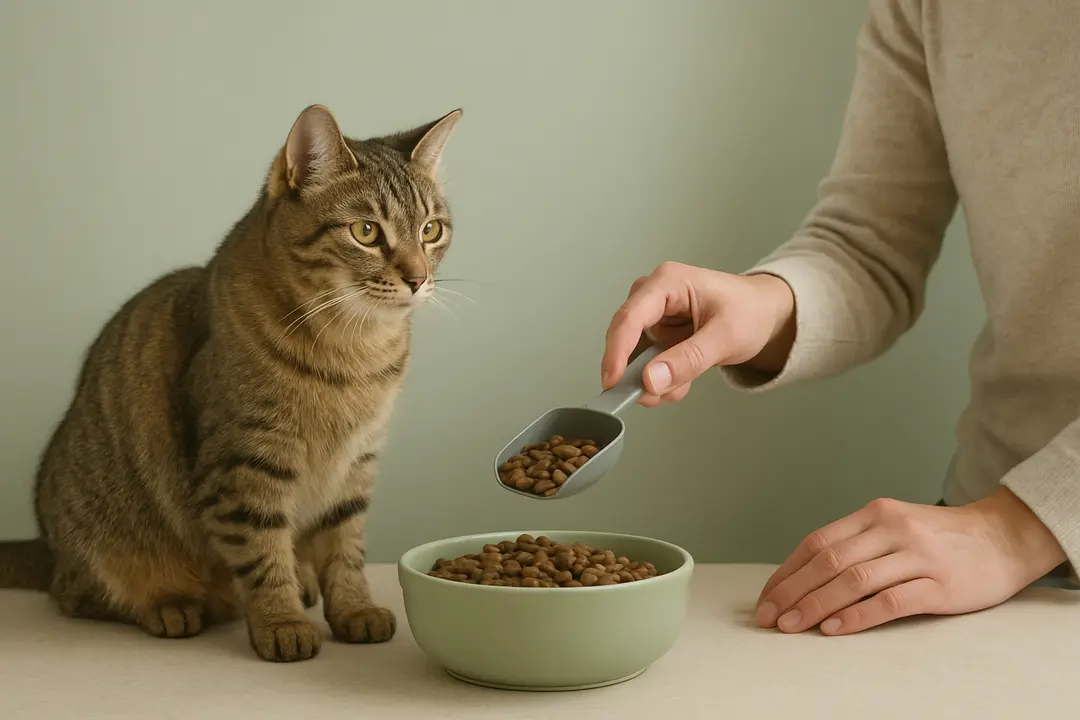
Yes. Most cats can have a bite or two of plain cooked chicken as a treat or food topper, but it shouldn’t replace their complete cat food. Set aside boneless, skinless chicken before you season dinner, poach or bake it until the thickest part reaches 165°F (74°C), then let it cool and shred it into small pieces.
Which chicken can you share with your cat?
The easiest piece to share is one you set aside before adding salt, marinade, or sauce. Start with a boneless, skinless chicken breast and check the ingredient list. Even fresh poultry that looks unseasoned can contain an added salt solution. Look for chicken as the only ingredient rather than relying on the word “plain” on the front of the package.
If dinner is already cooked, what went into the meat matters as much as what’s on it:
| What’s in your kitchen | What to do |
|---|---|
| Plain baked or poached chicken | Offer a few small shreds if you know it was cooked through and there’s no skin, seasoning, or bone in the portion. |
| Rotisserie chicken | Check the ingredients. Meat from the middle isn’t necessarily plain: taking off the skin won’t remove a salt solution added to the meat. If you can’t verify what’s in it, skip it. |
| Fried chicken or nuggets | Leave these off your cat’s plate. Removing the coating doesn’t tell you whether the meat underneath was seasoned. |
| Chicken cooked in stock, gravy, or marinade | Choose a different piece. Onion and garlic can be present as powders or in the liquid, even if you can’t see any pieces. |
| A wing, drumstick bone, or leftover carcass | Don’t offer it to chew, raw or cooked. A chicken bone can cause choking or injury, or become stuck in the gut. |
How to poach or bake chicken for your cat
- Separate the raw meat. Put your cat’s portion in its own small pan or baking dish. Keep raw chicken and its juices away from ready-to-eat food, including the food in your cat’s bowl. Wash your hands and any utensils that touched the raw meat before handling cooked food. Have a clean plate ready for the finished chicken.
- Use plain water or a plain baking dish. To poach, cover the chicken with water and bring it to a gentle simmer. To bake, put the chicken in the oven in its own dish, separate from any seasoned food. Neither method needs butter, oil, salt, or bouillon. You don’t have to boil chicken if baking a separate piece fits better with the meal you’re making.
- Check the center with a food thermometer. Insert the tip into the thickest part of the breast. The CDC’s poultry temperature guidance gives a minimum of 165°F (74°C). If the reading is lower, keep cooking and check again. White meat that pulls apart easily may look done, but neither color nor texture tells you the temperature at the center.
- Cool and portion it. Transfer the chicken to the clean plate. Once it has cooled, pull apart the portion you plan to serve and check it for bits of bone or skin. Cut or shred it into pieces small enough for your cat to take in one bite. Offer one or two on their own, or scatter a few shreds over the usual food rather than putting a whole piece in the bowl.
Don’t offer a raw sliver while your cat waits. Raw chicken can carry Salmonella, a bacterium that can cause illness. The FDA’s advice on bird flu in cats also links uncooked meat to infections with H5N1, a bird flu virus that can be fatal to cats. Cook your cat’s piece all the way through rather than searing the outside and leaving the center raw.
How much chicken can your cat have?
Count chicken as a treat whether it comes from your hand or lands on top of wet food. The World Small Animal Veterinary Association’s cat treat guide recommends keeping all treats combined below 10% of daily calories. That’s not 10% of the bowl by volume, and it’s not a separate allowance for each kind of treat.
For example, suppose your cat’s daily target is 200 calories. That leaves less than 20 calories for all treats that day. If your cat already gets 15 calories from other snacks, there are fewer than 5 calories left for chicken. Those numbers illustrate the calculation; 200 calories isn’t a recommendation for every cat. If little room is left, use chicken instead of another treat rather than adding it on top.
The other useful check is what your cat actually eats. A complete chicken-based cat food supplies the range of nutrients your cat needs. A bowl of chicken breast doesn’t, even though both smell and taste like chicken. If your cat picks out the topper and walks away from the complete food, use less topper rather than adding more chicken to the next meal. For help choosing a regular portion, bring your cat’s food label, usual serving size, and a list of other treats to a routine veterinary appointment.
How to store cooked chicken for later
Set aside today’s bite and divide the rest into shallow, covered containers. There’s no need to leave the whole batch on the counter while the serving cools. The CDC’s chicken food-safety guidance says to refrigerate leftovers within two hours, or within one hour if it’s hotter than 90°F. The same kitchen precautions apply whether you cooked the chicken for yourself or for your cat.
Label the container with the cooking date. Follow the CDC’s storage rule for leftovers: keep the refrigerator at 40°F (4°C) or colder and use refrigerated leftovers within three to four days. If one breast makes more treats than your cat will eat in that window, freeze the extra in small portions. That way you don’t have to increase the serving size to finish the batch.
What if your cat already ate some chicken?
A stolen shred of plain, thoroughly cooked, boneless meat counts toward the day’s treats. A missing bone or a bite of chicken in garlic sauce calls for a different response. If you’re looking at the remains of dinner, check which part is missing and keep the recipe or package handy, but don’t delay a call to find it.
- Go now for a swallowed bone. If you saw your cat swallow a chicken bone, seek immediate veterinary care. If your veterinarian can’t see your cat immediately, go to an emergency veterinary clinic and call on the way. Texas A&M’s veterinary first-aid guidance includes swallowed objects among the reasons to seek immediate attention.
- Call now if a bone may be missing. If you’re not sure your cat swallowed it, call your veterinarian or an emergency clinic for immediate guidance rather than waiting for symptoms. Tell them what kind of bone it was, when your cat had access to it, and what you saw. PDSA’s advice for swallowed hazards is to call even before signs appear. Don’t try to make your cat vomit at home.
- Call now for suspected onion or garlic exposure. Contact your veterinarian or an animal poison control service. As VCA’s guide to onion and garlic poisoning explains, these ingredients are toxic to cats even when cooked, powdered, or mixed into liquid. Tell them the ingredient, roughly how much your cat ate, and when. Don’t try to make your cat vomit unless a veterinarian directs you to.
Talk it through with Vicky
For an everyday feeding question, tell Vicky what you’re seeing right now. You can describe the chicken you have, what else your cat eats, and whether those shreds are an occasional treat or the only part of dinner your cat finishes. Vicky will bring in Sam (Virtual PhD (Animal Nutrition)), our animal nutritionist, to help you decide how chicken fits into your cat’s meals.
Common questions
Can I give my cat the water I boiled chicken in?
If you poached plain boneless chicken in water with nothing added, a little of the cooled cooking water with the shreds is different from seasoned broth. Don’t substitute stock, gravy, or bouillon: they may contain added salt, onion, or garlic.
Can I add chicken to my cat’s prescription diet?
Ask the veterinarian who prescribed the diet before adding treats, including chicken. Be specific about whether you want to offer an occasional bite, add a daily topper, or pour cooking water over meals so they can advise you about that particular diet.
Can kittens have plain cooked chicken?
Keep it to a tiny, finely shredded taste that doesn’t displace complete kitten food. A kitten’s enthusiasm for chicken isn’t a reason to offer a bowl of it in place of a meal.
Should I switch to boiled chicken if my cat has diarrhea or won’t eat their regular food?
Don’t switch to chicken-only meals as a treatment. Plain chicken is a treat, not a complete diet. Tell your veterinarian about the change in appetite or stool so they can advise you on the feeding question and the symptoms together.
Is canned chicken for people the same as chicken cat food?
No. A can of chicken meat isn’t a complete feline meal. If you’re considering it as a treat, read the ingredients for added salt, broth, or seasonings; if you can’t confirm it’s plain, use a piece of chicken you cooked yourself instead.
Sources
- Can Cats Eat Chicken? — PetMD
- Easter treats for cats: safe ideas for spring — Cats Protection
- Preventing Toxoplasmosis — CDC
- Chicken and Food Poisoning — CDC
- FDA Outlines Ways to Reduce Risk of HPAI in Cats
- Onion, Garlic, Chive, and Leek Poisoning in Cats — VCA Animal Hospitals
- Tips for Reducing Sodium Intake — CDC
- Refrigerator & Freezer Storage Chart — FDA
- My cat has eaten something harmful — PDSA
- Feeding Treats to Your Cat — World Small Animal Veterinary Association
- Tips for Preventing Listeria Food Poisoning — CDC
- Basic First Aid for Pets: What To Know As a Pet Owner — Texas A&M Veterinary Medicine


