Are raw or cooked chicken bones safe for cats, and what should I do if my cat swallows one?
If your cat may have swallowed a chicken bone, call a vet now. Learn when to go straight to emergency care, what to report, and which home remedies to avoid.

In this guide (8 sections)
Get urgent help
If your cat is struggling to breathe, go to an emergency veterinary clinic now. If breathing looks comfortable but your cat swallowed or may have swallowed a chicken bone, call your veterinarian now, or an emergency clinic if yours is closed. Neither raw nor cooked chicken bones are safe to feed, and you should not wait for symptoms before calling.
Breathing is the first thing to describe because a bone can cause two different problems: it can interfere with airflow, or it can get stuck in the tube that carries food to the stomach or farther along in the gut. You do not have to figure out where the bone is. If your cat appears to be fighting for breath, act on what you see rather than trying to identify the cause. Texas A&M’s choking emergency guide and the Pet Poison Helpline’s emergency guidance both treat breathing difficulty as an emergency.
Why neither cooked nor raw chicken bones are safe
With a cooked wing or drumstick, the concern is not just whether your cat swallowed the bone whole. A piece can get stuck, block the intestine, or injure the gut wall. Texas A&M’s advice on poultry bones recommends immediate veterinary care when you know or suspect a pet ate a bone, even if the pet looks well.
A raw bone is not a safe alternative. The World Small Animal Veterinary Association’s guide to raw diets warns that bones can cause blockages in the food tube or the intestine. Whether the chicken was raw or cooked is a useful detail for the clinic, but it does not change your first step. The same goes for size: tell the vet if it was a wing tip rather than a drumstick, but don’t use that distinction to decide whether to call.
What to do if you find a partly eaten wing or a tipped trash can
Suppose you walk into the kitchen and find half a cooked wing on the floor. Your cat is beside it, breathing comfortably, but you didn’t see what happened. This can happen even in a careful household. You can make a useful call with those facts alone: say what you found, what your cat is doing now, and that you don’t know how much was eaten.
- Move the remaining scraps out of reach. Keep other pets away from the plate, carcass, or open trash. If the leftover piece is right there, use it to describe what’s missing. Don’t spend time searching for matching pieces before calling.
- Give the clinic your best time estimate. If you saw your cat take the bone, say when. If you didn’t, give the window you know: for example, the plate was intact when you left the room, and part of the wing was missing when you came back. That’s more useful than guessing the exact minute.
- Describe the chicken as it was served. Include the part of the bird, whether it was raw or cooked, and roughly how much bone your cat could have reached. Mention onion or garlic in a sauce, rub, or stuffing. Those ingredients can make cats ill separately from the bone. Keep the ingredient list handy if you already have it.
- Describe your cat, starting with breathing. Give your cat’s age and approximate weight. Say whether you saw your cat swallow anything, gag, or vomit, and what has changed since. “She took it off the plate, but I didn’t see her swallow it” is useful information; there’s no need to turn a suspicion into a certainty.
Before ending the call, make sure you know where the clinic wants you to go and when. If reaching a clinic is difficult because of transportation or cost, say so during that first conversation. Ask what immediate options are available rather than putting off the call until you’ve solved those problems.
Don’t try to make your cat vomit
Don’t give your cat hydrogen peroxide or try another home method to bring the bone back up. Don’t put your fingers down your cat’s throat to trigger vomiting. ASPCA Poison Control’s guidance on inducing vomiting advises against home attempts, and both the ASPCA and the Pet Poison Helpline specifically warn against peroxide for cats.
If you’ve already given something, tell the clinic what it was, roughly how much you gave, and when. If your cat vomited on their own, say what you saw and whether you could see any bone. That gives the vet a clearer picture without asking you to decide what might still be inside your cat.
What the veterinarian may check
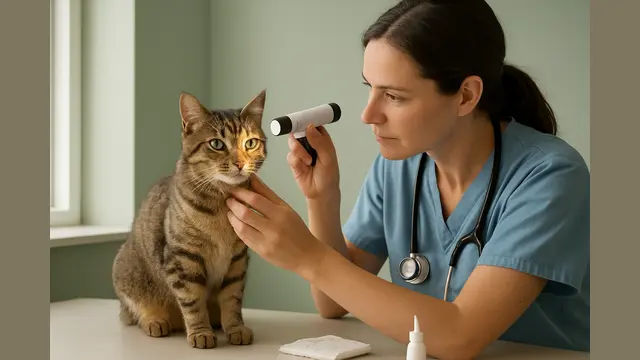
The vet’s questions are practical: Where might the bone be? Is it blocking anything? Is there evidence of injury? Your account of the meal helps the team know what to look for. An examination and imaging, such as an X-ray, may help the vet decide what to do next. If you’re told the bone is an “intestinal foreign body,” that means an object that doesn’t belong in the intestine; the term itself doesn’t tell you how much damage it has caused.
Swallowing a bone does not automatically mean your cat will need an operation. A blockage or a puncture in the gut wall, however, may need surgery. The American College of Veterinary Surgeons’ guide to swallowed objects explains why treatment depends on where an object is and what it has done. Useful questions for your vet are “What did you find?” and “What are you concerned could happen if the bone stays there?” Those answers matter more for your cat than what happened to another cat that ate a similar scrap.
Which changes to report after the first call
Follow the treating clinic’s directions. Report vomiting, less interest in food, or signs of belly pain promptly, including if they begin after you first spoke. PDSA’s guidance for cats that have eaten something harmful and the veterinary surgeons’ guide both describe these signs. They’re reasons to update the clinic, not symptoms you should wait to see before seeking help.
On a follow-up call, describe the change rather than trying to name the problem. For instance, “He has vomited twice since we spoke” gives the team more to work with than “I think the bone is stuck.” If your cat goes home after an exam, keep the clinic’s instructions and after-hours contact details together so you know whom to reach if something changes.
How to offer chicken without the bone
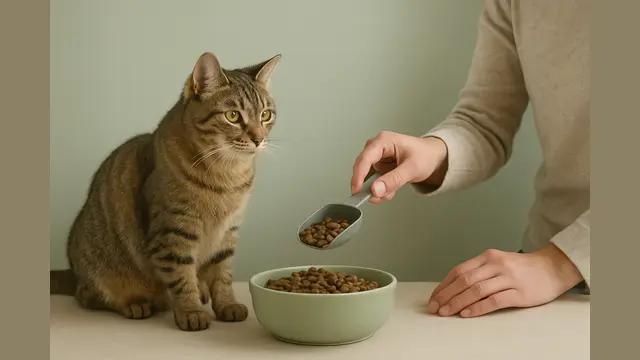
If you want to share chicken with your cat, choose a small piece of plain, cooked, boneless meat as a treat, not a replacement for balanced cat food. Set it aside before adding sauce or seasoning. Cats Protection’s guide to cats and human foods recommends cooked, boneless chicken and warns against onion and garlic.
Think about cleanup as well as what you put in the bowl. Give bones and carving scraps a place your cat can’t reach while you eat, then secure the trash and put away leftovers. That way, keeping the bones away from your cat doesn’t depend on someone watching the plate throughout dinner.
Talk it through with Vicky
After contacting your veterinarian or the emergency clinic, you can tell Vicky what you’re seeing right now. Vicky will bring in Dr. Ivan (Virtual DVM, DACVECC), our Emergency & Critical Care Specialist, to help you talk through the clinic’s instructions.
Common questions
My cat ate one small cooked wing bone and seems fine. Can it wait until morning?
Call an emergency veterinary clinic now if your own clinic is closed. Tell them it was one small bone and that your cat looks comfortable; the clinic can direct you without waiting for signs of a blockage.
Should I wait to see if the chicken bone passes in my cat’s poop?
No. The reason to call is that your cat may have swallowed a bone, not that a certain number of hours have passed or that the litter box looks different. If your cat has already passed stool, you can mention that during the call.
Should I give my cat bread or another meal to cushion the bone?
Ask the clinic what they want you to do about your cat’s next meal. Don’t delay the call to try bread or another home remedy, and tell the vet if your cat has already eaten since taking the bone.
What if I have several cats and don’t know which one ate the bone?
Tell the clinic which cats had access, how much chicken bone may be missing, and whether you noticed a change in any of them. Ask which cats the team wants to assess rather than waiting for one to look sick.
Are raw chicken necks or wing tips safe for cats to chew?
No. Both contain bones that can lodge in the digestive tract. If you want to offer chicken as a treat, choose plain, cooked, boneless meat instead.