Can cats eat plain corn kernels, and which parts of the ear should I keep away from my cat?
Learn how to offer plain cooked corn kernels, why to keep the cob, husk, and silk away, and when a missing piece means you should call your vet.
In this guide (6 sections)
Yes. Most healthy cats can have a few soft, plain, cooked sweet corn kernels occasionally, as long as you take them off the ear first. Keep the hard cob, leafy husk, and hairlike silk away: ordinary corn is not poisonous to cats, but a swallowed piece of cob or a wad of stringy material can get stuck.
Which parts of an ear of corn can my cat eat?
If your cat helped themselves while you were making dinner, the most useful question is which part of the ear did they get? A kernel that rolled off the cutting board is a different concern from a chunk missing from a discarded cob.
| Part of the ear | How to recognize it | What to do |
|---|---|---|
| Kernel | One of the small yellow, white, or mixed-color pieces arranged in rows | A few soft, cooked kernels are an occasional option. Serve them loose and plain. |
| Cob | The firm core that remains after the kernels come off | Keep the whole core and any broken pieces away. Call your vet if your cat may have swallowed a fragment. |
| Husk | The outer leaves you peel back when shucking corn | Don't offer a leaf to chew. Check whether your cat tore off a long strip. |
| Silk | The fine strands between the husk and the kernels, sometimes called corn hair | Remove the strands before serving kernels. Gather the loose silk rather than leaving it on the counter. |
The distinction is between poisoning and something getting lodged. ASPCA Poison Control identifies ordinary corn as nontoxic. The FDA's guide to potentially dangerous household items flags the cob because it can get stuck in the food pipe, stomach, or intestines. Your cat doesn't have to swallow a whole ear for a missing piece to matter.
How to serve plain corn kernels
- Set a little corn aside before seasoning your own. Plain means no butter, salt, sauce, onion, garlic, or seasoning blend. It's easier to save an unseasoned portion than to work out what was on a kernel taken from a finished dish.
- Choose soft, cooked kernels. Skip raw kernels. If you're preparing a whole ear, strip off the husk and silk, then separate the cooked kernels from the core. Check the portion for strands or chips of cob before you put it down.
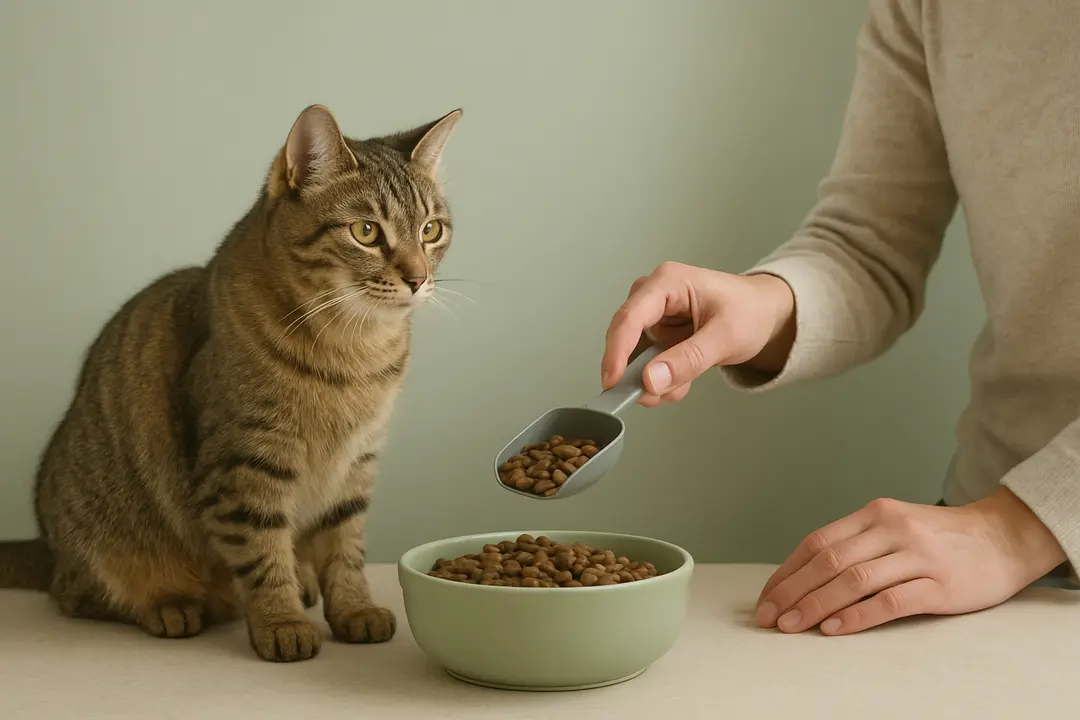
- Offer a taste, not a side dish. A few kernels on a separate dish let you see exactly what your cat has access to. There's no need to add corn to your cat's meals, and if they pass it up, there's no reason to offer a different part of the ear instead.
Put the trimmings away as you prepare the corn, not only after the meal. The leafy end sticking out of a scrap bowl may be the very part your cat wants. Gather the leaves and silk together, and put used cobs in a bin your cat can't open. Remember the bare cob left on a dinner plate, too.
My cat got into the corn. What should I check?
Look at your cat first. If they're choking or struggling to breathe, go to an emergency veterinary hospital now. Don't spend time examining the leftovers. An object in the airway is one possible reason for breathing trouble, but you don't need to establish the cause before leaving. The Cornell Feline Health Center's guide to breathing difficulty explains why the breathing problem itself needs prompt treatment.
If your cat is breathing comfortably, use what you saw and what's left on the plate to decide what to do:
- Account for the part your cat reached. If you watched your cat eat one plain cooked kernel, the cob and trimmings were out of reach, and your cat is acting normally, no special treatment is usually needed. Pick up the remaining kernels. You don't need to treat that single dropped kernel as a suspected blockage.
- Look for missing material, not just tooth marks. Seeing a cat mouth a leaf or bat at a strand of silk doesn't mean they swallowed it. But if a cob has a fresh gap, a long strip of leaf is gone, or your cat had a bunch of silk in their mouth that you can't account for, call your vet now. Describe what might be missing; you don't need to have witnessed the swallow. ASPCA guidance on potentially hazardous ingestions advises seeking help even when a pet still looks well.
- Check what was on the corn. A dropped kernel from a plain pot and one from a bowl of seasoned corn aren't the same exposure. Save the package or recipe. If onion, garlic, or another potentially harmful ingredient was involved, call your vet or an animal poison control service now. Don't try to make your cat vomit unless a veterinarian tells you to.
What symptoms suggest something may be stuck?
Repeated vomiting, refusing food, a painful belly, or unusual tiredness after a possible swallow calls for urgent veterinary assessment. Tell the clinic about the corn scraps when you call; don't assume vomiting means the missing piece came back up. If a piece is missing, these are not signs you should wait to see before calling.
A vet may use the term foreign body. It means something your cat swallowed that doesn't belong in the digestive tract. A firm fragment can block the way through. String-like material poses a different concern: if part of it catches inside, tension along its length can injure the intestine. The American College of Veterinary Surgeons explains these two kinds of foreign-body risk. That distinction is why it's worth mentioning whether the missing scrap was a solid chunk or a long strip.
If you see a strand hanging from your cat's rear, don't pull it, even if most of it seems to be out. You can't tell by looking whether the other end is caught. Seek veterinary attention immediately. The ASPCA's guidance on protruding string-like material applies to this situation; there's no need to identify exactly what the strand is before getting help.
What to tell your clinic and what to watch for next
Start with the detail that prompted the call: for example, “A strip is missing from the husk, but I didn't see my cat swallow it.” Then give the approximate time, the size and shape of what's missing, whether the corn had any added ingredients, and how your cat is acting now. If the cob is intact but the silk is gone, say so. That's more useful to the clinic than an estimate of how much “corn” your cat ate.
Your vet will use that history and your cat's signs to decide whether your cat needs to come in and be checked for a blockage. If your clinic advises watching at home, ask what changes should prompt a return call and when they'd like an update. Notice whether your cat eats when normally offered food, vomits again, or seems less active than usual. Texas A&M's guide to vomiting in cats highlights appetite and energy as useful observations to report along with vomiting. Follow your clinic's plan rather than choosing a deadline by which you expect a piece to pass.
Talk it through with Vicky
If you have a feeding question, you can tell Vicky what you're seeing right now, including which part of the corn your cat goes for and how you usually serve it. Vicky will bring in Dr. Ravi (Virtual DVM), our feline-friendly general practice veterinarian. If a cob fragment or long strip may already have been swallowed, call your own vet rather than waiting for a chat.
Common questions
Can my cat nibble kernels straight off the cob if I hold it?
Take the kernels off first. Holding the ear keeps it from rolling away, but it doesn't keep your cat's teeth away from the hard core. Loose kernels let you leave the cob out of reach.
How many kernels can I give, and can I use frozen or canned corn?
Think of a few kernels as an occasional taste, not a daily portion or an exact safety limit. Plain frozen corn cooked until soft or no-salt-added canned corn can work. Check the ingredients and skip creamed corn and seasoned mixes.
What if the corn had butter on it and I don't know what else was added?
Check the butter, sauce, or seasoning label; don't assume butter was the only addition. If onion or garlic may have been included, or you can't identify a potentially harmful seasoning, call your vet or animal poison control now with the ingredient information you have.
If cats are carnivores, why is corn in my cat's food?
Cats can use nutrients from grains, including corn, in a formulated food. Corn on the ingredient list of a complete and balanced cat food is different from corn offered as a snack: the whole food is formulated as a meal, and there's no need to add table corn to it.
Should I offer corn if my cat is on a prescription diet?
Ask the veterinarian who recommended the diet whether extras fit your cat's feeding plan. Until you know, leave the kernels off your cat's plate rather than assuming a plain snack is part of that plan.
Sources
- 5 Toxic Seasonal Plants You Don’t Want Your Pet To Fall For! — ASPCA
- Potentially Dangerous Items for Your Pet — U.S. Food and Drug Administration
- Gastrointestinal Foreign Bodies — American College of Veterinary Surgeons
- Seasonal Dangers: Chimi’s Close Call with Holiday Ribbon — ASPCA
- My Pet Ate Something! When Should I Seek Help? — ASPCA
- When To Be Concerned About Feline Vomiting — Texas A&M Veterinary Medicine & Biomedical Sciences
- Dyspnea (Difficulty Breathing) — Cornell Feline Health Center
- Nutrition Myth Infographics: Grains in Pet Foods — American Animal Hospital Association