
Can cats have chicken broth, and which ingredients should I check for on the label?
Check chicken broth for seasonings and sodium, learn how to use a little on your cat’s food, and know when a few licks warrant a call to your veterinarian.
In this guide (6 sections)
Yes, most healthy adult cats can have a little plain, unseasoned chicken broth occasionally. The easiest choice is the cooled liquid from cooking chicken in water alone; for packaged broth, check the ingredient list for seasonings, especially onion, garlic, and their relatives, then check the sodium per serving. If your cat already drank broth that contains or may contain onion or garlic, call your veterinarian or an animal poison control service now, even if your cat seems well.
If your cat already drank broth made with onion or garlic
Take the broth away and make the call rather than waiting for symptoms. This applies even if your cat licked only the liquid, not a piece of onion. VCA’s guide to onion and garlic poisoning in cats explains that liquid preparations can cause poisoning, as can cooked vegetables and powders. Don’t try to make your cat vomit at home.
Tell the clinic or poison specialist three things:
- What was in the broth. Read from the carton or recipe if you have it. For soup made with a cube or seasoning packet, include that ingredient list too.
- How much your cat may have swallowed. An estimate is useful. “A few licks from my bowl” is a better description than an exact amount you had to guess. If you mixed broth into food, say how much you added and how much of the meal is left.
- When it happened and how your cat looks now. If you didn’t see it happen, give the time range when the broth was within reach. Don’t delay the call to fill in a missing detail.
Onion and garlic can damage red blood cells, which carry oxygen. Signs of anemia, meaning too few healthy red blood cells, may take days to appear. Pale gums, weakness, or fast or difficult breathing after a possible exposure need urgent veterinary attention. If your cat is struggling to breathe, go to an emergency veterinary clinic. The reason to call before those signs appear is that a cat’s behavior right after a few licks can’t tell you whether the exposure was harmful.
Read the ingredients before you check the salt
Start on the back of the carton. You’re looking for plain chicken broth, not a soup base seasoned for people. Salt and seasonings are separate checks: an unsalted broth can contain garlic, and a broth without garlic can still be salty.
- Look for onion, garlic, shallot, scallion (green onion or spring onion), leek, and chives. These are members of the onion family, also called alliums. Skip the broth if you see any of them.
- Count powders and other forms. Dehydrated onion, onion flakes, garlic granules, powders, and onion or garlic extracts all rule out the broth. There doesn’t have to be a visible piece of vegetable in the carton.
- Read inside parentheses. A list might say “seasoning” and then name salt, onion powder, or other ingredients in the blend. The FDA’s guidance on seasoning labels distinguishes named ingredients such as onion and garlic powder from spices that can be listed together.
If the label says “spices,” you already know the broth is seasoned; choose another one. If it says “flavoring” without explaining what that means, it isn’t proof of onion, but it doesn’t confirm a plain recipe either. Ask the maker what the flavoring contains, or use plain water on the food instead. There’s no need to guess about a carton to soften one meal.
Compare sodium in milligrams for the same serving size
Once you’ve found an unseasoned broth, turn to the Nutrition Facts panel. Find sodium, read the amount in milligrams, and check the serving size at the top. A number for half a cup may look smaller than a number for a full cup. Double the half-cup figure to compare the two broths fairly. The cup is a unit for comparing labels, not a suggested portion for your cat.
The FDA’s guide to sodium on food labels explains two phrases that matter in the broth aisle:
| Label wording | What it tells you |
|---|---|
| No salt added | Salt wasn’t added, but the broth can still contain sodium. Check the actual amount. |
| Reduced sodium | It contains less sodium than the comparison product. That doesn’t necessarily make it low in sodium. |
For a packaged option, look for a plain, unseasoned broth without added salt or a plain, unseasoned low-sodium broth. Neither claim on the front takes the place of reading the recipe. If one carton says “no salt added” but lists onion, and another says “reduced sodium” but lists a spice blend, neither is the broth to use. You don’t have to pick the better of the two.
Which is better: homemade broth, stock, or bone broth?
A known recipe matters more than the name. If you cook unseasoned chicken in water, you can set aside a little of the cooking liquid and let it cool before adding it to your cat’s food. If you want to use the rest to make soup, take your cat’s portion out before adding salt, vegetables, or seasonings. PetMD’s guidance on chicken for cats favors broth without added spices or flavorings; making it yourself lets you control what goes in.
That’s different from ladling liquid out of a finished pot. Straining soup removes pieces, but it doesn’t turn broth cooked with onions into plain chicken water. The same goes for stock made with garlic and later used as the base for an otherwise unseasoned dish. If someone else made the soup, ask what went into the stock, not only what they added at the end.
For packaged stock, bone broth, or a liquid sold as a cat food topper, use the same two checks: what went in, and how much sodium is in it? The words “bone broth” describe a type of broth, not whether someone added salt or seasonings.
How to add moisture without replacing your cat’s meal
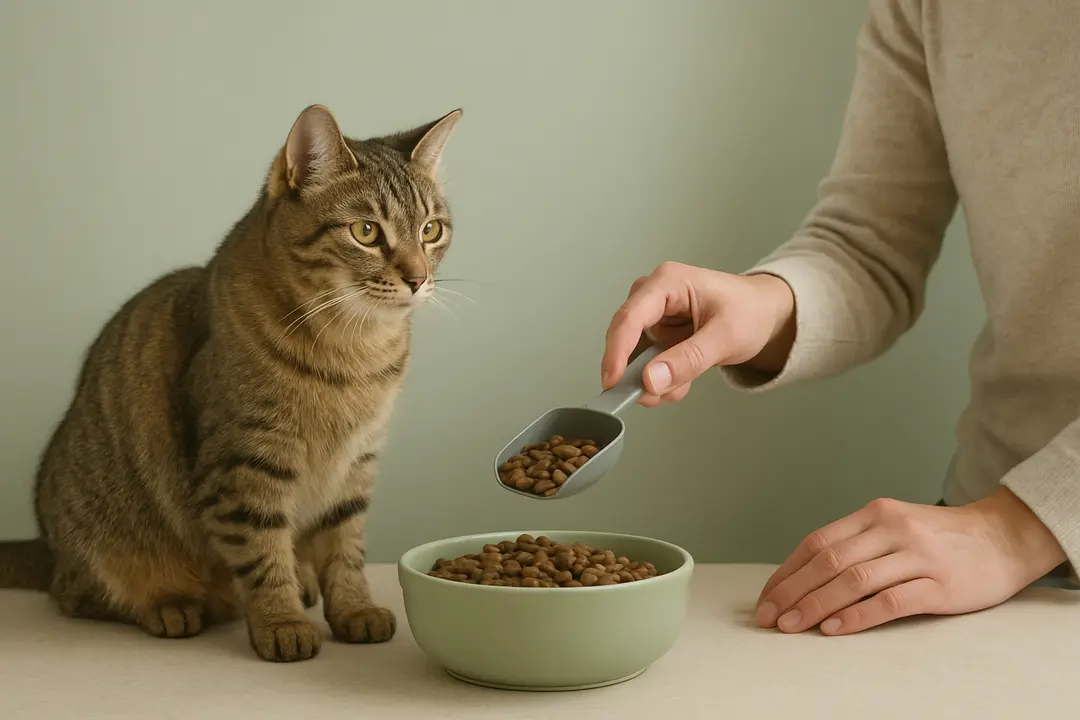
Start with a small portion of your cat’s usual food in a separate dish. Add a little cooled, plain broth to moisten it rather than pouring broth over the whole meal. That way you can see whether your cat likes the change without losing the familiar food if they don’t.
Watch what happens to the food, not only the liquid. If your cat eats the moistened portion, you can use a little suitable broth as an occasional topping. If they lick off the liquid or walk away from the new texture, offer their usual food without broth. There’s no benefit to holding out for them to eat the changed meal.
If moisture is the goal, broth is optional. VCA’s tips for increasing a cat’s water intake include offering wet food or mixing a little plain water into kibble. Keep fresh drinking water available separately. Adding moisture to a meal your cat already eats is different from treating a cat you think is dehydrated; don’t rely on a broth topper for the latter.
Keep complete, balanced cat food as the meal. The World Small Animal Veterinary Association’s guide to cat treats advises that extras should not displace that food. If your cat has a medical condition, a food sensitivity, or a prescribed diet, check with your clinic before adding broth. A photo of the ingredient list and the sodium panel, along with the name of your cat’s usual food, will help your clinic advise on the product you actually have.
Talk it through with Vicky
If you’re deciding what to put on your cat’s next meal, you can tell Vicky what you’re seeing right now. Share the label or homemade recipe and whether your cat is eating the food or only licking the topping. Vicky will bring in Sam (Virtual PhD (Animal Nutrition)), our animal nutritionist, to help with the feeding question. For a suspected onion or garlic exposure, call your veterinarian or animal poison control now rather than waiting for a label discussion.
Common questions
Is unsalted broth safe if onion powder is the last ingredient?
No. Its place on the list doesn’t establish a safe amount for your cat, and “unsalted” tells you nothing about the onion powder. Choose a plain broth without it.
Can I dilute a bouillon cube to make chicken broth for my cat?
Adding water doesn’t remove onion, garlic, salt, or other seasonings from a cube. If the mix is seasoned, skip it rather than trying to work out a dilution. Plain water will moisten kibble without those ingredients.
Should I flavor my cat’s drinking water with broth every day?
Keep fresh, plain water available rather than replacing it with broth. If you want to add moisture each day, wet food or a little water mixed into familiar food are options that don’t require a daily broth serving.
Can I add homemade broth to prescription kidney food?
Check with the clinic that prescribed the food first, even if the broth is homemade and unsalted. Give them the recipe and explain whether you want a softer texture or your cat has lost interest in eating; those call for different advice.
What if my cat will drink chicken broth but won’t eat?
Offer the familiar food without the topping to see whether it was the change in texture that put your cat off. If your cat has lost their appetite or stops eating their usual food too, contact your veterinarian. Drinking the liquid doesn’t count as eating a complete meal.
Sources
- Preventive Vet — Cat Won’t Drink: How Much Water Cats Need & Dehydration Prevention
- FDA — Sodium in Your Diet
- FDA — CPG Sec. 525.650: Labeling of Seasonings
- World Small Animal Veterinary Association — Feeding Treats to Your Cat
- VCA Animal Hospitals — How to Get Your Cat to Drink More Water
- Merck Veterinary Manual — Garlic and Onion (Allium spp) Toxicosis in Animals
- VCA Animal Hospitals — Onion, Garlic, Chive, and Leek Poisoning in Cats
- Pet Poison Helpline — Onions
- Can Cats Eat Chicken? — PetMD
- Onion and Garlic Poisoning in Cats — PDSA
- What to expect when you call PPH — Pet Poison Helpline
- My cat isn’t eating — PDSA




