Is bacon safe to give my dog as a treat?
Learn why bacon is a poor dog treat, what to check if your dog ate meat or grease, which signs need urgent care, and how to choose a better reward.
In this guide (6 sections)
Skip bacon as a treat. Its fat can upset your dog’s stomach, and a few pieces set aside from their usual meal make a better reward. If your dog already ate bacon, a crumb of plain cooked meat is a different concern from a pan of grease or a dish containing garlic: check what was eaten, how much, and how your dog feels now.
My dog already ate bacon. What should I do?
Move the food out of reach. If your dog looks seriously ill, act on what you see rather than stopping to count missing strips. Otherwise, check the package or recipe so you know whether you’re dealing with plain bacon or other ingredients too.
| What you notice | What to do |
|---|---|
| Your dog has a seizure or tremors, or has repeated vomiting or diarrhea with blood or severe weakness. | Seek emergency veterinary care now. Tell the clinic what your dog may have eaten, but don’t delay leaving to find the label. |
| The food may contain onion or garlic, including onion powder or garlic powder, or you suspect excessive salt intake. | Call your veterinarian or an animal poison control service now, even if your dog seems well. Don’t try to make your dog vomit unless a veterinarian tells you to. |
| Your dog has milder stomach trouble and is alert. | Note what happened and whether it happens again. Call your regular clinic for guidance, especially if vomiting or diarrhea recurs, your dog loses interest in food or water, or their energy drops. |
| Your dog seems well and the bacon was plain. | Check the amount in relation to your dog’s size and usual diet. A tiny taste alone is not evidence of poisoning. If you’re unsure whether observation is appropriate for your dog, your clinic can help you decide. |
Why bacon fat, salt, and seasonings pose different risks
With plain bacon, the first concern is the rich food itself. A fatty meal can cause digestive upset. A more serious possibility is pancreatitis, or inflammation of the pancreas, an organ that helps digest food. It’s a risk, not an inevitable result of eating bacon. Pet Poison Helpline’s guide to table food includes both bacon and meat drippings among the fatty foods of concern.
That matters if you’re thinking of pouring a little pan grease over kibble. The portion of dog food may be exactly what you usually serve, but the meal now contains the fat you poured on top. If what you want is to include your dog in breakfast, offer a piece of their own food while you eat. They still get something from your hand without the drippings becoming part of their daily diet.
Salt raises a different question. Salt poisoning follows excessive intake; tasting a salty food does not by itself establish that your dog has salt poisoning. The MSD Veterinary Manual and Pet Poison Helpline’s guidance on excess salt identify tremors and seizures as serious signs. If you suspect your dog ate an excessive amount of salt, don’t wait for those signs to appear before seeking help.
With seasoned bacon, the meat may not be the ingredient that changes your next step. For example, if your dog picked bacon out of a dish made with garlic powder, tell the clinic about the garlic rather than reporting only “cooked bacon.” Cornell’s first-aid guidance for suspected poisoning identifies both onion and garlic as hazards.
Four details to give your veterinarian
You don’t need a perfect account to call. These details help your clinic or an animal poison control specialist decide whether your dog needs to be seen. If you have the package, keep it or take a photo. The University of Illinois guide to household toxins explains why the label and the circumstances of the exposure are useful.
- Describe the food, not just the flavor. Was it plain cooked bacon, raw or undercooked pork, grease from a pan, or part of another dish? For packaged food, read from the ingredient list. For homemade food, ask the cook what went into the whole dish, including seasoning blends. If you can’t identify an ingredient, say so.
- Estimate the amount and give your dog’s weight. “One piece” could be a crumb that broke off as you cooked or an entire strip. With drippings, describe what was in the pan or jar beforehand and how much is left. If two dogs had access, explain that you don’t know how much each ate rather than assuming they split it evenly.
- Give the time and describe any changes. If you didn’t see your dog eat it, give the earliest and latest times it could have happened. Say whether your dog is acting normally, has vomited once or several times, has had diarrhea, or has turned down a usual meal. A specific change is more useful than saying your dog seems “off.”
- Mention previous pancreatitis or a prescribed diet. Those details matter even when your dog looks comfortable. Tell the clinic if your dog normally eats a prescribed low-fat food or has instructions to avoid table scraps. Ask for advice that fits that feeding plan rather than relying on what happened when another dog ate bacon.
If your clinic recommends watching at home
Ask how long to observe your dog, what change should prompt another call, and where to go if the clinic is closed. There’s no need to guess at a bacon-specific countdown. Use your dog’s ordinary routine as a comparison: do they come for their meal, drink as usual, and show their normal interest in a walk? When you take them outside, notice whether their stool has changed.
If your dog vomits or has diarrhea, note the time, whether it happens again, and whether you see blood. Texas A&M’s guide to a dog’s stomach ache distinguishes a dog who is otherwise eating, drinking, and behaving normally from one with frequent digestive signs or a change in appetite or energy. Report those changes rather than waiting for a monitoring period to end.
The combination of signs matters. One loose stool in a dog who still wants breakfast is a different situation from repeated bloody diarrhea in a dog who can barely get up. The latter needs emergency care, not another check at the next meal. Cornell’s guide to when a dog needs the ER can help you recognize that difference. You don’t have to identify the cause before getting help.
What to use instead of bacon for training or breakfast
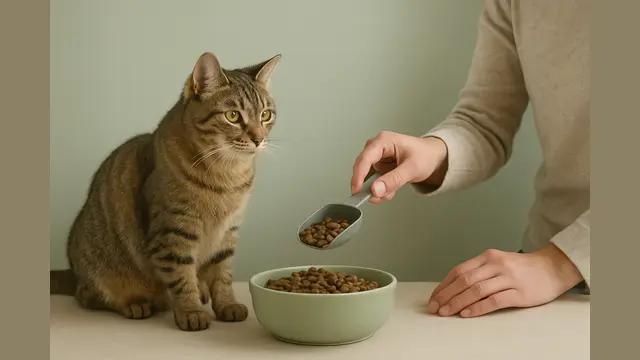
The easiest swap is one you can make before you fill the bowl. Measure your dog’s usual meal, put a few pieces of kibble in a small container, and serve the rest. Use the reserved pieces when you’d otherwise reach for bacon. That gives you a reward you can offer several times during training without adding several snacks on top of breakfast.
If you use separate treats, keep all extras together below 10% of daily calories for a healthy dog. That’s a ceiling, not a target or a reason to include bacon. Both Tufts’ veterinary nutrition guidance and the World Small Animal Veterinary Association’s guide to dog treats put that limit in the context of the whole day’s food. Count the biscuit at the door and the treats on a walk together, even if different people give them. Setting out the day’s rewards in one place makes that easier.
Talk it through with Vicky
You can tell Vicky what you’re seeing right now, including what your dog usually eats and when you’d like to offer a reward. Vicky will bring in Sam (Virtual PhD (Animal Nutrition)), our AI animal nutrition specialist, to help you think through treat choices. For suspected poisoning or urgent symptoms, contact your veterinarian or an emergency service directly rather than waiting for a reply.
Common questions
Does one strip of bacon pose a different risk for a small dog than for a large dog?
The same strip is a bigger serving relative to a small dog’s weight. There isn’t a useful strip count for every dog; give your clinic the amount, your dog’s approximate weight, and the ingredients if you need help judging the exposure.
My dog vomited after eating bacon. Does that mean pancreatitis?
No. Fatty food can cause stomach upset, and vomiting alone doesn’t tell you whether the pancreas is inflamed. Contact your vet if vomiting repeats or your dog becomes unusually tired or refuses food or water.
Can a dog that has had pancreatitis have bacon-flavored dog treats?
The flavor name doesn’t tell you whether the treat fits your dog’s diet. Show the label to your veterinarian before offering it, especially if your dog has a prescribed low-fat diet; a small portion of their usual food is a reward already in the plan.
My active dog has had bacon before without getting sick. Is it OK as a regular treat?
A previous serving tells you how your dog did that time, not how they’ll respond to the next fatty meal. Even if weight isn’t a concern, there’s still a digestive reason to skip bacon and drippings.
Sources
- Pet Poison Helpline — Is table food poisonous for dogs?
- Texas A&M Veterinary Medicine — When To See A Veterinarian For A Dog’s Stomach Ache
- MSD Veterinary Manual — Salt Toxicosis in Animals
- Purdue University College of Veterinary Medicine — Your Pets Will Thank You If You Follow These Thanksgiving Pet Tips
- Tufts Cummings School of Veterinary Medicine — Healthy eating for dogs during this time of year
- Texas A&M Veterinary Medicine — Paws Before You Pass The Plate: Pet-Friendly Thanksgiving Plate
- Cornell University College of Veterinary Medicine — Re-evaluating your dog’s diet
- World Small Animal Veterinary Association — Feeding treats to your dog
- First-aid for poisonous substances — Cornell University College of Veterinary Medicine
- What to Do When Your Pet Gets into Household Toxins — University of Illinois College of Veterinary Medicine
- My Dog Ate Too Much Salt — Pet Poison Helpline
- When to go to the ER — Cornell Richard P. Riney Canine Health Center