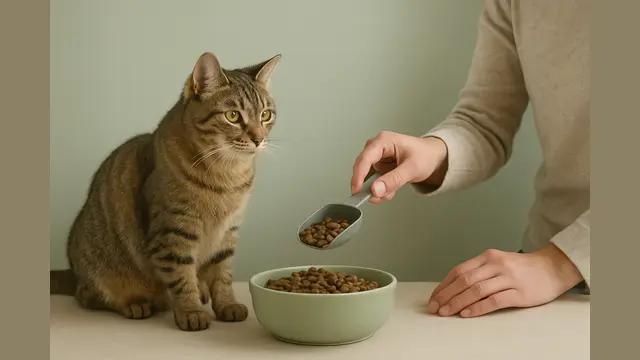
Can I add flaxseed to my dog's food, and does it matter whether the seeds are whole or ground?
Learn which form of flaxseed to mix into your dog's food, how to introduce it, and when digestive upset or a special diet means you should ask your vet.

In this guide (7 sections)
- Whole seeds, ground flaxseed, and oil: what changes in the bowl?
- How much flaxseed makes sense for your dog?
- When to check with your vet before adding flaxseed
- How to introduce ground flaxseed and see whether it agrees with your dog
- What if loose stools, vomiting, or itching are the real concern?
- What if your dog ate a bag of flaxseed or chewed the plant?
- Talk it through with Vicky
Yes, most healthy dogs can have a small amount of plain, food-grade flaxseed mixed into their usual meal. Choose ground or chopped flaxseed rather than whole seeds: that's the form recommended for mixing into dog food, and it provides fiber. Flaxseed oil supplies fat rather than fiber, so it isn't an equivalent swap.
Whole seeds, ground flaxseed, and oil: what changes in the bowl?
If you're choosing between two bags of flaxseed, look for the words ground or milled. Both describe seed that has been broken into smaller pieces. PetMD's guide to feeding flaxseed suggests mixing chopped or ground seed into your dog's regular food. There's no need to guess how much more your dog might absorb from one form than another to make that choice.
| Form | What you're adding | When it fits |
|---|---|---|
| Whole flaxseed | Seed with its outer covering intact | If you're buying a topper, choose chopped or ground seed instead. |
| Ground or milled flaxseed | Broken-up seed, including its fiber | Use this form if you want a meal topper that adds a little fiber. |
| Flaxseed oil | Fat pressed from the seed | It supplies a plant omega-3 fat, not the fiber you'd get from ground seed. |
The distinction matters most when you have a goal in mind. For example, if you're interested in fiber for your dog's stools, buying a bottle of oil would miss the part of the seed you wanted. As VCA explains in its flaxseed guide, the fiber in ground seed can support bowel function. That doesn't make it a treatment for a dog who already has constipation or diarrhea.
How much flaxseed makes sense for your dog?
Start with the food label, not a measuring spoon. Some commercial dog foods already contain flaxseed. If your dog is doing well on one of those foods, you don't need to add more because you've heard that flax contains fiber. If it isn't on the label, you can still leave the meal as it is. Flaxseed is an optional extra.
For a healthy dog trying it as a topper, think in terms of a small addition to the usual meal, not a serving you need to increase each day. Count it along with everything else your dog gets outside regular meals. Training treats, table food, and something sprinkled on dinner all share the same allowance for extras; flaxseed doesn't get a separate allowance because it has nutritional value.
Weight alone doesn't settle the portion question. Consider two dogs of the same size: one eats kibble containing flaxseed and gets treats during walks; the other eats a prescribed low-fat food. A spoonful-by-weight rule would give you the same answer for both while overlooking the most useful information. If you want to feed flax daily, tell your vet the name of the food, how much you serve, what extras your dog gets, and why you'd like to add it. The first question is whether to add any at all.
When to check with your vet before adding flaxseed
- Your dog eats a prescription diet. Get approval from the vet who recommended the diet before adding food or treats, including ground seeds. Tell them what you hope the flax will do. That's more useful than asking whether flaxseed is safe for dogs in general.
- Your dog has had pancreatitis. This is inflammation of the pancreas, and it can recur. Fatty foods are a concern, and low-fat meals and treats may be part of your dog's ongoing care. Check before using either form, especially oil: a pour of oil adds fat even if the label emphasizes omega-3s. PDSA's guide to pancreatitis explains why that history matters.
- Your dog takes medication. Ask your treating vet before starting a regular supplement. Supplements can have unwanted effects or interact with medications. Have the product label handy and specify whether you're considering ground seed or oil, along with any supplements your dog already gets.
How to introduce ground flaxseed and see whether it agrees with your dog
- Choose a plain product intended for eating. Check the ingredient list so you know you're adding flaxseed, not a blend of seeds, flavorings, and other extras. Follow the preparation directions on the package. A food product for the bowl is a different choice from flax picked from a plant.
- Change one thing at a time. Mix a small amount into a familiar meal. If you're also changing kibble, keep the flax aside rather than introducing both together. Tufts' guidance on dietary changes and extras notes that a sudden change can cause loose stools or vomiting in sensitive dogs. This can happen even when you've chosen a food carefully.
- Use the next meals as a check, not a schedule for increasing the amount. Notice whether your dog's stools stay usual and whether there's any vomiting. If a loose stool or vomiting follows the new topper, stop adding it. Don't switch straight to oil or try a larger amount of seed to firm up the stool. Both would introduce another change while you're trying to understand the first one.
- Keep the package and put the supply out of reach. Follow the storage directions, including any that apply after opening. If you use a separate container, use a clean, dry one with a snug lid and keep the original label and best-by date. Pay particular attention to the directions on flaxseed oil because the oil can turn rancid after opening.
What if loose stools, vomiting, or itching are the real concern?
A single loose stool after a new topping is a reason to leave the topping out. If vomiting or diarrhea continues or keeps coming back, call your vet about the symptoms rather than carrying on with a feeding trial. You don't need to offer flaxseed again to prove it was the cause before you call. The Merck Veterinary Manual's guide to when a pet needs veterinary attention distinguishes ongoing digestive symptoms from signs that need immediate care, such as difficulty breathing or a seizure.
If symptoms started after a change of kibble, save the old and new ingredient lists if you have them. Tell the clinic when the food changed, when symptoms began, and whether they continued after you left out the topper. Finding flaxseed on a label tells you your dog ate it; it doesn't establish which ingredient, if any, caused the problem.
If itchy skin prompted you to look for an omega-3 supplement, tell your vet about the scratching itself. Flax supplies a plant omega-3 called alpha-linolenic acid, or ALA. Dogs have limited ability to turn ALA into two other omega-3 fats called EPA and DHA. Fish oil provides DHA directly, as PetMD's explanation of DHA for dogs describes. If your vet recommended fish oil, don't substitute flax on the strength of the words “omega-3” on both labels.
What if your dog ate a bag of flaxseed or chewed the plant?
An open bag with an unknown amount missing is a different situation from a measured sprinkle at dinner. If your dog ate a large or unknown amount, chewed flax plant material, or you suspect poisoning, move the rest out of reach and call your vet or an animal poison control service now. Don't wait for symptoms. The Pet Poison Helpline's flax guidance recommends getting advice about a suspected exposure.
Keep the package or a sample of the plant for identification. Say what your dog ate, when it happened, how much might be missing, and what you're seeing now. If you don't know the amount, say so. Don't try a home remedy or make your dog vomit unless a veterinarian tells you to. If your dog is struggling to breathe or having a seizure, go directly to an emergency veterinary clinic. The ASPCA's guide to suspected poisoning explains what to save and why prompt help matters.
Talk it through with Vicky
For a routine feeding question, tell Vicky what you're seeing right now. Share the food your dog usually eats, the flax product you're considering, and what you'd like it to help with. Vicky will bring in Sam (Virtual PhD (Animal Nutrition)), our animal nutritionist, to help you decide whether ground flaxseed fits your dog's meals.
Common questions
If I see what looks like a whole flaxseed in my dog's poop, did my dog get any benefit?
Appearance alone can't tell you how much your dog got from the seed. Don't use what you see as a reason to feed more; if you want to keep using flax as a topper, choose ground or chopped seed.
Can I use ground flaxseed from the grocery store, or do I need a dog-specific product?
Plain ground flaxseed sold as food is an option; you don't need a dog-specific label. Check that flaxseed is the only ingredient and that the product is intended for eating.
Do I have to soak or cook ground flaxseed before mixing it into kibble?
If the package identifies the ground flaxseed as ready to eat, you can mix a small amount directly into the meal. “Ground” describes the size of the pieces, not how the food was prepared, so follow any preparation instructions on your product.
Does ground flaxseed have to go in the refrigerator after opening?
Use the after-opening directions on your particular package rather than assuming ground seed and pressed oil need the same storage. Keep the package closed and retain the best-by information if you move it into another container.
Sources
- Healthy Foods Checklist: Flaxseed for Dogs — PetMD
- Flaxseed Oil — VCA Animal Hospitals
- DHA – It’s Not Just for Senior Dogs — PetMD
- Healthy Eating for Dogs During This Time of Year — Tufts Cummings School of Veterinary Medicine
- Proper Storage of Pet Food & Treats — U.S. Food and Drug Administration
- Heart Disease – Nutrition — Tufts Cummings School of Veterinary Medicine
- Can Dogs Eat Pumpkin? — PetMD
- Pancreatitis in Dogs — PDSA
- When to See a Veterinarian — Merck Veterinary Manual
- Flax — Pet Poison Helpline
- What to Do if Your Pet Is Poisoned — ASPCA
- PDSA — Pancreatitis in Dogs