
Can dogs get dandruff, and when should a vet check flaky skin?
Learn what white flakes in your dog’s coat can mean, how to check the skin beneath them, and when to book a routine visit or get help for a sore patch.
In this guide (6 sections)
Yes, dogs get dandruff: it’s shed skin you can see in the coat, not a diagnosis. A few loose flakes on a comfortable dog aren’t usually urgent, but book a regular vet visit for dandruff, especially if it persists, spreads, or keeps coming back. A wet, sore patch or scratching that’s leaving the skin raw needs attention the same day.
Check the skin underneath the flakes
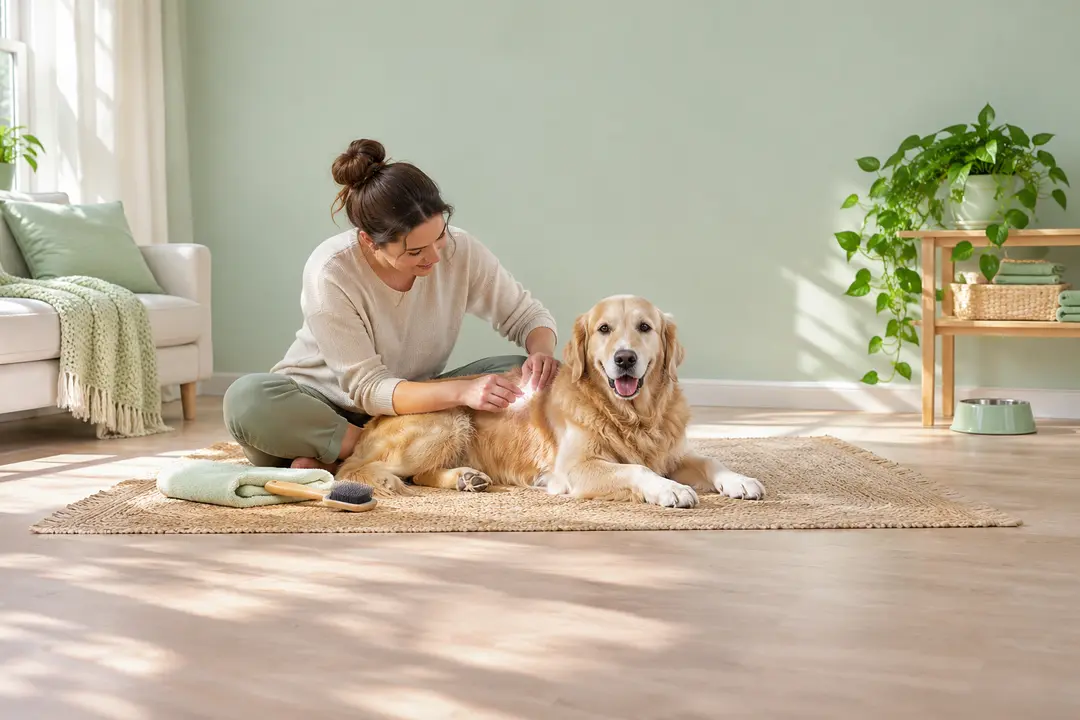
Suppose you brush your dog and notice white specks against the dark fur on their back. Before you reach for the shampoo, set the brush down and part the hair. A few flakes sitting on healthy-looking skin are a different finding from flakes around a damp patch your dog keeps chewing. What’s under the coat matters more than how much is on the brush.
- Look at the skin in good light. Use your fingers to part the fur where you first saw the flakes. Compare that spot with skin nearby. Is it your dog’s usual skin color, with similar hair coverage? Note any redness, thinning hair, crusts, or moisture. Long fur can hide a sore patch that isn’t obvious until you separate the hair.
- Check whether the coat is dry or greasy. Don’t assume that flakes mean dry skin. Notice whether the hair feels oily or the area has a new odor. If you call the clinic, “greasy flakes with a sour smell” gives them more useful information than “dry skin.”
- Watch your dog between grooming sessions. Itching doesn’t always look like scratching with a hind foot. Your dog may keep turning to lick or nibble one spot. Note where that happens and whether the skin there is still intact. If it’s already raw, stop the coat check and arrange care.
When to book a visit, call today, or go now
| What you see | What to do |
|---|---|
| Loose flakes, skin that looks intact, and a dog who seems comfortable | Arrange a routine visit, not an emergency trip. Mention whether this is the first time you’ve noticed flakes or whether they return after grooming. |
| More areas becoming flaky, hair loss, redness, or a greasy coat | Tell your clinic about those changes when you book. If you already have a visit scheduled, give them the date and ask whether to move it up. Don’t wait for itching to develop before reporting persistent scaling. |
| A sore, wet or oozing patch, especially one that’s growing, or repeated chewing or scratching that’s damaging the skin | Call your vet today for a prompt examination. If your clinic can’t see your dog, contact a veterinary urgent-care clinic. |
PDSA’s dandruff guidance notes that a little flaking can be normal but recommends a nonurgent appointment for dandruff. That distinction lets you use your regular clinic without having to decide for yourself that the flakes are harmless.
Go now if your dog won’t stop biting or scratching a raw patch and is continuing to injure it. Seek urgent veterinary care; if an emergency clinic is the only place your dog can be seen promptly, go there now. It’s the ongoing injury, not the flakes, that changes the decision. VCA’s guide to urgent care for itchy skin flags persistent chewing or scratching and enlarging patches. Texas A&M’s veterinary guidance on hot spots explains why: biting can open the skin and allow an infection to deepen. While arranging care, keep your dog from licking or chewing the area as best you can.
Why a dog’s skin can be flaky, even without itching
Dry air and bathing habits. If the flakes appeared during a spell of dry indoor air, after more frequent baths, or after a shampoo change, tell your vet. Any of those can contribute to dry skin. They don’t establish the cause, though. A dog can develop an unrelated skin problem in winter, too.
Parasites, allergies, or infection. Fleas, mites, allergies, and bacterial or yeast infections can cause skin changes that look much alike. As PDSA’s overview of dog skin problems explains, a greasy coat with a sour odor can occur with yeast infection. That’s a reason to describe the smell to your vet, not enough evidence to pick a yeast treatment. Likewise, a bald, itchy patch doesn’t tell you by itself whether your dog has parasites or an allergy.
A scaling disorder or an underlying illness. You may hear the word seborrhea, a skin disorder that causes excessive scaling. It isn’t another name for every white flake. In dogs that have seborrhea, the disorder is more often due to another condition than inherited, according to the Merck Veterinary Manual’s guide to seborrhea. Some underlying problems, including hormone disorders, can cause scaling with little itching. That’s why a comfortable dog whose coat stays flaky still deserves an exam.
How to care for the coat while you arrange a check
If the skin is intact and your dog is comfortable, gentle brushing can help remove loose flakes. A little flaking can happen even with careful coat care. There’s no need to brush harder to get the last specks off, and a clean-looking coat after brushing doesn’t tell you why the flakes were there. Leave sore areas alone rather than trying to brush crusts out of them.
Skip the extra bath meant to scrub the dandruff away. Banfield’s guide to dandruff and dry skin notes that occasional flakes may improve with grooming, but frequent bathing and unsuitable shampoo can contribute to dryness. If your vet has already prescribed a bathing routine for a skin condition, that’s different from adding baths on your own. Tell the clinic about the flakes and ask whether to keep the same schedule.
For your next coat check, part the fur in the same spot. A photo with the hair held apart can make it easier to compare the skin and show your vet where the change started. Look for a change in the area affected, not just the flakes left in the hair: is the original spot unchanged, is the skin sore now, or are you seeing a similar patch somewhere else?
What to tell your vet and what they may test
Give your clinic a short timeline. Say where the flakes appeared first, when you noticed them, and what’s different now. Include whether licking or chewing started before you saw the flakes, whether a patch has grown, and whether the coat has become greasy or developed an odor. Have the name of your dog’s shampoo handy, along with how often you bathe them and what you use for parasite prevention.
Your vet can use that history and the skin exam to choose a test rather than treating all flaky coats the same way. The Merck Veterinary Manual’s guide to diagnosing skin disorders describes several options. A vet looking for mites may examine a small sample taken from the skin’s surface, called a skin scraping. For other skin changes, they may examine hairs or collect material on a swab. Not every dog needs every test; if the exam points to an underlying illness, your vet may suggest a different investigation.
Before you leave, ask what improvement should look like for your dog and when to report back. For a dog that chews one sore patch, less chewing and the condition of that patch matter more than a flake-free brush. For a dog that never seemed itchy, the useful comparison may be whether the same areas still scale or new ones appear. There’s no single recovery timeline for dandruff because the causes differ.
Talk it through with Vicky
You can tell Vicky what you’re seeing right now: where the flakes are, what the skin underneath looks like, and whether your dog keeps returning to the spot. Vicky will bring in Dr. Nadia (Virtual DVM, DACVD), our veterinary dermatologist, to help you make sense of those observations.
Common questions
Why do I see more white flakes right after brushing my dog?
Brushing can make loose, already-shed skin easier to see. Flakes on the brush alone don’t mean you caused a skin problem; check the skin where they came from and note whether the flaking returns between grooming sessions.
Can I use my own dandruff shampoo on my dog?
Check with your vet before using a treatment shampoo, including your own. An unsuitable shampoo can contribute to dryness, and the right choice depends on what’s causing the flakes.
Can my family or other pets catch walking dandruff?
Shed skin itself isn’t contagious, but Cheyletiella mites, the cause of “walking dandruff,” can spread to other pets and affect people. Don’t rely on how the flakes look to identify mites. Your vet may check a skin scraping or tape sample and advise you about other pets if mites are found.
Should I try fish oil before booking a vet visit?
Flakes alone don’t show that your dog needs a supplement. Keep the appointment and ask about diet there rather than waiting to see whether fish oil changes the coat.
If my puppy already has dandruff, does that mean it’s inherited?
No. Inherited seborrhea usually starts early in life, but a puppy’s age doesn’t establish the cause. Vets check for other explanations before diagnosing the inherited form.
Sources
- Dandruff and dry skin in pets — Banfield Pet Hospital
- Dandruff in dogs — PDSA
- Seborrhea in Dogs — Merck Veterinary Manual
- Skin problems in dogs: an overview — PDSA
- Diagnosis of Skin Disorders in Dogs — Merck Veterinary Manual
- Urgent Care for Itchy Skin or Rashes — VCA Animal Hospitals
- Hot spots (acute moist dermatitis) in dogs — PDSA
- Does your pet have a hot spot? — Texas A&M Veterinary Medicine & Biomedical Sciences
- Urgent Care — Cornell University College of Veterinary Medicine
- Walking Dandruff in Dogs — PetMD



