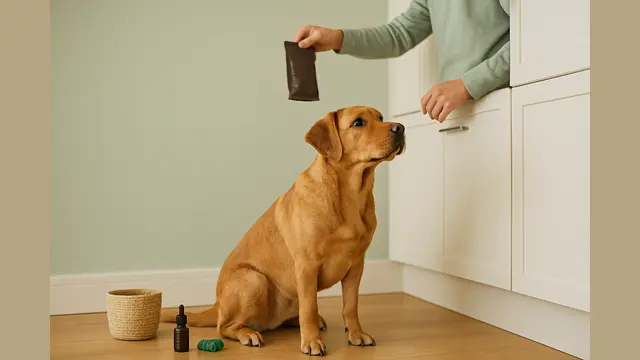
Can the salt in soy sauce harm my dog, and when should I call a vet?
A tiny lick of soy sauce is different from an unknown spill. Learn when to call your vet, when to go to an emergency hospital, and what the label can tell you.

In this guide (8 sections)
- Get urgent help
- Why a lick is different from drinking the sauce
- How to estimate the amount without delaying the call
- Which numbers on the soy sauce label matter?
- Check the recipe if it was takeout or a marinade
- Offer ordinary access to water, not a home remedy
- What to tell the clinic and what to expect next
- Talk it through with Vicky
Get urgent help
Go to an emergency animal hospital now if your dog has a seizure or collapses after swallowing soy sauce. Yes, the salt can harm your dog: if they drank from a dipping bowl, you cannot tell how much they swallowed, or they seem unwell after a taste, call your veterinarian or an animal poison control line now. One witnessed, tiny lick of plain soy sauce is unlikely to poison a healthy adult dog; seeing your dog lick the last drop of a spill is a different situation.
Move the sauce out of reach. If your dog is stumbling or shaking with tremors, call an emergency veterinarian immediately and describe what you see. Vomiting, diarrhea, marked thirst, or unusual tiredness after exposure also warrant a prompt call. Pet Poison Helpline’s guide to salt describes both stomach upset and more serious signs that affect movement and alertness.
If a potentially harmful amount is missing, do not wait for signs. The ASPCA’s poisoning first-aid guidance recommends getting advice even when a pet still looks well. You can make that call without knowing exactly how much your dog drank.
Why a lick is different from drinking the sauce
With plain soy sauce, the main concern is how much salt your dog swallowed relative to their weight. The same spoonful gives a small dog more salt per pound than it gives a large dog. Access to fresh water also matters. The American Kennel Club’s guide to salt in dogs identifies excess soy sauce as a poisoning risk and explains that lack of drinking water increases that risk.
The useful question is not “How many licks are safe?” It is “What is the most my dog could have swallowed?” If you dropped a few drops on a clean floor, saw one lick, and wiped up the rest, you know the limit. If you found your dog beside a tipped bowl, counting the licks you saw cannot tell you what happened before you arrived. Even careful owners may not see the spill happen. Tell the clinic which parts you know rather than trying to fill in the gaps.
How to estimate the amount without delaying the call
Start the call first if the amount is unknown. If someone else is with you, they can look at the spill or packaging while you speak. Three details help turn “my dog got into soy sauce” into an estimate the clinic can use:
- What was within reach? A smear on a plate, a full dipping cup, and a torn takeout packet each tell a different story. If there were several packets, say how many were open and whether more were accessible. Keep a matching unopened packet if you have one.
- Where did the sauce go? Say how full the container was beforehand, if you know, and what is left. Sauce still in the bowl or soaked into a napkin did not all go into your dog. You do not need to measure a wet patch or guess how much a lick holds.
- What is the largest plausible amount? For example, if the bowl started with a tablespoon, say that it held at most a tablespoon and that some spilled. That is more accurate than saying your dog drank a tablespoon. If you never saw the bowl before it tipped, say the starting amount is unknown.
Pet Poison Helpline’s guide to what to expect on a call explains that a best estimate, range, or upper limit is useful. You do not need to choose an exact number to get help.
Which numbers on the soy sauce label matter?
Find serving size and sodium per serving on the Nutrition Facts label. Read them together: “The serving size is one tablespoon, and the label lists this many milligrams of sodium per serving.” Then tell the clinic how much sauce your dog could have swallowed. That gives them the strength of the sauce as well as the possible amount.
Check the number of servings in the container, too. Half a dipping cup is not necessarily half a labeled serving. If you are unsure which units to give, a photo of the label saves you from having to convert teaspoons, tablespoons, or milligrams during the call.
The FDA’s guide to sodium on food labels explains that similar products can contain different amounts of sodium. The percent Daily Value on the label is for a human diet. It cannot tell you whether your dog has salt poisoning, and you do not need to calculate a poisoning threshold before calling.
Check the recipe if it was takeout or a marinade
If your dog ate seasoned food rather than plain soy sauce, give the clinic the dish name and ingredients you know. Look for onion and garlic as well as soy sauce. These can pose a separate risk to dogs, including when cooked or used as powders. VCA’s guide to onion and garlic poisoning explains why the form and amount matter.
Keep the food and the dipping sauce separate in your account. For example, you may know that your dog took one piece of chicken but not whether they also reached the marinade beside it. Say exactly that. A recipe, ingredient list, or photo can help, but do not put off the call to track down a restaurant recipe.
Offer ordinary access to water, not a home remedy
After a known tiny taste, remove the sauce and leave your dog’s usual fresh water bowl within reach. If you are unsure whether watching at home is appropriate for your dog, ask your vet. If your dog may have drunk the sauce, tell the clinic whether fresh water was available and ask what to do about drinking while you arrange care.
Do not force water or encourage your dog to gulp a large amount to dilute the salt. Leaving a bowl available after a lick is different from trying to treat suspected poisoning with water. The Merck Veterinary Manual’s salt poisoning guide distinguishes ordinary access to fresh water from the controlled care an affected dog may need.
Do not try to make your dog vomit unless a veterinarian directs you to. Never use salt or salt water to cause vomiting: that adds more of the substance you are concerned about.
What to tell the clinic and what to expect next
Start with how your dog is acting right now, then give their weight, the product or dish, the largest amount they might have swallowed, and when it happened. If you did not see it happen, say so. Cornell’s first-aid guide for poisonous substances lists the details that help a veterinary team assess an exposure. In the US, if your clinic is closed, an emergency veterinarian, ASPCA Poison Control, or Pet Poison Helpline can advise you. Poison line consultation fees may apply.
The first decision is whether your dog needs an exam or can be observed at home. If the clinic asks you to come in, take the packet or label photo if it is handy; do not delay leaving to find it. If they advise home observation, ask how long to watch, which changes to report, and whom to call overnight. If you later discover another open packet or learn that the dish contained garlic, update the clinic. Their first advice was based on what you knew at the time.
Talk it through with Vicky
For help organizing what you saw, you can tell Vicky what is happening right now. Vicky will bring in Dr. Nora (Virtual DVM, DABT), our AI specialist in veterinary toxicology. If the amount is uncertain or your dog seems unwell, contact your veterinarian or an animal poison service first. For a seizure or collapse, leave for the emergency hospital now; do not wait for a call or chat.
Common questions
My dog still wants dinner. Does that mean the danger has passed?
No. A normal appetite describes how your dog seems now, not how much salt they swallowed. If they may have drunk sauce or you cannot tell how much is missing, call your vet or an animal poison control line now.
Does reduced-sodium soy sauce change what I should do?
It may change how much sodium your dog received, but “reduced sodium” does not mean a missing packet or bowl is safe. Give the clinic the sodium per serving, the serving size, your dog’s weight, and the amount that could be missing.
What if the takeout packet has no label?
Call without the label. Say what kind of sauce you think it was, whether the packet was full or partly used, what remains, and your dog’s weight. If you do not know the packet size, say so rather than assuming it held a teaspoon or tablespoon.
Should I count all the soy sauce in a recipe if my dog ate one bite of chicken?
No. Tell the clinic how much sauce went into the whole dish, if known, and separately describe the bite your dog ate. Mention any sauce your dog could have drunk directly and any onion or garlic in the recipe.
Two dogs got into the spill. Can I assume each drank half?
Not unless you saw how much each swallowed. Give the clinic both dogs’ weights, how each is acting, and the total amount that may be missing. An even split could underestimate what one dog received.
Sources
- American Kennel Club — Is Salt Bad for Dogs?
- Merck Veterinary Manual — Salt Poisoning
- Pet Poison Helpline — Salt
- ASPCA — What to Do if Your Pet Is Poisoned
- Cornell University College of Veterinary Medicine — First-aid for poisonous substances
- US Food and Drug Administration — Sodium in Your Diet
- Centers for Disease Control and Prevention — Tips for Reducing Sodium Intake
- VCA Animal Hospitals — Onion, Garlic, Chive, and Leek Poisoning in Dogs
- Homemade Play Dough — Pet Poison Helpline
- What to Expect When You Call — Pet Poison Helpline
- Nutrition Facts Label and Your Health — CDC
- Garlic and Onion (Allium spp) Toxicosis in Animals — Merck Veterinary Manual