Can I bathe my cat with dog shampoo, or are some ingredients unsafe for cats?
Check which shampoos are suitable for cats, which flea ingredients and oils matter, and whether a bath with the wrong bottle needs a rinse or urgent care.

In this guide (6 sections)
Use the shampoo only if that exact bottle says it’s for cats or for both dogs and cats. An ordinary dog-only shampoo can leave your cat’s skin dry and itchy; a dog flea shampoo containing permethrin can cause serious poisoning. If you’ve already used a dog-only flea product on your cat, call your veterinarian or animal poison control now, even if your cat looks well.
Already used dog shampoo? When to rinse, call, or go now
Go directly to an emergency veterinarian if your cat is twitching, trembling, losing balance, struggling to breathe, or having a seizure after the exposure. Don’t delay the trip to wash your cat. Handling and bathing can make tremors or seizures worse; the emergency team can stabilize your cat before attempting a bath.
If your cat has none of those signs, the next step depends on the product:
| What got on your cat | What to do now |
|---|---|
| Ordinary dog grooming shampoo, with no flea treatment or suspected toxic ingredient | Rinse the shampoo out thoroughly with lukewarm water. If you’ve already rinsed it all away, watch the skin rather than starting a second bath with a different cleanser. |
| Dog-only flea or tick shampoo, or a concentrated essential oil such as tea tree oil | Call your vet or an animal poison control service now for advice specific to the product. Call even after one application and even if you’ve rinsed your cat. |
| An unknown product that might contain a flea treatment or concentrated oil | Make the same call. Say what you know about the bottle rather than assuming it was ordinary shampoo. |
The reason not to wait for symptoms is that signs of permethrin poisoning can be delayed. If your cat licked the product, mention that when you call. Don’t try to make your cat vomit unless a veterinarian directs you to.
How to check the bottle before a bath
Bottles for different pets can look alike, and a mix-up can happen in a careful household. You don’t necessarily need two shampoos for a dog and a cat, but you do need directions that apply to the animal you’re about to bathe. Check these three things:
- Who is it for? Look for the word cats in the directions on the bottle you have, not on another product from the same brand. A shampoo with directions for dogs and cats is an option for both. If the directions mention only dogs, put it aside. If the label is missing, choose a bottle you can identify.
- What is it meant to do? A shampoo for washing dirt out of a coat is different from one that kills fleas or ticks. On a flea shampoo, look for the active ingredient. That’s the substance that acts against the pest. Its name and concentration, or strength, are more useful than the brand name if you need advice.
- Does it fit your particular cat? For a flea product, check the minimum age, any weight limits, and the instructions for use. A bottle labeled for cats may still be unsuitable for your kitten. The FDA’s guide to flea and tick products recommends saving the packaging. Keep the box if that’s where the full directions are printed.
Which shampoo ingredients change the decision?
Permethrin is a flea-killing ingredient, not a cleanser. It belongs to a group of synthetic insecticides called pyrethroids. Some dog flea shampoos and spot-on treatments contain it. If you find permethrin on a dog flea product, don’t use it on your cat. If it’s already on your cat, finding the name on the label is reason to call, not a reason to spend time calculating how much got through the coat.
Pyrethrins are related, but they are not the same as permethrin. Some flea shampoos containing pyrethrins are made and labeled for cats. As VCA explains in its guide to these insecticides, the strength and the other ingredients in the product matter. You may therefore see pyrethrins on a bottle with feline directions. That tells you about that particular shampoo; it does not make a dog-only formula interchangeable with it.
Concentrated essential oils are another concern. Tea tree oil is one example where both the ingredient and its concentration matter. A scent on the front of a bottle doesn’t tell you whether the shampoo contains a concentrated oil, and the word natural doesn’t tell you whether it’s suitable for cats. The ASPCA’s guidance on essential oils advises against applying oils directly to pets. Leave essential oils out of a homemade bath mixture. If concentrated oil has already touched the coat, get advice rather than relying on the smell to judge the exposure.
What to tell the clinic after a shampoo mix-up
Start with what happened and how your cat looks right now. For example, the distinction between “I rinsed out a dog grooming shampoo and my cat is scratching” and “I used a dog flea shampoo and my cat is trembling” matters more than the color of the bottle.
Have the following details ready if you can get them without delaying care:
- The label: Product name, intended species, active ingredients, and any strengths listed. Take the package or photograph the front and back.
- The exposure: When it happened, where the product went, whether your cat licked it, and whether you’ve already rinsed or applied anything else.
- Your cat: Age, approximate weight, and any changes you’ve noticed since the bath. Say if the scratching was there before the shampoo went on.
For a potentially toxic product, the professional you call can advise whether to wash off the residue or bring your cat in. If they recommend washing away an oily substance, the ASPCA’s advice on washing after exposure specifies mild liquid soap meant for washing dishes by hand, followed by thorough rinsing. That is a way to remove certain contaminants under guidance, not a recommendation to use dish soap for grooming. Never substitute dishwasher detergent.
What to use for ordinary dirt or itchy skin
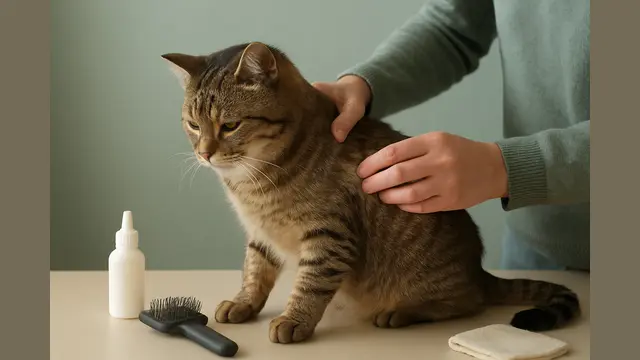
Most cats keep their coats clean by grooming. For a food smear or a muddy paw, dampen a soft cloth with lukewarm water and wipe the dirty patch. If the dirt comes away, there’s no need to wet and shampoo the rest of your cat. This approach is for a mess you recognize, not an unknown spill on the coat.
If a full bath is needed, choose a cat-labeled shampoo and follow its directions. The ASPCA’s cat grooming guide recommends rinsing thoroughly with lukewarm water because shampoo left in the coat can irritate the skin. If all you have is human shampoo, baby shampoo, or dish soap, stick with the damp cloth for ordinary dirt. Those cleansers are poor choices for routine baths, even when they’re described as gentle for people.
After an ordinary shampoo has been rinsed away, pay attention to whether scratching settles or keeps coming back. If you notice persistent scratching, redness, or flakes, ask your vet to check the skin rather than trying another shampoo. This is especially useful if itching was the reason for the bath in the first place: fleas, other parasites, allergies, and infections can look similar but need different treatments. Telling your vet what the skin looked like before and after the bath helps separate the original problem from possible irritation.
Talk it through with Vicky
If you’re choosing a shampoo, you can tell Vicky what you’re seeing right now. Include why you want to bathe your cat and what the bottle says under species and ingredients. Vicky will bring in Dr. Nora (Virtual DVM, DABT), our veterinary toxicologist, to help you understand an ingredient concern. If a potentially toxic product is already on your cat, call your own veterinarian or animal poison control now rather than waiting for an online answer.
Common questions
Does an oatmeal or gentle puppy shampoo count as safe for cats?
Not on that wording alone. Oatmeal names an ingredient, and puppy directions are for young dogs. Check whether that exact bottle also gives directions for cats.
Can my cat be poisoned by licking a dog that just had a flea treatment?
Licking the treated patch can expose your cat to the dog’s flea product. If that happened, call your veterinarian or animal poison control now with the dog’s product label, even if nothing was applied directly to your cat.
What can I use on a flea-covered kitten younger than the age on the bottle?
Set that product aside. Give your vet your kitten’s age and weight and ask for a flea-control option suitable for both. A cat label doesn’t override the minimum age printed on it.
If I still see fleas after a shampoo, can I repeat the bath or add a spot-on treatment?
Follow the shampoo label for when it can be used again; seeing fleas isn’t a direction to repeat it early. Before adding another flea product, have both packages handy and ask your vet whether the products are appropriate together for your cat.
Sources
- VCA Animal Hospitals: How to Choose the Right Dog & Cat Shampoo
- FDA: Safe Use of Flea and Tick Products in Pets
- VCA Animal Hospitals: Pyrethrin/Pyrethroid Poisoning in Cats
- Pet Poison Helpline: Essential Oils and Cats
- ASPCA: Pet Decontamination at Home: What to Do After Exposure
- ASPCA: Cat Grooming Tips
- Preventive Vet: Shampoo for Your Pet – Which to Use and NOT Use
- Cats Protection: Skin Problems in Cats
- Pet Poison Helpline — Four Things You Should Know About Flea and Tick Topical Solutions
- PDSA — Permethrin Toxicity in Cats
- Clinician’s Brief — Managing Exposure to Permethrin
- ASPCA — The Essentials of Essential Oils Around Pets