
Can pet birds eat dry oats or plain cooked oatmeal, and how do these foods fit into their diet?
Learn which pet birds can share plain cooked oatmeal, what’s known about dry flakes, how much to offer, and when to remove leftovers from the cage.
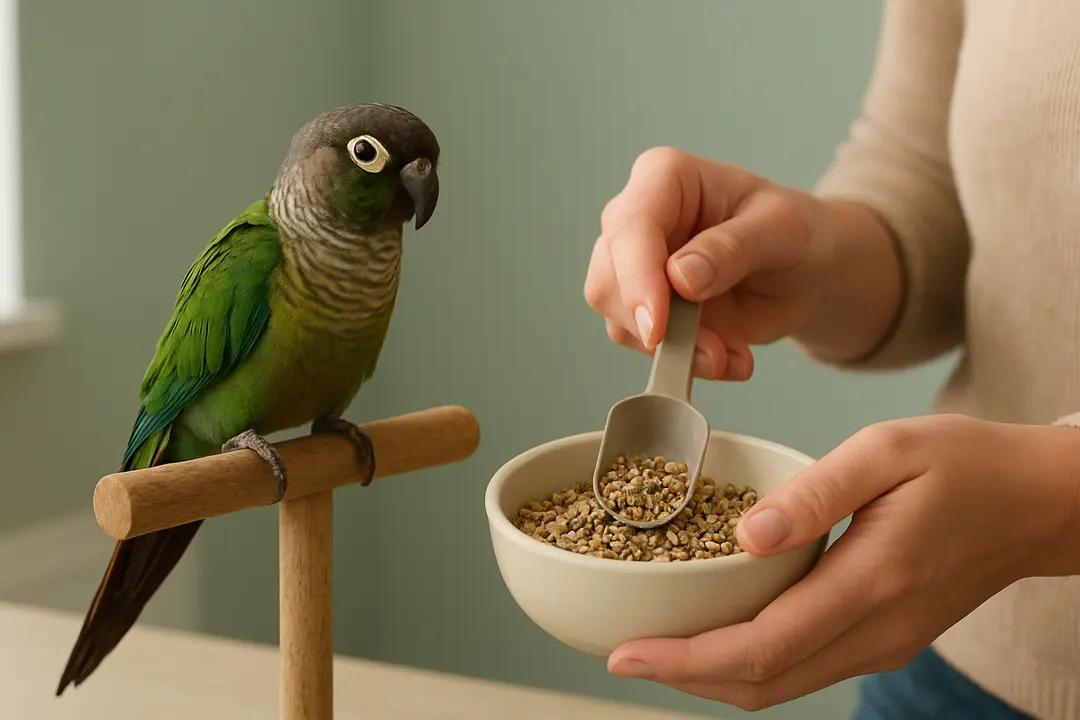
In this guide (7 sections)
- Which pet birds can share plain oatmeal?
- Do dry rolled oats need to be soaked?
- How to choose between old-fashioned, quick, and instant oats
- How much oatmeal can you share with a cockatiel?
- When to take cooked oatmeal out of the cage
- Is your bird choosing oats or eating less overall?
- Talk it through with Vicky
Many pet parrots, including cockatiels and budgies, can have a small taste of plain oatmeal cooked in water. Parrot feeding guidance recommends cooked oats but doesn’t establish whether to serve dry rolled flakes straight from the container or soak them first. If oats fit your bird’s diet, offer cooked oatmeal as an occasional extra, not in place of pellets and fresh foods.
Which pet birds can share plain oatmeal?
For a cockatiel that eats pellets, vegetables, fruit, and some seed, a taste of cooked oatmeal can add variety. The Best Friends guide to feeding parrots lists cooked oats among the whole grains that can go alongside pellets and fresh foods. The grain is optional: if your bird leaves the oatmeal and eats its usual breakfast, there’s no need to find a way to make porridge more appealing.
Start with the species, though, rather than assuming all pet birds can share the same breakfast. Lories and lorikeets are parrots, but they need a nectar-based diet. A bowl of thin oatmeal isn’t a substitute for nectar. The RSPCA’s bird diet guide distinguishes their needs from those of birds such as cockatiels. If your avian veterinarian has prescribed a particular diet, ask whether a grain treat fits that plan before changing the menu.
Do dry rolled oats need to be soaked?
An old-fashioned rolled oat isn’t an untouched raw grain. The grain has been steamed, flattened, and dried to make the flake you see in the container. That explains why it looks different from a whole oat groat, but it doesn’t tell you whether that dry flake is suitable for your bird. Advice about cooked oats also doesn’t establish that a sprinkle of water makes dry flakes equivalent to cooked porridge.
If you’re choosing something to share today, you don’t need to settle the soaking question: use plain oats and cook them in water. That’s a recommendation for the cooked option, not a finding that dry flakes are harmful. If what you want is a dry food to put in a foraging toy, ask your avian veterinarian about a choice suited to your bird rather than assuming that every form of oat has the same feeding guidance.
How to choose between old-fashioned, quick, and instant oats
Read the ingredients before you put the pan on. The useful distinction is plain versus flavored, not how long the oats take to cook. The University of Illinois Extension guide to oats notes that plain quick oats are nutritionally similar to rolled oats and supply soluble fiber, a type of fiber that mixes with water. Flavored instant varieties can contain added sugar and more sodium.
| What’s in the cupboard | What to do at breakfast |
|---|---|
| Old-fashioned rolled oats | If the only ingredient is oats, cook them in water and set aside a small taste. |
| Quick oats or an instant packet | Check the packet itself. If it contains only oats, you can use it to make plain oatmeal. |
| Oats with sugar, salt, or flavoring already mixed in | Keep these for your own bowl. Cooking the mix in plain water won’t remove what’s already in it. |
How much oatmeal can you share with a cockatiel?
Think of a little dab to sample, not a human spoonful every morning. That’s a way to picture a treat for a small parrot, not an exact serving or an amount your bird needs to finish. LafeberVet’s parrot feeding guide puts whole grains in the small-extras part of a diet built around formulated food, such as pellets, and daily vegetables. It also recommends preparing cooked food without added butter, salt, or sugar.
Suppose you’re making oatmeal for yourself while your cockatiel eats breakfast. Here’s how to share one batch without sharing everything in your bowl:
- Cook the oats in water according to the package directions. If you like to cook yours in milk or add salt to the pan, make the bird’s plain portion separately.
- Take out the bird’s taste before adding anything to yours. Put a dab in a clean dish and let it cool before offering it. You can then add milk, butter, sugar, or toppings to your bowl without having to pick around them for the bird.
- Keep the oatmeal separate from the regular food. You can see whether your cockatiel samples the oats and goes back to its usual meal. You can also lift out the moist leftovers without throwing away a dish of pellets.
- Decide when you’ll take the dish out. If you’re about to leave for work and no one can clear breakfast, save the oatmeal for a morning when you’ll be home.
When to take cooked oatmeal out of the cage
Remove uneaten cooked oatmeal within 30 to 60 minutes. That’s the cage-specific advice in Lafeber’s guide to foods not to leave in a bird’s cage. Bacteria grow faster in perishable food in hot weather, so use the shorter end of that window when it’s hot. If the dish goes in at 8 a.m. on a hot morning, plan to take it out around 8:30.
If you’re used to the FDA’s general food-storage guidance, you may remember a two-hour room-temperature limit for perishable foods, or one hour above 90°F. Those are general limits, not instructions to leave cooked food in a cage that long. Use the shorter cage window, discard the leftover dab, and wash the dish rather than topping up the old portion.
Is your bird choosing oats or eating less overall?
A bird that picks its favorite food first presents a different question from a bird that has lost its appetite. Look at what your bird actually eats and how it acts, not only whether it visits the bowl. LafeberVet’s guide to recognizing illness in birds points out that a bird can spend time at its dish without eating.
If your bird is active as usual and eating its normal amount overall, but chooses oatmeal ahead of pellets, offer its usual familiar foods without oatmeal at the next meal. There’s no need to take away its regular foods to force a choice. If it eats normally, you can offer the occasional taste of oatmeal after its usual meal. If favorite extras routinely crowd out pellets and vegetables, skip the oatmeal and discuss the everyday menu with your avian veterinarian.
For that routine diet discussion, describe what goes into each dish and what’s left when you clear it. “I offer pellets every morning, but my cockatiel mostly eats seed and finishes the oatmeal” tells the clinic more than a list of three foods. It distinguishes what you provide from what your bird chooses, without assuming the oats are the whole problem.
If your bird is eating less overall or seems unwell, don’t use the next meal as a test. Contact your avian veterinarian and describe the change. If appetite loss comes with unusual inactivity, seek veterinary care now. Call your avian veterinarian for immediate assessment; if they can’t see your bird immediately, contact an emergency clinic that treats birds and go now. Both the LafeberVet illness guide and VCA’s guide to appetite loss and lethargy in birds identify that combination as potentially serious. Tell the clinic when you last saw your bird actually eat and how its activity differs from normal.
Talk it through with Vicky
You can tell Vicky what you’re seeing right now: which kind of bird you have, what’s in the oat packet, and what your bird eats or leaves behind. For a routine feeding question, Vicky will bring in Dr. Wren (Virtual DVM, DABVP (Avian)), our AI specialist in avian and exotics care, to help you think through the menu. This is virtual guidance, not a veterinary examination.
Common questions
Does a gluten-free label mean my budgie can eat the flakes dry?
No. That label doesn’t give dry-feeding or soaking instructions for a budgie. If you want to share oats, check that oats are the only ingredient and offer a small taste cooked in water.
Can I share instant oatmeal if the toppings come in a separate packet?
Check the ingredients for the oatmeal base, not only the topping packet. If the base contains only oats, cook it in water and set aside the bird’s taste; if sugar or salt is already in the base, leaving out the topping won’t make it plain.
Should I replace my cockatiel’s seed with oatmeal?
There’s no need to make that swap. Cockatiels can have some seed alongside pellets and produce, while cooked oatmeal is an optional grain treat. If your bird mostly eats seed, discuss the whole diet with your avian veterinarian rather than replacing one favorite with another.
What if my parrot refuses plain oatmeal but wants a taste from my bowl?
If you’ve already added butter, salt, sugar, or other toppings, keep that bowl for yourself. A parrot that is eating its usual foods normally doesn’t need to learn to like oatmeal, so it’s okay to skip the treat.
Sources
- The Best Parrot Diet (and Toxic Foods to Avoid) — Best Friends Animal Society
- Know your oats this Oatmeal Month — University of Illinois Extension
- Diet: The right food for your bird — RSPCA
- Don’t Leave These In Your Pet Bird’s Cage — Lafeber Company
- Are You Storing Food Safely? — U.S. Food and Drug Administration
- Anorexia and Lethargy in Birds — VCA Animal Hospitals
- “Healthy” Foods Your Bird Should Stop Eating Today — Lafeber Company
- Feeding Your Parrot a Healthy Diet — LafeberVet
- Identifying Signs of Illness in Your Bird — LafeberVet



