
Can rabbits get fleas, and how can I tell if my rabbit has them?
Learn how to spot fleas and test black specks in your rabbit’s fur, when itching or ear crusts need a vet, and what to do after possible flea-drop exposure.
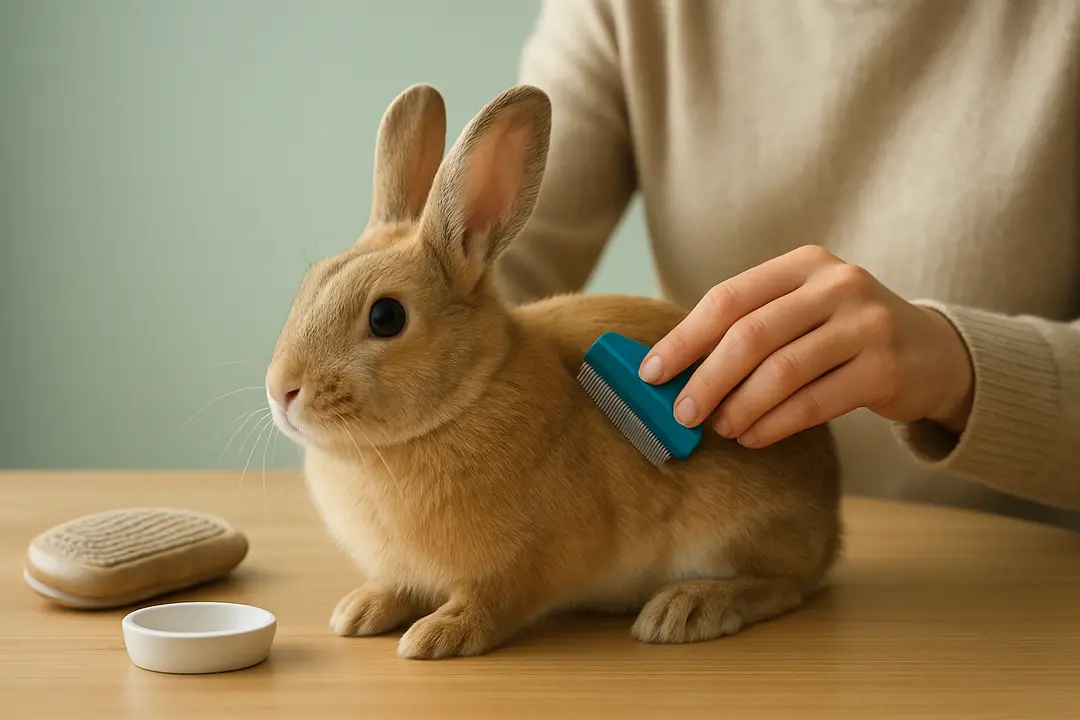
In this guide (7 sections)
Yes. Even a rabbit that never goes outside can get fleas from a cat, a dog, or a room where fleas are present. Part the fur down to the skin and use a fine-toothed flea comb: look for a small, dark insect moving quickly or for pepper-like specks that leave a rusty-red stain on damp white paper.
If you’re checking because your rabbit may have been exposed to a flea product containing fipronil, call your veterinarian or an animal poison control service now, even if your rabbit looks well. If your rabbit has a seizure after possible exposure, go to an emergency veterinary clinic now rather than waiting for a callback.
How to check your rabbit for fleas and flea dirt
You’ll need a fine-toothed flea comb, a sheet of white paper, a white paper towel, and a little water. The comb helps you find material hidden in the coat; the white paper lets you see whether it moves or changes color when wet.
- Look close to the skin. When your rabbit is settled, gently part the fur with your fingers until you can see the skin. Watch for a small, dark insect moving along the part. Check more than one spot. Looking over the surface of the coat can miss a flea underneath.
- Comb over the white paper. Gently draw the comb through the parted fur, starting close to the skin. After each pass, look between the teeth and at anything that fell onto the paper. Check for movement first. Then tap any dark crumbs from the comb onto the paper so you can test them.
- Wet the specks, not your rabbit. Move a few specks onto the white paper towel and dampen them with plain water. Look at the paper around each speck. A rusty-red or reddish-brown mark suggests flea dirt: droppings that contain digested blood from a flea’s meal. You may find this clue without catching the flea that left it.
- Note what you actually found. A photo of the paper towel can help when you call your clinic. Record whether you saw a moving insect, whether the specks stained the paper, and where on the rabbit you found them. If nothing came off on the comb, note that too, along with any itching or skin changes that prompted you to check.
What do black specks, flakes, or ear crusts mean?
| What you see | What it suggests | What to do |
|---|---|---|
| A small, dark insect that moves quickly near the skin | This fits a live flea. | Contact your vet for a rabbit-safe treatment plan. |
| Still, black crumbs that stain wet paper reddish-brown | Flea dirt is likely, even if you found no insect. | Report the result to your clinic. |
| Dark debris that leaves no reddish stain | The paper test hasn’t identified it as flea dirt. | Let persistent itching or skin changes guide your next step, not the specks alone. |
| Pale flakes or patches of scaly skin | Fur mites are one possibility. Flakes alone don’t prove mites. | Arrange a skin exam rather than trying flea drops as a test. |
| Crusts inside or around the ears | Ear mites can cause painful crusts. | Contact your vet as soon as possible to have the ears checked. |
A clean comb doesn’t rule out fleas. Rabbits can groom away the evidence before you look, as PetMD’s guide to finding fleas on rabbits explains. On the other hand, scratching isn’t proof of fleas. If your rabbit keeps scratching or has patchy fur loss, don’t wait until you catch a bug to book an exam.
How could an indoor rabbit get fleas?
Think about where your pets spend time, not only whether they touch. For example, a dog might nap on the living room rug in the morning and your rabbit might use that room in the evening. Flea eggs can fall from the dog’s coat into the rug. Fleas can develop there, so your rabbit can encounter them without ever sharing the room with the dog at the same time.
This can happen in a well-cared-for home. If another pet has fleas, check your rabbit even if you haven’t noticed scratching. When you speak to your clinic, mention the shared rug or bedding. That detail helps identify a place to address as well as a pet to check.
When does my rabbit need a vet for fleas or itching?
A regular appointment: If you find a flea or flea dirt and your rabbit otherwise seems well, contact your regular rabbit-experienced veterinarian for an appointment and treatment advice. A regular skin exam is also the next step for persistent itching, sores, or fur loss despite a negative comb check. Your vet can examine the coat, skin, and ears to distinguish fleas from other causes. PDSA’s guide to rabbit skin parasites explains why different parasites can cause similar signs but need different care.
A prompt call: If a young rabbit has many fleas, call your veterinarian promptly and tell the clinic your rabbit’s age and what you saw. Heavy infestations can cause dangerous blood loss, especially in young rabbits. This can lead to anemia, meaning there are too few red blood cells. Don’t spend time counting every flea before calling. VCA’s guide to fleas in rabbits explains this risk.
Ear symptoms also deserve a prompt call. If you see crusts, redness, or discharge inside an ear, or your rabbit keeps scratching there, ask to have the ears checked as soon as possible. The RSPCA’s rabbit health guidance recommends contacting a vet about these changes. A clean flea comb tells you little about what’s happening inside a sore ear.
What if I already used cat or dog flea drops?
Check the package for the active ingredient, not only the brand name or the size of pet on the front. Fipronil, found in some Frontline products, can cause severe poisoning in rabbits. Suspected exposure needs immediate advice; you don’t need to see symptoms first. Seizures are a possible sign of poisoning and need emergency care. The ASPCA’s guide to rabbit toxins and Pet Poison Helpline’s fipronil guidance explain the danger.
If you don’t know what was in a product already used on your rabbit, ask your veterinarian or animal poison control to help identify it and advise you. Read them the label or have a photo handy, and tell them when and how the exposure happened. Don’t assume an unfamiliar product is safe or delay a call about suspected poisoning to hunt for the packaging. If you haven’t applied anything yet, leave the drops off and ask your vet to choose a product for your rabbit.
How to keep fleas from coming back
Removing a flea with a comb helps you recognize the problem, but it doesn’t remove eggs that have fallen into carpets or bedding. Once fleas are confirmed, address the pets and their living space together:
- Ask for a plan for each animal. Tell your vet which pets live with you, which have had fleas, and which flea products you’ve already used. A household plan doesn’t mean putting the same medicine on every pet. Ask what to use for your rabbit and how to judge whether the plan is working.
- Wash the bedding and vacuum the carpets. Include the places your rabbit visits, not only the sleeping area. If another pet uses the same rug or has a bed nearby, include those places too. The CDC’s guide to getting rid of fleas recommends cleaning the home while addressing fleas on the pets, rather than finishing one job before starting the other.
- Keep track of new findings. Over the next few days, note any live insects or specks you find and whether the scratching or skin changes persist. Fleas can still emerge from the surroundings after adults have been removed from the coat. If you keep finding them, tell your clinic what you’ve done for each pet and which areas you’ve cleaned. That’s more useful than adding another flea product on your own.
Talk it through with Vicky
If you’re unsure what came off the comb, tell Vicky what you’re seeing right now. Describe whether it moved, what happened on the damp paper, and how the skin underneath looked. Vicky will bring in Dr. Wren (Virtual DVM, DABVP (Avian)), our Avian & Exotics Veterinarian, to help you sort out those clues and decide what to ask your clinic.
Common questions
Are the black specks in my rabbit’s fur flea eggs?
Pepper-like specks that leave a rusty stain on damp white paper point to droppings, not eggs. Flea eggs can fall out of the coat into bedding or carpet. Specks that don’t stain aren’t enough to identify eggs.
Should I dip the flea comb in soapy water before testing the specks?
Collect the specks on white paper before cleaning the comb so you don’t wash away what you want to test. Plain water on a white paper towel is enough for the color check; you don’t need to put detergent on your rabbit.
Can a cat flea live on a rabbit, or would it have to be a rabbit flea?
Cat fleas can infest domestic rabbits too. If your cat has fleas, tell your vet about the rabbit even if you haven’t seen a flea on the rabbit’s coat.
Is a flea treatment labeled for kittens safe for a small rabbit?
A kitten label doesn’t establish safety for rabbits. Choosing a product by the animal’s size, or using less of a cat product, is not a substitute for having your veterinarian select a rabbit-appropriate treatment.
Sources
- How To Get Rid of Fleas on Rabbits — PetMD
- Fleas in Rabbits — VCA Animal Hospitals
- How to get rid of fleas — RSPCA
- Fleas, mites and lice in rabbits — PDSA
- Fleas Infecting the Body in Rabbits — PetMD
- Rabbit Pet Parents: Beware of These Common Pet Toxins! — ASPCA
- Antiparasitics containing fipronil are toxic to rabbits — Rabbit.org
- Fleas — Cornell University College of Veterinary Medicine
- Getting Rid of Fleas — CDC
- How to Keep Your Rabbit Healthy — RSPCA
- Fipronil Insecticide Poisoning — Pet Poison Helpline
- Fleas in Dogs and Cats — Merck Veterinary Manual



