What should I do if my cat has both vomiting and diarrhea, and when does it need urgent care?
If your cat is vomiting and has diarrhea, learn when to call an emergency clinic, which changes to report, and what to ask before monitoring at home.
In this guide (6 sections)
Call your veterinarian now if your cat has both vomiting and diarrhea, even if each happened only once. If your vet is closed, call an emergency veterinary clinic rather than waiting until morning. Tell them immediately if your cat is too weak to stand, keeps bringing water back up, seems to have belly pain, or may have swallowed something harmful.
Does my cat need an emergency visit or a call for advice?
The combination of symptoms is the reason to call. Whether you need to leave for the clinic depends in part on how your cat is doing now. For example, an adult cat that vomited once, passed a loose stool, and went back to playing gives the clinic a different picture from a cat that vomits after every drink and can barely walk. You don’t need to wait for another episode in either case.
Start with the most concerning thing you see. If your cat has collapsed or cannot stand, call the emergency clinic immediately and say that first. If your cat is alert but cannot keep water down, say so rather than describing your cat as “still drinking.” If the belly looks swollen or seems painful, report what you see; you don’t need to press on it to find out more. PDSA’s guidance on vomiting in cats recommends contacting a vet straight away when vomiting comes with diarrhea, water won’t stay down, or the belly is painful.
Mention blood early in the call. Tell the clinic whether you saw it in the vomit, on the surface of the stool, or mixed throughout the diarrhea. Stool that looks black and sticky like tar also matters, even if you see no red blood. PetMD’s guide to diarrhea in cats advises an immediate call when diarrhea occurs with vomiting, blood, or dark, tarry stool. If the clinic directs you to come in, don’t delay to take a photo or collect a sample.
What can I check for dehydration?
Your cat loses fluid in both vomit and watery stool. Dehydration means the body has lost more water than it has taken in. What happens after your cat drinks is therefore more useful to the clinic than how often your cat visits the bowl. Report the last drink you saw stay down, if you know. Don’t offer water as a test or postpone the call to watch for a result.
Notice your cat’s energy and movement. Is your cat getting up to greet you or use the litter box as usual? If you can easily lift a lip, note whether the gums feel moist or unusually sticky or dry. Also mention a change in the amount of urine you’ve seen. These observations help describe your cat’s condition; no single home check can tell you it’s safe to wait.
Give the clinic your cat’s age and mention any ongoing illness. Kittens and senior cats need prompt advice, and conditions such as diabetes and chronic kidney disease can add to fluid loss. The Cornell Feline Health Center’s hydration guide explains why these conditions matter and describes signs you might notice, including dry gums, low energy, and weakness.
Could it be the food, or did my cat swallow something?
A sudden change in food can cause vomiting and loose stool. Other possibilities include intestinal parasites, infection, kidney disease, a swallowed object, or poisoning. You usually can’t distinguish these by looking at the mess. Preventive Vet’s overview of vomiting and diarrhea in cats explains why the vet needs to know about more than your cat’s last meal.
Think back to what changed before the first episode. Did you open a different food? Is a length of ribbon missing? Did your cat have access to a medicine or a plant? A new food is a useful clue, but it doesn’t rule out the other possibilities. Describe what you know: finding a chewed object is different from seeing your cat swallow part of it. Neither requires you to work out the cause before calling.
If poisoning is possible, call your veterinarian or an animal poison control service immediately, even if your cat looks well again. Give the name of the substance if known, when your cat could have reached it, and how much might be missing. Don’t wait to establish the exact amount. The ASPCA’s poisoning guidance explains why to call on suspicion of exposure. Leave treatment to the veterinarian: RSPCA’s advice on suspected poisoning in cats cautions against trying to make your cat vomit or giving medicine yourself.
What details will help the clinic decide what to do?
After you’ve explained how your cat is acting right now, give the clinic a short timeline. You don’t need perfect notes. Four details are particularly useful:
- Timing and frequency. When did you first see vomit or loose stool, and when did you last see each one? Distinguish episodes you witnessed from several spots you found together. Mention similar bouts on previous days.
- What the stool looked like. Describe whether it was soft but still shaped, loose, or watery. If you already have a clear photo, ask whether the clinic wants to see it. A description is enough to start the call.
- Meals, drinks, and litter box visits. When did your cat last eat? Has food or water stayed down since then? Mention appetite loss or a change in urination. If several cats share a bowl or litter box and you can’t tell, say so rather than guessing.
- Health history and recent changes. List ongoing conditions and medicines, including anything you’ve already given for the upset. Mention changes in food or surroundings and anything your cat might have chewed or swallowed.
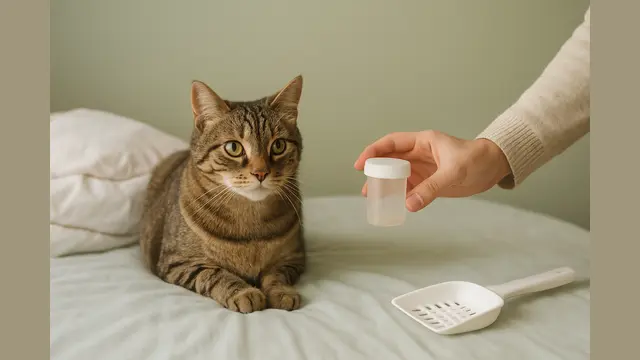
The clinic can use this history to advise whether your cat needs emergency care, an appointment, or monitoring with a plan. If you’re coming in, ask whether to bring a fresh stool sample you already have. The VCA guide to diarrhea in cats explains how the timing, appearance of the stool, and recent changes at home help a veterinarian assess possible causes.
If your vet recommends home monitoring
Before ending the call, get instructions for water, the next meal, and the next check-in. Ask what food to offer, how much, and when, taking the vomiting into account. Don’t start a day-long fast on your own or give a human anti-diarrhea product; some of these products can harm cats. If your vet suggests a pause before feeding, make sure you know when to offer food again.
Write down the time of the next drink, meal, vomit, or loose stool you actually see. At the next check-in, “she drank twice and kept it down, but hasn’t eaten” tells the clinic more than “she’s better.” Ask what change should prompt an earlier call and which clinic to contact if that happens overnight.
If vomiting returns after a quiet stretch, report the whole pattern rather than starting the count over. Cornell’s guidance on vomiting in cats recommends evaluation for recurrent vomiting and prompt attention when vomiting occurs with diarrhea or weakness. A plan made when your cat was alert and keeping water down needs an update if that changes; don’t wait for a scheduled callback to report it.
Talk it through with Vicky
After you’ve contacted your clinic, you can tell Vicky what you’re seeing right now. Vicky will bring in Dr. Ivan (Virtual DVM, DACVECC), our Emergency & Critical Care Specialist, to help you organize your observations and talk through your clinic’s instructions. If your cat needs urgent care, contact the emergency clinic directly rather than waiting for an online conversation.
Common questions
Could my cat have swallowed a ribbon even though loose stool is still coming out?
Yes. A swallowed object is one possible cause of vomiting with diarrhea, so passing stool doesn’t rule it out. Tell the clinic right away if a ribbon is missing or you saw your cat swallow it.
Is a small red streak in the litter box the same as black, sticky stool?
No. Describe a red streak as a streak, and tell the clinic specifically if the stool looks black and tarry or contains a large amount of red blood. With vomiting and diarrhea together, don’t use the small size of a streak to decide against calling.
What if my diabetic cat vomited and didn’t eat the meal that goes with a scheduled medicine?
Tell your clinic which meal your cat missed, when your cat last kept food down, and which medicine is due. Ask for instructions about both the meal and the medicine rather than relying on a general feeding plan.
What if I find dark flecks in the vomit but can’t tell whether they’re blood?
Tell the clinic you saw dark flecks and aren’t sure what they are. Blood in vomit matters, but you don’t need to identify the flecks yourself: vomiting with diarrhea is already reason to call promptly.
What if another cat in the house starts vomiting too?
Tell the clinic which signs you’ve seen in each cat and whether they shared a new food or had access to the same substance. That information is useful, but the timing alone doesn’t prove that food, an infection, or a shared exposure is responsible.
Sources
- Vomiting — Cornell Feline Health Center
- Vomiting in cats — PDSA
- Initial Triage and Resuscitation of Small Animal Emergency Patients — Merck Veterinary Manual
- Hydration — Cornell Feline Health Center
- What to Do if Your Pet Is Poisoned — ASPCA
- Cat Vomiting and Diarrhea — Preventive Vet Pet InfoRx
- Cat Diarrhea Treatment: What to Give Cats With Diarrhea — PetMD
- Diarrhea in Cats — VCA Animal Hospitals
- Helping Your Pet Poop Perfectly: Vet Tips for Healthy Stool — Schwarzman Animal Medical Center
- Cat Diarrhea: What to Do and NOT Do — Preventive Vet
- Poisoning in Cats — RSPCA
- Common Cat Hazards — Cornell Feline Health Center