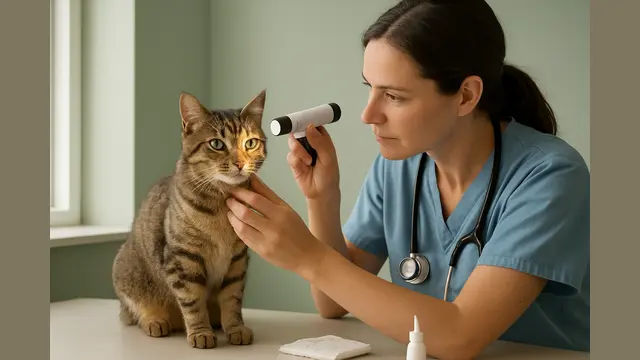
Do cats normally eat the mice they catch, and should I be concerned if mine ate one?
Some cats eat their catch. Learn when mouse bait means an urgent call, which signs need an emergency vet, and what to watch at meals and in the litter box.

In this guide (7 sections)
- Emergency clinic, phone call, or home monitoring?
- Check for mouse bait before counting how much your cat ate
- What if you found a mouse but didn’t see the catch?
- What to watch if your cat ate a mouse and seems fine
- Parasites are a separate question from poisoning
- Keep mice out without putting your cat in reach of a trap
- Talk it through with Vicky
Yes. Even a well-fed cat may eat part or all of a mouse; other cats chase, kill, or carry mice home without eating them. One mouse is not automatically an emergency, but if your cat may have eaten bait or you have reason to suspect the mouse was poisoned, call your veterinarian or an animal poison service now, even if your cat seems well.
Emergency clinic, phone call, or home monitoring?
| What’s happening | What to do |
|---|---|
| Your cat is struggling to breathe, has collapsed, is bleeding without an obvious explanation, or is having tremors or a seizure. | Go to an emergency veterinary clinic now. Do not wait to identify a poison or confirm that your cat ate the mouse. |
| Your cat looks normal, but you found chewed bait or saw it eat a mouse you suspect had eaten poison. | Call your vet, an emergency animal hospital, or an animal poison service now. They can tell you whether to come in before signs develop. |
| You have no reason to suspect poison, and your cat is eating and behaving normally. | Monitor at home. Check the next meals and litter-box visits. If your cat becomes unwell, contact your regular vet rather than waiting for a routine appointment. |
The distinction is whether you are watching a well cat after a catch or dealing with a possible poisoning. ASPCA Poison Control’s first steps for suspected poisoning include preventing further access, saving any available packaging, and getting help without waiting for symptoms.
Check for mouse bait before counting how much your cat ate
Start with where the hunt happened. Was bait put down in a kitchen cabinet, garage, or shed your cat can enter? Could your cat have eaten the bait itself? That question matters even if the mouse you found is still whole. If someone else handles pest control, ask what they used and where. If you already suspect exposure, make the call first; someone else can look for the package.
Some mouse poisons, called anticoagulants, interfere with blood clotting. A cat can be exposed by eating the bait directly or, less commonly, by eating a rodent that has fed on it. That second route is called secondary poisoning. The number of mice is not enough to settle the question: one catch does not prove poisoning, but “it was only one” does not rule it out either.
VCA’s guide to anticoagulant bait in cats explains why it is risky to wait for visible bleeding. The Merck Veterinary Manual notes that bleeding typically appears three to seven days after a toxic dose. Those are not days to spend watching a suspected exposure at home. They explain why a cat can eat dinner as usual and still need help.
Not every bait affects clotting. Bromethalin, for example, affects the nervous system and can cause tremors or seizures. That is why the clinic wants the active ingredient on the package rather than a description such as “mouse pellets.” If the label is handy, read it over the phone or take a photo to bring with you. Keep your cat away from the bait and the remains of the mouse. Do not try to make your cat vomit at home, including with hydrogen peroxide. Pet Poison Helpline’s advice for cats specifically warns against this.
What if you found a mouse but didn’t see the catch?
A cat walks into the kitchen carrying a mouse, drops it, and later returns to the food bowl. You know the cat handled the mouse. Unless you saw chewing or swallowing, you do not know it ate any. As Cats Protection explains about hunting, some cats bring prey home alive, some leave it dead, and others eat it. This is instinctive behavior and can happen in a home where a cat is well fed and carefully looked after.
If you need to call the clinic, describe what you saw: “I found half a mouse,” “I saw my cat swallow it,” or “My cat carried it in and let it go.” You do not need to turn a missing piece into an estimate of how much your cat ate. Give the time and location, whether your cat had access to bait, and how your cat is acting now. Those details help the clinic decide whether your cat needs an examination for this event or whether the catch belongs in a routine discussion about parasites.
What to watch if your cat ate a mouse and seems fine
If there is no particular reason to suspect poison, use your cat’s familiar routine as your guide over the next day or two. You do not need to guess whether a mouse “agreed” with your cat from the length of one nap. Look at these things together:
- Appetite. At the next usual meal, notice whether your cat actually eats. Walking up to the bowl and turning away is different from finishing dinner.
- Activity. Compare your cat with its usual self at the same time of day. Does it get up for a meal or join you as usual, or does it seem unusually tired and uninterested?
- Vomiting and bowel movements. If your cat vomits, note when it happens and whether it happens again. When you clean the litter box, look for diarrhea. If you have several cats and cannot tell whose stool it is, tell the clinic that rather than guessing.
Contact your regular veterinarian for an assessment if your cat vomits repeatedly, refuses food, seems unusually listless, or has vomiting along with diarrhea. Texas A&M’s guidance on feline vomiting explains why appetite, activity, and bowel movements matter alongside the vomiting itself. Report the changes without assuming the mouse caused them.
There is no 48-hour all-clear for every risk. The next few meals are useful for spotting digestive upset, not for ruling out poison or worms. If you later find chewed bait that your cat could have reached, call about that new information even if every meal and litter-box visit so far has been normal.
Parasites are a separate question from poisoning
An infected mouse can expose a cat to roundworms, tapeworms, or a parasite called Toxoplasma. Rodents can also carry bacteria that cause illness. Eating a mouse creates an opportunity for infection; it does not mean your cat has one. Conversely, a normal appetite does not prove your cat is parasite-free. The Companion Animal Parasite Council’s guide to tapeworms notes that many infected cats show no obvious illness.
If your cat is well, poison is not suspected, and your concern is worms, this is a useful topic for your regular veterinarian rather than an emergency poison call. Tell the clinic whether this was the first mouse you have seen your cat eat or whether you find catches most weeks. Have the name of any parasite preventive your cat receives. The practical question is whether hunting changes your cat’s parasite-care plan, not whether you can diagnose worms by looking at the mouse.
Keep mice out without putting your cat in reach of a trap
Start where you found the mouse. Check for gaps it could have used to enter, seal accessible entry points, and put away food mice can reach. If you need traps, a mechanical trap avoids introducing rodent poison, but its moving parts can still injure a cat. Place it where your cat cannot reach the mechanism, including with a paw. Behind a cabinet is out of sight, not necessarily out of reach.
If someone else sets the traps, show them where your cat goes, including cupboards and storage areas you sometimes leave open. Agree on a spot your cat cannot access before the trap is set. That is more dependable than expecting a cat that has already found one mouse to ignore the next one.
Talk it through with Vicky
If your cat seems well and poison is not suspected, you can tell Vicky what you are seeing right now, including what happened to the mouse and how your cat acted at its next meal. Vicky will bring in Dr. Ravi (Virtual DVM), our virtual feline-friendly general practice specialist, to help you sort out what to monitor and what to raise with your own vet.
Common questions
Would feeding my cat more stop it from hunting mice?
Not reliably. Even a cat that has finished a full meal may hunt, so a catch alone is not a reason to increase your cat’s portions.
What if my neighbor uses mouse poison but I don’t?
A neighbor’s use of bait does not by itself mean the mouse was poisoned. What matters is whether your cat could have reached the bait or you have a specific reason to think the mouse ate it. If either applies, call your veterinarian or an animal poison service now; do not wait for your neighbor to find the label.
Does my cat need a stool test or a dewormer after one mouse?
One catch does not establish that your cat has worms or tell you which treatment would help. Ask your regular vet whether a stool test or a change in parasite prevention makes sense, especially if your cat often eats its catch.
Who should clean the litter box if someone in my household is pregnant?
The CDC recommends daily litter-box cleaning. If possible, someone who is not pregnant or immunocompromised should do it; if that is not possible, the person cleaning the box should wear disposable gloves and wash their hands afterward.
Sources
- Cats Protection: Why do cats bring you dead animals?
- Animal Medical Center: My Cat Just Ate a Mouse! Should I Be Proud or Worried?
- VCA Animal Hospitals: Anticoagulant Rodenticide Poisoning in Cats
- Texas A&M Veterinary Medicine: When To Be Concerned About Feline Vomiting
- Texas A&M Veterinary Medicine: Put a “Paws” on Hunting: Keep Your Cat Safe From Rodent-Carried Disease
- Companion Animal Parasite Council: Tapeworms in Cats
- CDC Healthy Pets, Healthy People: Cats
- Why do cats bring you dead animals? — Cats Protection
- What to Do if Your Pet Is Poisoned — ASPCA Poison Control
- Anticoagulant Rodenticide Poisoning in Animals — Merck Veterinary Manual
- Bromethalin Rodenticide Poisoning in Cats — VCA Animal Hospitals
- My Cat Ate Something Toxic — What Should I Do? — Pet Poison Helpline