Why does my dog gag after a dry cough, and when should I call a vet?
Learn why a dry cough can end in a gag, what to watch for between fits, and when your dog needs a call to your regular vet or a trip to an emergency clinic.
In this guide (7 sections)
A hard, dry cough can irritate the back of your dog’s throat, where even a little mucus can trigger a final gag. If your dog is struggling to breathe, go to an emergency vet now. If breathing is comfortable but the cough keeps coming back, call your regular vet; call promptly if the cough is getting worse or your dog is unusually tired or eating less.
First, look at your dog’s breathing between coughs
When the hacking pauses, look at your dog rather than listening for the next cough. Can your dog draw breath comfortably and settle down, or are they still struggling to get air? You don’t need to identify the cause of the cough before acting on breathing trouble. Keep your dog calm and head for the emergency hospital. Don’t wait for another fit so you can record it. Cornell’s guide to breathing distress in dogs explains why difficulty breathing takes priority over the cough itself.
If it started during a treat or while playing with a toy, consider choking. A dog who suddenly paws at their mouth and struggles to draw breath may have something blocking the airway. Go to an emergency vet now; don’t put your fingers into a conscious dog’s mouth to search for an object. As Texas A&M’s choking guidance explains, you shouldn’t wait to hear a particular choking sound before acting.
Why a dry, hacking cough can end in a gag
Picture a dog who wakes up, hacks several times, gags once, then swallows. From across the room, the gag may be the part you notice most. Up close, the useful detail is that the cough came first. The force of coughing can irritate the throat, and mucus left there can set off the gag reflex. “Dry” describes the sound of the cough; it doesn’t mean there’s no mucus in the throat.
You might find a little saliva afterward, or nothing at all if your dog swallowed. That’s different from bringing up food or other stomach contents. It’s also different from repeatedly heaving as though trying to vomit without producing anything. The advice below about watching a brief cough at home is for a bout of hacking that ends in a gag, not for repeated unsuccessful attempts to vomit.
Even a careful owner can find the movements hard to tell apart. PetMD’s explanation of coughing and gagging describes how a video can help. The sequence helps your vet understand what you saw, but a cough that comes first is not proof that the cause is mild.
When can you watch, and when should you call your vet?
One brief fit that has stopped: If your dog is breathing comfortably and behaving as usual, note when it happened and watch for another episode. There’s a useful difference between “it happened once last night” and “it happened several times last night, but my dog was fine at breakfast.” In the second case, the dog feels well enough to eat, but the cough is recurring. Tell your clinic both things.
Fits that keep returning or don’t settle: Call your regular vet to discuss an exam, even if your dog seems comfortable between fits. Tell the clinic when the cough began and whether the breaks between fits are getting shorter. A recurring cough doesn’t automatically mean an emergency visit. VCA’s urgent-care guide distinguishes coughing that needs assessment from shortness of breath that needs emergency care.
A worsening cough or a dog who feels ill: Call your clinic promptly if your dog is coughing more and more, loses interest in meals, has much less energy than usual, or has a fever. Mention any nasal discharge, too. These details can change what your vet needs to check for, including pneumonia, an infection in the lungs. MSPCA-Angell’s kennel cough guide explains why appetite and energy matter alongside the cough. Tell the clinic your dog’s age and whether they already have a health problem, especially if you’re calling about a puppy or a dog with weakened immunity.
What the timing and triggers can tell your vet
The gag helps explain how a coughing fit ends. To work out why it started, your vet will want a little history. Three patterns are particularly useful to describe:
- A new cough after time with other dogs. Mention recent boarding, daycare, or close contact with another dog. That history can point toward a contagious respiratory infection such as kennel cough, even though it can’t confirm one. Texas A&M’s guide to kennel cough after social contact explains why your vet will ask where your dog has been.
- A honk when a small dog gets excited or pulls on the leash. One possible cause is tracheal collapse, which means the windpipe narrows. If every fit you’ve noticed has started when the leash went tight, mention that rather than trying to reproduce the noise for your vet. A honking sound alone doesn’t establish a windpipe problem.
- Coughing at rest or without a clear trigger. Say so rather than guessing at a cause. Infections, windpipe problems, and heart disease can all cause coughing. Washington State University’s guide to the coughing dog describes how timing and triggers help a veterinarian sort through the possibilities. The final gag by itself doesn’t distinguish a heart problem from an airway problem.
What to record for the appointment
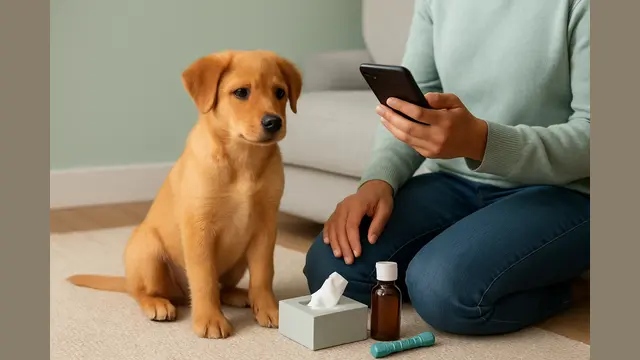
If your dog is comfortable and a fit happens while you’re nearby, a short video with sound is useful. Try to capture the last cough, the gag or swallow, and how your dog breathes afterward. You don’t need a perfect recording, and you shouldn’t put off a call to get one. If the episode is over, jot down these four details instead:
- What your dog was doing beforehand. Were they resting, walking on the leash, greeting someone, or chewing? If you heard the noise from another room and missed the start, that’s useful to say, too.
- What happened in order. Describe the hacks, the gag, and anything that came up. “Several hacks, one gag, then a little saliva” gives the clinic more to work with than “sounded sick.”
- How your dog was afterward. Start with breathing. Then say whether your dog settled, ate their usual meal, and showed their usual interest in you or in play.
- What has changed since the first fit. Give the time of the first episode you noticed and a rough count of later ones. Note whether the cough itself is worsening or whether something else, such as a drop in appetite, is new.
Tell the staff about the cough before entering the waiting room. If an infection is possible, they can tell you where to wait to avoid exposing other dogs. PDSA’s kennel cough advice recommends alerting the clinic and waiting outside rather than walking a coughing dog into a shared waiting area.
What to watch over the next few days
If your vet recommends monitoring at home, ask what improvement to look for and when they want an update. Use the first day as your point of comparison: are the fits becoming less frequent, is your dog comfortable in between, and are meals and activity back to normal? Whether your dog gags at the end of every fit is less useful than that overall pattern.
If the cough is worsening or your dog starts feeling ill, call back rather than waiting for the planned update. If your dog starts struggling to breathe, the plan changes: go to an emergency hospital.
Talk it through with Vicky
If your dog is breathing comfortably, you can tell Vicky what you’re seeing right now, including what came first and how your dog acts when the coughing stops. Vicky will bring in Dr. Andy (Virtual DVM), our general practice veterinarian, to help you sort through those details and decide what to discuss with your clinic.
Common questions
Does a little white foam after a dry cough mean my dog threw up?
Not necessarily. A little saliva or mucus can come out with the final gag. Tell your vet what happened before the foam appeared rather than relying on its color to identify it as vomit.
Why does the cough seem to happen mainly at night or after drinking?
Timing is a clue, not a diagnosis. Notice whether the coughing wakes your dog from sleep or starts after your dog has already gotten up for water. Those are different observations, though both are easy to describe as a nighttime cough.
Should I keep my dog away from other dogs if the cough is mild?
While you’re checking with your vet about a possible respiratory infection, skip daycare, dog parks, and close contact with other dogs. A mild cough can still have an infectious cause. Ask your clinic when your dog can return to group activities.
Can I give my dog cough medicine while I wait for the appointment?
Don’t give human cough syrup or cold medicine unless your veterinarian advises using that specific product. If you want to ask about a medicine you already have, read your clinic the full ingredient list rather than giving the brand name alone.
Sources
- Why Is My Dog Coughing and Gagging? — PetMD
- Recognizing and responding to canine respiratory distress — Cornell University College of Veterinary Medicine
- First aid for choking — PDSA
- Gastric dilatation volvulus (GDV) or “bloat” — Cornell University College of Veterinary Medicine
- Runny Nose, Coughing or Sneezing — VCA Animal Hospitals Urgent Care
- Kennel Cough — MSPCA-Angell
- Summer Socializing? What Owners Need To Know About Kennel Cough In Dogs — Texas A&M Veterinary Medicine
- The coughing dog — Washington State University Veterinary Teaching Hospital
- Kennel Cough — PDSA
- Are over-the-counter medications safe for my dog? — VCA Animal Hospitals
- When to Go to the ER — Cornell University Riney Canine Health Center
- Prepared, Not Panicked: An Owner’s Guide to Choking Emergency Responses — Texas A&M Veterinary Medicine