How do cats get intestinal worms, and how can I lower my cat's risk?
Learn how soil, fleas, and mice expose cats to intestinal worms, what to do if you spot rice-like pieces, and which steps help prevent another infection.

In this guide (7 sections)
- How soil, fleas, and prey expose cats to worms
- Where to look for risk in an indoor cat or kitten
- Three practical changes that reduce exposure
- What to do if you see rice-like pieces near the tail
- What treatment can do, and what to watch for afterward
- How to protect people without deep-cleaning everything
- Talk it through with Vicky
Cats can get intestinal worms by swallowing worm eggs from contaminated soil, eating infected prey, or swallowing an infected flea while grooming. To lower your cat’s risk, scoop the litter box daily, limit access to rodents, and ask your vet about flea control. If you already see what looks like a worm, ask about treatment, too: preventing the next infection and treating the one your cat has are different jobs.
How soil, fleas, and prey expose cats to worms
Roundworm eggs take time to become infectious. A cat with roundworms can pass eggs in its stool. The eggs have to mature in the environment before another cat can become infected by swallowing them. For example, a cat can walk through contaminated soil, then lick that soil off a paw. This is why removing feces promptly matters more than being able to tell by eye whether the stool contains worms. The Cornell Feline Health Center’s guide to intestinal parasites explains how this cycle works.
For tapeworms, it matters what the cat swallowed. One common tapeworm, Dipylidium, reaches a cat inside an infected flea. It’s swallowing the flea during grooming, not the flea bite, that passes the worm to the cat. Another tapeworm, Taenia, reaches cats when they eat an infected mouse or rat. Rodents can expose cats to roundworms, too. The Merck Veterinary Manual’s guide to tapeworms distinguishes the flea route from the prey route. Flea control addresses the first; it won’t protect a cat that eats an infected mouse.
Where to look for risk in an indoor cat or kitten
Think about what your cat can reach, not only whether they go outdoors. An apartment cat that catches a mouse in the kitchen has had contact with prey. A cat that never hunts can still swallow a flea. Either can happen in a well-cared-for home. You don’t have to find a flea or prove that your cat ate the mouse before mentioning either possibility to your vet.
For a newly adopted kitten, separate what you know from what happened before adoption. “Indoors since I brought her home” is useful information. So are the kitten’s age, whether she’s still nursing, and any records for her or her mother. If a record says “dewormed,” look for the product name and date. Those details let your clinic check what the kitten received rather than assume it covered every intestinal worm.
Three practical changes that reduce exposure
- Remove stool daily, even when it looks normal. Scoop the litter box, dispose of the feces promptly, and wash your hands when you finish. If cats also use a patch of your yard as a toilet, pick up feces there rather than leaving them in the soil. The goal is to remove a source of roundworm eggs before the eggs have time to mature. Waiting until you see a worm misses the point.
- Make flea control specific to your household. Tell your vet which pets live with your cat, what each one uses for fleas, and when each product was last given. If you’re unsure of a name, take a picture of the package. Ask for a plan suited to your cat and instructions for the other pets, rather than assuming the same product belongs on all of them.
- Look for actual opportunities to hunt. Outdoors, limiting hunting reduces the chance that your cat will eat infected prey. Indoors, pay attention to where your cat finds mice. If a mouse got into a pantry or through a gap under a cabinet, blocking your cat’s access while you address the entry point does more for that exposure than changing the litter.
What to do if you see rice-like pieces near the tail
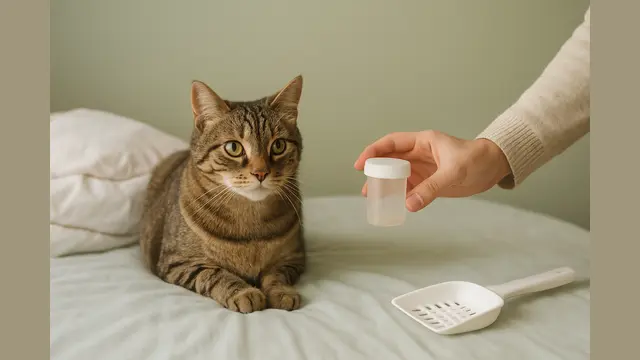
Small, pale pieces that resemble grains of rice around your cat’s anus or on a favorite sleeping spot may be tapeworm segments. A segment is a piece of the worm, not an individual egg. If you can, photograph what you see and note where and when you found it. Call your clinic and ask whether they want the piece itself, a stool sample, or both. Follow their collection instructions.
Mention the pieces even if a recent stool test was negative. A routine fecal exam checks stool for signs of parasites. Tapeworm eggs can stay inside segments, so the portion of stool examined may not contain them. Your observation gives your vet a reason to consider tapeworms that the sample alone might not provide. The reverse matters, too: a litter box with no visible worms doesn’t tell you that your cat is free of intestinal parasites.
If your cat seems unwell, tell the clinic what has changed and ask how soon your cat should be seen. Don’t wait to find a segment or collect a perfect sample before calling. If you’re asking about prevention and your cat is well, bring the exposure history and product names to your next routine visit so you can agree on a testing plan.
What treatment can do, and what to watch for afterward
If your vet identifies a tapeworm, ask two questions: What treats this worm now? What will help keep my cat from getting it again? Purdue University’s tapeworm guidance explains why treatment for the worm and control of fleas go together for flea-associated tapeworms. Getting rid of fleas serves a different purpose from giving a medicine that treats an existing tapeworm.
Before you leave, ask what you should expect to see over the next few days and when your clinic wants an update or another sample. If rice-like pieces appear again, write down the date and take a fresh photo. Tell the clinic which treatment your cat received, whether flea control has continued, and whether your cat has caught any rodents since then. Those details are more useful than guessing that the medicine failed. Check with your vet before repeating a treatment.
How to protect people without deep-cleaning everything
Focus on the route that matters. People can swallow mature roundworm eggs when contaminated soil gets from hands to mouth. Have children wash their hands after playing in soil and before eating. For adults, wear gloves when gardening and wash up afterward, especially if animals use the area as a toilet. Texas A&M’s guide to infections pets and people can share explains the link between soil exposure and hand hygiene.
If you find a suspected segment on bedding, remove it, clean the soiled bedding, and wash your hands. Then turn your attention back to the cat. Washing a blanket won’t treat a tapeworm or stop your cat from swallowing another infected flea. For everyday prevention, Texas A&M’s household parasite guidance emphasizes manageable habits: scoop daily, dispose of feces promptly, and wash your hands after cleanup.
Talk it through with Vicky
You can tell Vicky what you’re seeing right now, whether that’s a rice-like piece under your cat’s tail, a mouse your indoor cat caught, or a kitten’s treatment record you’re unsure about. Vicky will bring in Dr. Ravi (Virtual DVM), our feline-friendly general practice veterinarian, to help you sort out which details matter and what to ask your clinic.
Common questions
Can my other cat catch worms from the same litter box?
Sharing the box is not how the flea tapeworm passes between cats; each cat would have to swallow an infected flea. Roundworms are different: their eggs pass in feces and need time in the environment to become infectious. Scoop daily and tell your vet about both cats’ exposures.
Can my child get the flea tapeworm from a cat sleeping on their bed?
Sleeping next to the cat is not the route of infection. A person would have to accidentally swallow an infected flea. If you find suspected segments on the bed, clean the bedding and ask your vet about tapeworm treatment and household flea control.
Does my cat’s monthly flea medicine treat tapeworms it already has?
Don’t assume it does. A monthly schedule tells you when a product is given, not which parasites it treats. Give your vet the exact product name and ask whether it treats the suspected tapeworm or whether your cat needs a separate treatment.
How often should my kitten or adult cat have a stool test or be dewormed?
Ask your vet for two specific dates: when the next stool sample is due and when any recommended treatment is due. Include your cat’s age, previous test and treatment records, flea history, and access to prey so the plan fits your cat rather than relying on whether you see worms.