How much plain pumpkin can I safely add to my cat’s food?
Offer a small taste of plain pumpkin in wet cat food. Learn which purée to buy, what to do if stool gets loose, and when to call your veterinarian.
In this guide (8 sections)
- When a taste of pumpkin makes sense
- Which pumpkin can cats eat?
- How to try pumpkin without wasting a meal
- What if your cat has diarrhea?
- Why more pumpkin isn’t always better for hard stool
- Straining to pee is an emergency, not a feeding problem
- What to tell your clinic about a stool change
- Talk it through with Vicky
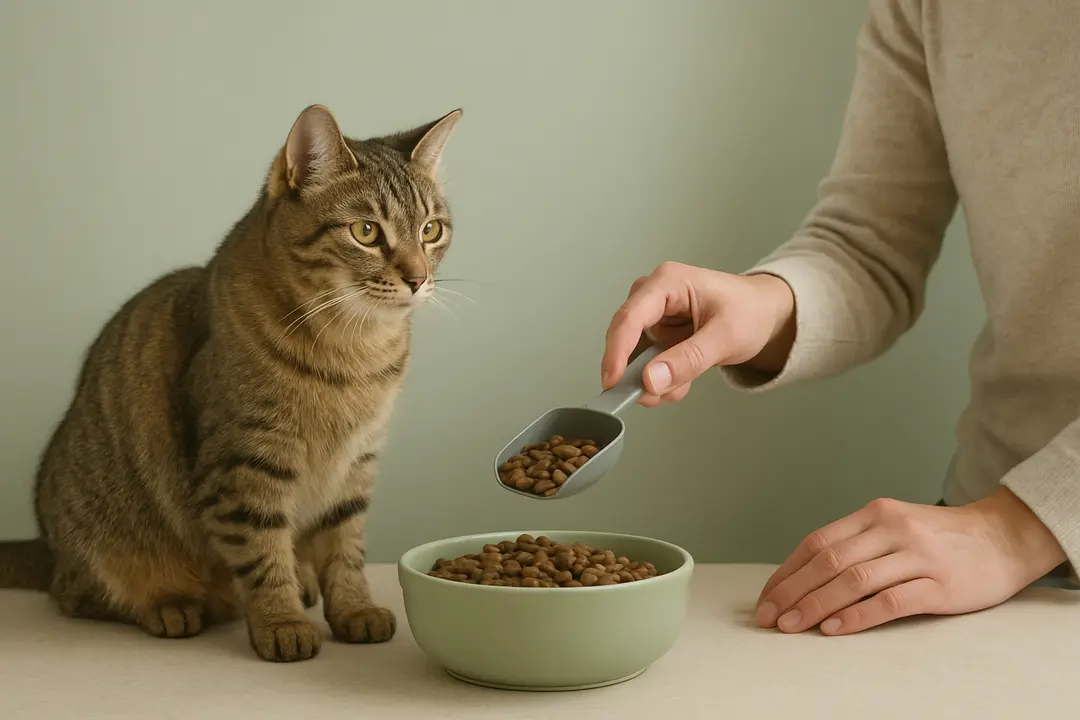
For a healthy adult cat, start with a small dab of plain pumpkin purée stirred into a bite of their usual wet food. Think of a taste on the tip of a spoon, not a spoonful your cat needs to finish: there’s no established teaspoon serving that’s right for every cat. If you’re considering pumpkin because your cat already has diarrhea or is struggling to pass stool, ask your veterinarian about the symptom before adding it.
When a taste of pumpkin makes sense
If your cat is eating normally and passing their usual stool, pumpkin is an optional treat. The goal is to see whether your cat likes it, not to reach a daily fiber target. Banfield’s guidance on pumpkin treats is to introduce pumpkin in small amounts. Cats don’t need it regularly. If your cat has a chronic health condition or eats a special diet, check with your vet before changing what goes into the bowl.
If a litter-box change prompted the question, the most useful thing you can do first is notice what your cat is passing. Loose stool calls for different advice than hard pellets. Repeated squatting with little or no urine is different from either one: go to an emergency veterinarian now rather than trying pumpkin for suspected constipation.
Which pumpkin can cats eat?
For canned pumpkin, the ingredient list is a better guide than the picture on the front. Look for pumpkin as the only ingredient. A can of 100% pumpkin purée is suitable even if the label shows a slice of pie. A can of pumpkin pie filling with sugar and spices is not the same food. If you have filling rather than plain purée, leave it out of your cat’s meal.
You can also use fresh pumpkin. Set aside a piece of the plain, cooked flesh before seasoning your own food. Mash the soft flesh so a dab will mix into wet cat food; leave out the tough rind and the seeds. The Pet Poison Helpline’s guide to fall foods identifies cooked flesh and plain purée as the parts to offer. You don’t need to buy anything labeled specifically for cats to give this kind of treat.
How to try pumpkin without wasting a meal
- Set aside a little of your cat’s usual wet food. Use a separate dish or one side of the plate. Keep most of the meal plain. That way, if your cat doesn’t like the pumpkin, they still have their familiar, complete and balanced food to eat.
- Stir the dab of purée into the small portion. Don’t use a weight chart to turn that first taste into a fixed serving. Your cat’s weight doesn’t tell you whether they’ll enjoy pumpkin or whether their stool will become loose after eating it.
- Let your cat decide whether to eat it. If they sniff the mixture and walk away, offer the plain food. If they lick around the pumpkin, there’s no need to estimate what they missed or hide more in the rest of the meal. Whether they’ll still eat their familiar food is more useful to know than exactly how much pumpkin they swallowed.
- Keep the next meals familiar. Trying a topper at breakfast doesn’t mean adding it again each time you open a can of cat food. Notice your cat’s appetite and what their next stool looks like. PetMD’s guide to pumpkin for cats notes that too much can cause diarrhea. If the stool becomes looser, leave the pumpkin out rather than adding more.
For example, say your cat eats several small meals and leaves half the pumpkin mixture behind at breakfast. Give their normal lunch. You haven’t missed part of a feeding plan: the regular cat food is the meal, and the pumpkin was an optional taste. There’s no benefit to persuading a cat who dislikes it to finish the portion.
What if your cat has diarrhea?
The order of events matters. If the stool was normal before the first taste but loose afterward, stop the pumpkin and note whether the change continues on your cat’s usual food. The timing is useful information, though it doesn’t prove that pumpkin caused the problem. If the diarrhea started before you offered pumpkin, consult your vet instead of working out how much to mix into dinner.
Diarrhea that persists or keeps coming back deserves a call to your veterinarian. It can be a sign of an underlying illness, as the Cornell Feline Health Center’s guide to diarrhea explains. If your cat also vomits, eats less than usual or seems unusually tired, say so when you call. Persistent diarrhea with any of those changes is a health concern, not a routine question about a topper. Don’t wait for a different serving of pumpkin to fix it.
Why more pumpkin isn’t always better for hard stool
If your cat is passing small, hard pellets, crying while trying to poop or making repeated efforts to pass stool, contact your regular veterinarian promptly. PDSA’s guide to constipation in cats describes these as signs of difficulty. Tell the clinic if your cat is still passing urine normally. If you can’t tell, don’t assume the straining is an effort to poop.
Pumpkin contains dietary fiber, which adds bulk to stool. Whether that helps depends in part on whether your cat has enough fluid in their body. The Merck Veterinary Manual’s guidance on constipation explains that if an animal is dehydrated, added fiber can make stool pack more tightly instead of helping it pass. Mixing the pumpkin into moist food doesn’t tell you whether your cat is well hydrated. Your vet can assess that and decide whether fiber is appropriate or whether stuck stool needs treatment.
Straining to pee is an emergency, not a feeding problem
From across the room, a cat trying to pee can look like a cat trying to poop. If your cat repeatedly tries to urinate and passes only drops or nothing, go to an emergency vet now. If your cat keeps straining and you can’t tell whether urine is coming out, call the emergency clinic right away. Don’t wait for another litter-box visit to be sure.
The concern is a urethral obstruction, meaning a blockage in the tube that carries urine out of the body. Cornell’s guide to feline urinary problems describes repeated efforts with little or no urine as a possible sign. The American College of Veterinary Surgeons explains the danger of urinary blockage in male cats: a complete blockage is life-threatening. Tell the emergency team what you actually saw, such as repeated squatting with only a few drops. You don’t need to know the cause before seeking help.
What to tell your clinic about a stool change
Start with what changed and when, rather than with how much pumpkin you think your cat needs. Describe the stool, whether it took repeated attempts to pass it, and whether the problem started before or after the pumpkin. Mention appetite, vomiting and any change in energy. If you offered pumpkin, keep the ingredient list handy and distinguish what you offered from what your cat ate. “There was a dab in the food, but most of the food was left” is more useful than guessing at a precise measurement.
Talk it through with Vicky
For help with a feeding question, you can tell Vicky what you’re seeing right now. Share what your cat usually eats, which pumpkin you have and whether you want to offer a treat or have noticed a change in stool. Vicky will bring in Sam (Virtual PhD (Animal Nutrition)), our animal nutritionist, to help you decide whether pumpkin fits your cat’s meals.
Common questions
If my vet recommends a measured amount, is that per day or per meal?
An amount labeled “per day” is the total for the day, not an amount to repeat at every meal. If the instructions don’t specify, ask your clinic to clarify both the amount and how often to offer it. On a measuring spoon, tsp means teaspoon and Tbsp means tablespoon.
Does my cat need extra pumpkin if their usual food already contains it?
No. Cats don’t need a daily serving of pumpkin, so there’s no target to reach by adding more. If you’re concerned about a change in stool, ask your vet about the change rather than adjusting the pumpkin.
Can I work out a kitten’s pumpkin portion by weight?
There isn’t an established treat serving here to scale down from an adult cat. Ask your vet whether pumpkin fits your kitten’s diet rather than calculating a portion from body weight.
Does the same advice apply to pumpkin powder or a pet pumpkin supplement?
This advice is for plain cooked pumpkin flesh or purée only. If you’re considering a supplement for a digestive problem, ask your veterinarian about the symptom and show them the product label.
How soon should I expect pumpkin to change my cat’s stool?
If you’re offering a treat to a healthy cat, there’s no stool change you need to see. If your cat already has diarrhea or difficulty passing stool, get veterinary advice rather than waiting for pumpkin to take effect.
Sources
- Halloween pumpkin treats for dogs and cats — Banfield Pet Hospital
- Can Cats Eat Pumpkin? — PetMD
- Friendly Fall Foods — Pet Poison Helpline
- Constipation, Obstipation, and Megacolon in Small Animals — Merck Veterinary Manual
- Diarrhea — Cornell Feline Health Center
- Constipation in cats — PDSA
- Feline Lower Urinary Tract Disease — Cornell Feline Health Center
- Urinary Obstruction in Male Cats — American College of Veterinary Surgeons
- Constipation, Obstipation, and Megacolon in Small Animals — MSD Veterinary Manual
- Urinary Stones — American College of Veterinary Surgeons