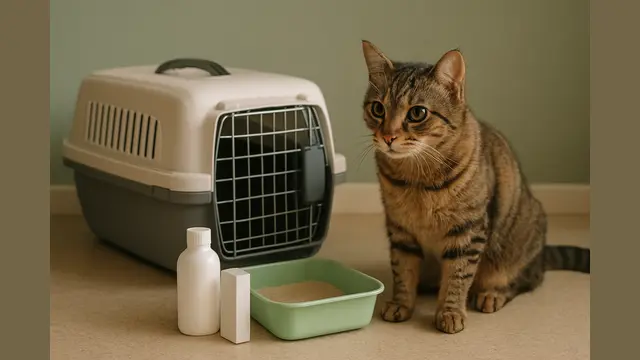
How can I teach my kitten to use the litter box?
Choose a litter box your kitten can reach, learn how to introduce it, and tell the difference between a training accident and urgent trouble peeing.
In this guide (6 sections)
For a weaned kitten, set up a low, open litter box in one room and show them where it is as soon as you get home. Let your kitten explore, then give them access to more of the house once they can find and use the box on their own. For a baby kitten, first check whether they can pee and poop without help.
A missed box is different from an inability to pee. If your kitten keeps squatting or straining and produces only drops, no urine, or you can't tell whether any urine is coming out, go to an emergency veterinarian now. Don't wait to try a different litter box.
When is a kitten old enough to start litter training?
Kittens generally begin peeing and pooping on their own around 3 to 4 weeks of age. Before that, their mother stimulates them to go. If you're caring for an orphan, they may still need you to provide that help while they're learning to use a tray. If no one has shown you how, ask your veterinarian to walk you through it.
Around 3 weeks, offer a shallow tray with non-clumping litter, as described in the Alley Cat Allies guide to three-week-old kittens. For an orphan, look at what happens after they climb in. Getting into the tray and pawing at the litter are not the same as passing pee and poop independently. Don't stop helping based on a birthday alone. If you've seen your kitten pee on their own but aren't sure about poop, tell your vet exactly that.
With a weaned kitten who already goes without help, you have a different task. Even if they used a box in their previous home, they still need to learn where to find one in yours.
Set up a litter box your kitten can use without help
- Check the entrance from floor level. Choose an uncovered tray with a low edge your kitten can step over without jumping. Look at the space inside, too: can they turn around comfortably? A roomy box with a tall lip can work when you lift the kitten into it but be out of reach when they're playing on the floor.
- Choose litter by age first. The ASPCA's foster kitten supply guide recommends non-clumping litter for kittens under 4 months, because kittens may swallow it. That includes weaned kittens in that age group, not only babies taking their first steps into a pan. Look for an unscented option.
- Ask what your kitten has used before. If the shelter's or breeder's litter is suitable for your kitten's age, you can start with that type. If you later want to switch, make the change gradually, as the PDSA kitten checklist advises. There's no need to keep using clumping litter for a young kitten for the sake of familiarity.
- Walk the route to the tray. Choose a quiet spot away from food, water, and noisy appliances. Check that the door will stay open and that another cat isn't sitting in the only way through. A tray in the laundry room may be easy for you to reach but a poor choice for a kitten who has to pass a running washer to get there.
Show your kitten the box, then watch for the return trip
Start in one kitten-safe room. When you bring your kitten home, put them down beside the box and let them investigate. They don't need to pee or poop on that first visit. The aim is to show them the entrance and give them a chance to step in and out by themselves. This is the starting approach in VCA's kitten litter-training guide.
When your kitten looks ready to go, offer the tray again. Let them leave rather than holding them there until something happens. If they use it, wait until they're finished and give quiet praise. If you find an accident later, don't scold your kitten or make them sniff the spot. Clean it up and check what might have made that place easier to use than the tray.
The milestone to watch for is the return trip. A kitten who uses the box when placed beside it has shown they can use that tray. A kitten who leaves their play area, walks back to the box, and uses it regularly has also learned where it is. Once you see that pattern, open up more of the home. Leave the original tray in its familiar spot and check the route back from each new area.
What to change if your kitten keeps missing the box
Accidents happen even in carefully prepared homes. Before buying a different litter or moving every tray, look for a pattern. Where did your kitten go? Was it pee, poop, or both? Did they pass it outside the box, or did you see them trying to go without success? That last distinction matters more than which corner they chose.
| What you notice | What to do with that clue |
|---|---|
| Your kitten repeatedly uses one corner. | Put a second low tray in that spot. Keep the first one available if your kitten also uses it. PDSA's litter-training guide recommends trying a tray where the cat already chooses to go. |
| The room changes, but the surface stays the same. | Notice whether each accident is on fabric or carpet, for example. That pattern is worth telling your vet about; it gives you more information than a list of rooms alone. |
| The misses started when you opened up another part of the house. | Follow the route from that area to the tray. Check for a closed door, stairs, or a box with a high edge. Give your kitten a reachable tray or return to the smaller starting area while they learn. |
Scoop the box at least daily, wash the tray regularly, and use an enzymatic pet cleaner made for urine or stool on accident spots. As you clean, notice which boxes contain pee and which contain poop. If you have two kittens, waste in a shared box tells you that one of them used it. It doesn't tell you whether the kitten you're concerned about passed urine.
When to call your vet about litter box accidents
Call your regular veterinarian if accidents persist or begin after your kitten was using the box reliably. Choosing carpet can reflect a surface preference, but it doesn't rule out illness. Pain while peeing and digestive problems can both lead a cat to go outside the box, as the Cornell Feline Health Center's guide to house soiling explains. Your vet can check for a medical cause rather than assuming your kitten needs more training.
Tell the clinic your kitten's age, when the change started, and whether you've actually seen them pass pee and poop. Describe what you saw rather than trying to name the problem. Finding a puddle beside the tray is different from watching a kitten squat several times without leaving one. If several cats share the box and you're not sure whose pee you found, say so.
Go to an emergency veterinarian now for repeated straining with drops, no urine, or uncertain urine output. A blockage in the tube that carries urine out of the body can be life-threatening. Straining to pee can look like constipation; you don't have to work out which it is before leaving. Both Cornell's urinary tract disease guide and the Schwarzman Animal Medical Center's guide to urinary blockage explain why difficulty passing urine needs immediate assessment.
Talk it through with Vicky
If your kitten is passing pee and poop but hasn't settled into using the box, you can tell Vicky what you're seeing right now. Describe how your kitten gets into the tray and where you're finding accidents. Vicky will bring in Dr. Hana (Virtual DVM, DACVB), our veterinary behaviorist, to help you choose what to change first.
Common questions
Do two kittens need separate litter boxes, and should I put one upstairs?
Aim for one box per cat plus one extra, so two kittens have three boxes to choose from. In a home with more than one floor, put a box on each floor. You don't need to assign boxes, but do check that both kittens can step into them without help.
Should I put my kitten in the box after every meal or show them how to dig?
You don't need to work by the clock or move your kitten's paws. Show them the tray on arrival, offer it again when they look ready to go, and give them room to explore or leave.
Why does my kitten pee in the tray but poop somewhere else?
Peeing in the tray tells you your kitten knows where it is, but not why they go elsewhere to poop. A particular spot or surface may appeal to them, or a digestive problem may be involved. If it keeps happening or is a new change, tell your vet it's the poop, not the pee, you're finding outside the box.
How many days should litter training take?
Use consistency rather than a set number of days. Before giving your kitten more space, look for them to find the tray from different spots in their starting room and use it regularly without being carried there.
Sources
- How Old Is That Kitten? Kitten Guide: Three Weeks — Alley Cat Allies
- Kitten Constipation — PetMD
- Supply List and Tips for Foster Kittens — ASPCApro
- How to Litter Train Your Kitten — VCA Animal Hospitals
- How to Litter Train Your Cat — PDSA
- Feline Behavior Problems: House Soiling — Cornell Feline Health Center
- Feline Lower Urinary Tract Disease — Cornell Feline Health Center
- Urethral Obstruction in Cats — Schwarzman Animal Medical Center
- PDSA — Kitten Checklist