
What are the signs of chocolate poisoning in dogs, and can a dog be at risk before signs appear?
Chocolate poisoning can cause vomiting, pacing, or tremors, but signs may be delayed. Learn when to go straight to the ER and what to tell your vet now.
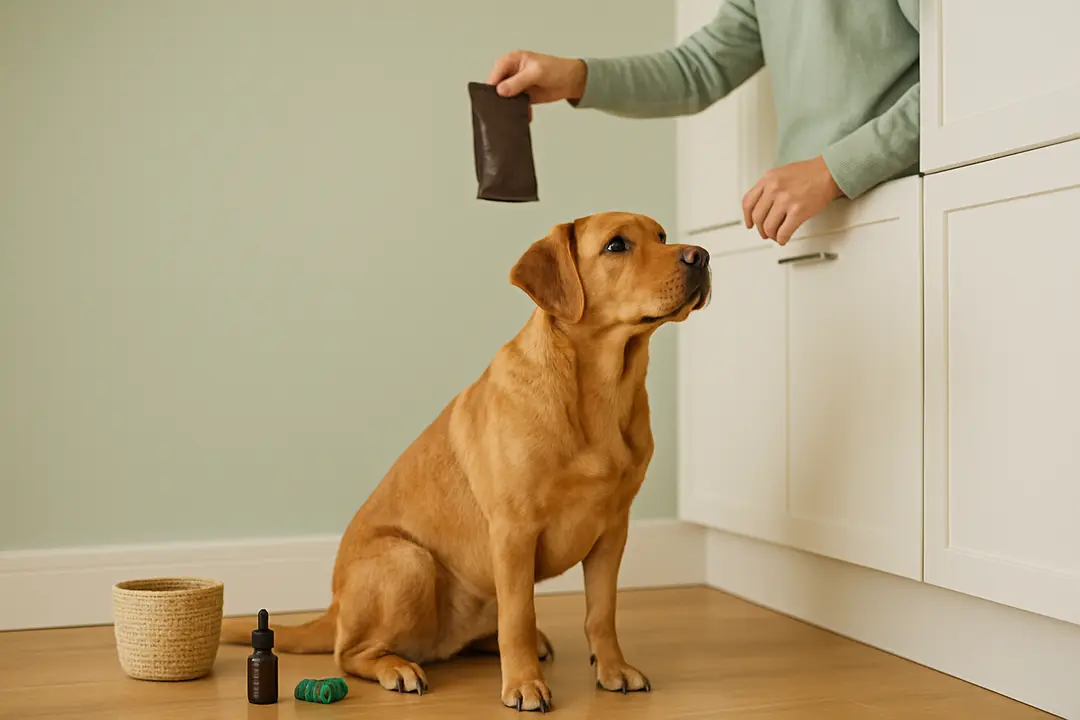
In this guide (8 sections)
- Get urgent help
- What chocolate poisoning can look like at home
- How long after eating chocolate can signs start?
- Why the chocolate type, amount, and your dog's size matter
- What to tell your veterinarian or animal poison control
- What the clinic can do before signs appear
- What to expect over the next few days
- Talk it through with Vicky
Get urgent help
Yes—call your veterinarian or an animal poison control service now if your dog may have eaten chocolate, even if they look well. A dog can eat a dangerous amount and still play normally for hours. Vomiting, panting, pacing, increased thirst, or more frequent urination may be the first changes you notice.
Go straight to an emergency veterinary hospital if your dog:
- Is struggling to breathe.
- Has muscle tremors, is stumbling, or cannot walk steadily.
- Has a seizure, collapses, or loses consciousness.
Don't wait for vomiting or a second sign. If someone is with you, they can call the hospital while you head there. Take the packaging if it's handy, but don't delay to find it. The ASPCA's poisoning guidance advises calling about a suspected exposure even when a pet looks well.
Do not try to make your dog vomit unless a veterinarian specifically tells you to. That includes giving hydrogen peroxide. VCA's guide to suspected poisoning explains when to go directly to a hospital and why to get advice before trying to induce vomiting.
What chocolate poisoning can look like at home
You don't have to decide whether a change is definitely due to chocolate. Tell the clinic what's different from your dog's usual behavior. These observations are useful:
| What you notice | What to tell the clinic |
|---|---|
| Stomach upset | Say whether your dog has vomited or had diarrhea, when it started, and whether it happened more than once. |
| Pacing or panting | Describe what your dog is doing: getting up each time they lie down, walking from room to room, or panting while resting. If it looks like work to draw a breath, go straight in. |
| More thirst or urination | Mention repeated trips to the water bowl or requests to go outside again soon after urinating. You don't need to measure the water first. |
| Shaking or trouble walking | Restlessness is not the same as losing control of movement. If your dog's muscles are trembling or they can't keep their footing, go to the emergency hospital. |
One important change you may not see is an abnormal heartbeat. An alert dog can look right at you without giving you any clue about their heart rhythm. Don't spend time trying to count a pulse to decide whether to call. VCA's overview of chocolate poisoning in dogs describes both the outward signs and the effects on the heart.
How long after eating chocolate can signs start?
Signs can begin as early as about two hours after a dog eats chocolate, as described by Cornell's College of Veterinary Medicine and Washington State University's veterinary hospital. They often take 6 to 12 hours to appear. That later window is common, not a promise that your dog will look well until then or be safe afterward.
Suppose you come home to find a torn wrapper beside a dog who greets you as usual. You know when you found the wrapper, but not when your dog got into it. Report both the last time you saw the chocolate intact and the time you found it missing. “It could have been any time this afternoon” is more useful than picking an exact time that might be wrong.
Pet Poison Helpline's advice for a dog that seems fine explains why that distinction matters: a dog may need early treatment before anything looks wrong at home. Call when you discover the possible exposure, rather than setting an alarm to check for symptoms overnight.
Why the chocolate type, amount, and your dog's size matter
Chocolate contains stimulants called theobromine and caffeine. What matters is how much your dog may have swallowed relative to their body weight. The same piece represents a larger exposure for a small dog than for a large one. Size alone can't settle the question, though: the clinic also needs to know what was eaten.
Cocoa powder, unsweetened baking chocolate, and dark chocolate are generally more concentrated than milk chocolate. If you have the label, read the type from it rather than trying to identify chocolate by color. With a cookie or cake, there's another question: how much of the missing food was actually chocolate? An ounce of brownie is not an ounce of cocoa powder.
You don't need to turn those details into a home calculation. Give the clinic the information you have, and distinguish what you saw your dog eat from what could be missing. That lets the team assess the exposure without treating a guess as a measurement.
What to tell your veterinarian or animal poison control
Start with your dog's condition right now. “She's alert and walking normally” is useful information, as is “She's vomited twice and can't settle.” Then work through these details with the person taking your call:
- Your dog's weight. Give the most recent weight you know and say whether it's in pounds or kilograms. If it's approximate, say so. There's no need to delay the call to weigh your dog.
- The product or recipe. Keep the wrapper or ingredient list available. For homemade food, a recipe can identify whether the baker used cocoa powder, melted chocolate, chips, or a combination. It can also help the clinic check for other ingredients of concern.
- The amount possibly eaten. For a bar, give the package weight and the number of squares missing. Say if the bar was already partly eaten. For baked goods, describe the number and size of the missing pieces rather than guessing their chocolate content.
- The time and any changes since. Say whether you saw the ingestion or are giving a time range. If signs have started, distinguish the time you first noticed them from the time the chocolate might have been eaten.
These are the details the ASPCA's chocolate exposure guide for veterinary teams uses to assess a case. You can make the call with gaps in that list. If someone else can find the recipe or check the package while you speak, they can fill in the missing information without costing you time.
What the clinic can do before signs appear
Your veterinarian can use the type, amount, time, and your dog's weight to judge whether your dog should come in. If the exposure was recent, the veterinarian can decide whether making your dog vomit would be helpful and safe. The absence of vomiting is not a reason to put off that decision.
At the clinic, the team can assess your dog's heartbeat and movement along with the history you give them. That answers a question the wrapper alone cannot: how is your dog doing now? In turn, the product details help answer a question an exam alone cannot: how concerning is the amount they may have eaten? Together, those findings guide treatment and monitoring.
What to expect over the next few days
Once signs begin, they can persist for a day or longer and sometimes for several days. The American Kennel Club's guide to chocolate ingestion describes both delayed onset and signs lasting up to three days. That's a possible course of illness, not a length of time to watch a sick dog without veterinary advice.
If your veterinarian recommends home observation after assessing the exposure, ask how long to monitor your particular dog, which changes warrant a call back, and where to go if the clinic is closed. Jot down the time of any new vomiting, panting, or restlessness so you can give a clear update. If breathing becomes difficult, your dog develops tremors or a seizure, or they collapse, go straight to emergency care rather than waiting for a scheduled check-in.
Talk it through with Vicky
After contacting your veterinarian or animal poison control, you can tell Vicky what you're seeing right now. Vicky will bring in Dr. Nora (Virtual DVM, DABT), our team's AI veterinary toxicologist, to help you understand the exposure details and your clinic's advice. If your dog has emergency signs, go to the hospital rather than waiting for a chat.
Common questions
Is one square of dark chocolate more concerning than a whole milk chocolate cookie?
It can be, but the size of the treats alone doesn't tell you. Give your vet the bar's weight and number of squares, or the cookie's size and ingredients, along with your dog's weight.
What if I know how much brownie is missing but don't have the recipe?
Report the missing portion as brownie, not as an estimated weight of pure chocolate. Say the recipe is unknown and call with the details you have; you can pass along the recipe later if you find it.
My dog threw up chocolate. Does that mean the danger has passed?
No. Seeing chocolate in the vomit doesn't tell you how much your dog swallowed or whether they still need treatment. Tell the clinic what came up, when it happened, and how much chocolate may be missing.
What if either of my two dogs could have eaten the chocolate?
Give the clinic each dog's weight and current condition, the total amount missing, and the time both dogs had access. Don't assume they split it evenly or that a dog who looks well didn't eat any.
Can a chocolate calculator tell me it's safe to watch overnight?
A calculator can't resolve an unknown chocolate type, portion size, or recipe. Even if your dog is playing normally, call your veterinarian or animal poison control now rather than relying on an estimate to decide whether to wait.
Sources
- Pet Poison Helpline — My Dog Ate Chocolate: What To Do (Even If They Seem Fine)
- ASPCA — What to Do if Your Pet Is Poisoned
- Cornell University College of Veterinary Medicine — Chocolate toxicity: What should I do if my dog eats chocolate?
- VCA Animal Hospitals — Chocolate Poisoning in Dogs
- Chocolate toxicity in dogs — Washington State University Veterinary Teaching Hospital
- What to do if your pet eats something toxic — VCA Animal Hospitals
- How to Treat Chocolate Ingestion in Dogs — ASPCApro
- What to Do if Your Dog Eats Chocolate — American Kennel Club
- Chocolate Toxicosis in a 2-Year-Old Border Terrier — Clinician’s Brief


