
Do cats growl, and how should I respond when my cat growls?
Learn what to do when your cat growls, how to spot early signs they want space, and which changes call for a vet visit or a trip to the emergency clinic.
In this guide (8 sections)
- What to do the moment your cat growls
- Is that low sound a growl or a purr?
- Why a cat may ask for petting and then growl
- When growling happens near food, a bed, or a window
- What to watch over the next few days
- When to book a veterinary exam for growling
- Two signs that need emergency care now
- Talk it through with Vicky
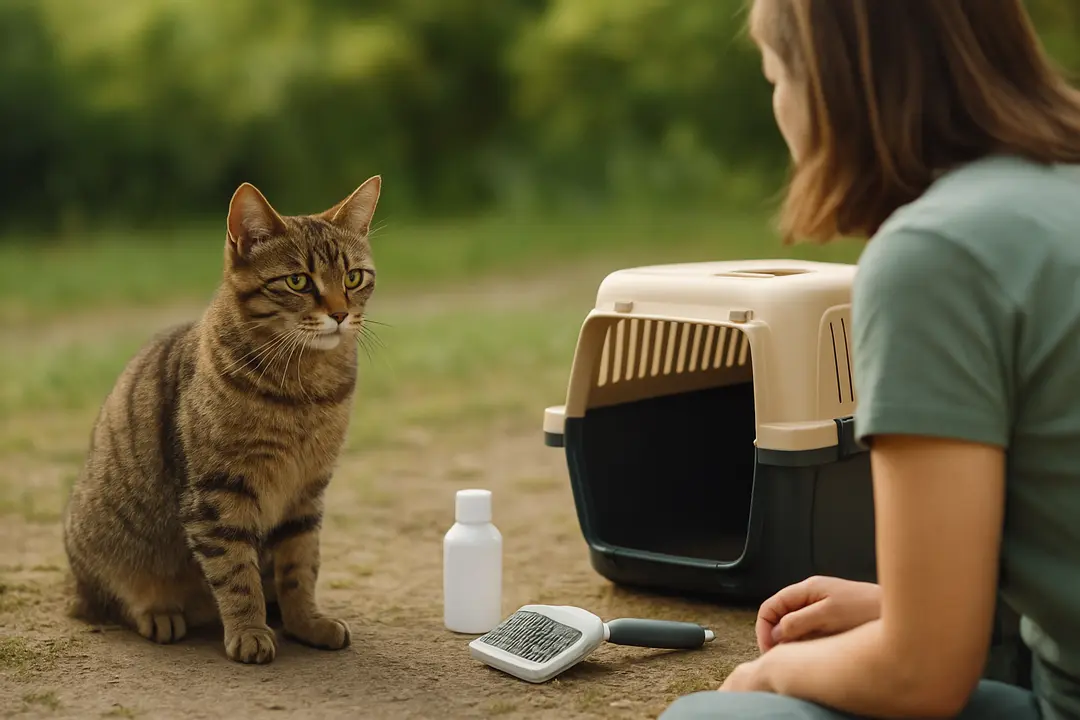
Yes, cats growl. If your cat growls while you’re petting or approaching them, stop, step back quietly, and leave a clear way out. Let your cat decide whether to come back; you don’t have to know exactly what caused the growl to respect the warning.
What to do the moment your cat growls
- End the contact. Take your hand away, or stop walking toward your cat. Don’t scold, hiss back, or pick them up to comfort them. If your cat is on your lap and turns to leave, move your arm out of the way rather than holding them there.
- Check the way out. You may have stopped reaching, but are you still standing in the only doorway? Step aside. Ask a child to come back to you or guide a dog away so your cat can leave without someone following. If two cats are facing each other, keep your hands out from between them.
- Let your cat choose the distance. A fearful cat may crouch, flatten their ears, turn away, or hide. The San Francisco SPCA’s guidance on fearful behavior recommends letting the cat approach you. If your cat goes under the couch, that means leaving them there, not reaching underneath to offer reassurance.
Is that low sound a growl or a purr?
A growl can sound like a low rumble. A purr has a regular rhythm as your cat breathes in and out. A hiss, like a growl, can be a warning. As PetMD’s guide to cat sounds explains, the sound makes more sense when you consider what the rest of the cat is doing.
During petting, notice whether your cat’s body has gone stiff, their ears have flattened, or they’re shifting away from your hand. Those are reasons to stop even if you thought you heard purring a moment ago. If you’re unsure which sound you heard, there’s no need to lean closer and listen. Your cat may have already given you a clearer answer by getting up to leave.
Why a cat may ask for petting and then growl
Picture a cat who climbs onto the couch beside you and leans into the first few strokes. A little later, their ears flatten. You stroke their back again and hear a growl. Coming over wasn’t a mixed message: your cat may have enjoyed the contact at first and had enough by the time you heard the warning. This can happen even when you’re gentle.
The useful moment to notice next time is when your cat first tenses or turns away, not how long it takes to get a growl. Keep the next petting session shorter. Rest your hand and let your cat stay beside you without being stroked. You can give them the company they sought without continuing the touch they’re moving away from.
There’s a difference between a familiar limit and a new reaction. If your cat used to enjoy the first stroke but now growls the moment your hand touches one spot, don’t keep touching it to check. VCA’s guide to petting-related aggression recommends a veterinary exam for an unexpected response to touch, since the area may hurt.
When growling happens near food, a bed, or a window
In a home with more than one cat, start with where each cat was just before the growl. You don’t need to decide which one is in charge. Look for a place where one cat has to get close to the other to eat or rest. Best Friends Animal Society’s guidance on tension between cats suggests matching the change you make to what sets off the conflict.
| When you hear the growl | What to look for | What to change |
|---|---|---|
| As you set down dinner | Are there two bowls, but only one place to eat? Does one cat have to walk past the other to reach dinner? | Put feeding places in different parts of the home so the cats don’t have to eat side by side. |
| When a cat approaches a favorite bed | Can the approaching cat reach another comfortable spot without passing the cat on the bed? | Spread resting places around the home rather than putting a second bed beside the first. |
| When an animal appears outside | Was your cat watching the window before they growled at you or a nearby cat? | Step away rather than picking your cat up. Cover the part of the window where the visiting animal comes into view. |
Timing matters here. If your cats eat comfortably apart but tense up whenever an outdoor cat visits, moving the bowls again won’t address the problem at the window. And if you didn’t see what happened before the growl, it’s fine to leave the cause open rather than assume the nearest person or pet started it.
What to watch over the next few days
An isolated growl at the end of a long petting session gives you something specific to change the next time your cat chooses contact. The same goes for growling when another cat crowds the food bowl. Watch what happens during ordinary life after you shorten the petting or move the bowl. Don’t recreate the encounter to see whether your cat will growl again.
If it does happen again, a short note can help you spot a pattern or describe it to your vet:
- Before: Where was your cat, who was nearby, and was anyone touching them? If so, where?
- During: What did you hear and see? “Crouched and growled when the other cat walked toward dinner” says more than “got aggressive.”
- After: When there was room to move, did your cat walk away, stay beside you without more petting, or keep growling even after everyone stepped back?
The useful change isn’t silence alone. It’s whether your cat can now reach their meal, rest near you, or leave when they want to without having to warn anyone away.
When to book a veterinary exam for growling
Call your veterinarian if growling is new for your cat, is becoming more frequent, or now happens during handling they used to welcome. You don’t need to collect several days of notes before calling. Tell the clinic what changed: for example, “It used to happen only after several strokes; now it happens as soon as I touch their back.” That gives your vet a place to start when examining your cat for pain or illness.
Mention any other changes you’ve already noticed. Is your cat eating differently, hesitating before a usual jump, grooming less, or spending more time grooming one area? Have their litter-box habits changed? VCA’s guide to recognizing illness in cats identifies these as useful clues. They don’t diagnose the cause of a growl, but they help your vet see what else has changed besides the sound.
Two signs that need emergency care now
Go to an emergency veterinary clinic now if your cat is straining to urinate or struggling to breathe. Either sign is enough, whether or not your cat is growling. Both Texas A&M’s veterinary emergency service and NC State’s emergency hospital advise immediate care for these signs. You can call the clinic on the way rather than delaying departure.
If you notice straining in the litter box, don’t wait for another attempt or try to verify how much urine came out. The Cornell Feline Health Center explains that attempts to urinate with little or nothing passed can mean a urinary blockage. This is not a situation for a routine behavior appointment.
Talk it through with Vicky
You can tell Vicky what you’re seeing right now, including what happened before the growl and what your cat did when you stepped back. Vicky will bring in Dr. Hana (Virtual DVM, DACVB), our AI veterinary behaviorist, to help you sort through the pattern. This is guidance from a virtual specialist, not an examination by a human veterinarian.
Common questions
Does growling mean my cat is about to bite?
A growl is a warning, not a prediction of a bite. Stop approaching and give your cat room; you don’t need to wait for a swat or bite to know they want the contact to stop.
Why does my kitten growl with a toy in their mouth? Should I take it away?
If the growl starts when you reach for the toy, leave it alone and step back. The timing suggests your approach matters, but it doesn’t prove why your kitten growled. Don’t take the toy away to test the reaction.
My cat growls at the new kitten but doesn’t chase them. Should I separate them?
Give them more space rather than letting the kitten keep approaching until your cat reacts. If they meet at the same bowl or bed, separate their feeding or resting places so neither has to get close to the other to use them.
Why has my cat started growling when I pick them up?
An unexpected response to handling can mean something hurts, especially if lifting your cat used to be comfortable. Avoid repeating the lift to find the sore spot; tell your veterinarian how you were holding your cat when it happened and arrange an exam.
How do I know when it’s safe to approach my cat again?
Let your cat close the distance rather than treating the end of the growl as permission to reach out. If they’re still crouched, turned away, or hiding, leave them space. Even if they come back to sit beside you, you can enjoy their company without starting to pet them again.
Sources
- San Francisco SPCA — Overstimulation (Cats)
- PetMD — 9 Cat Noises and What They Mean
- Best Friends Animal Society — Cat Aggression Toward Other Cats: Causes and Prevention
- Texas A&M Veterinary Medical Teaching Hospital — Emergency Medicine
- Cornell Feline Health Center — Feline Lower Urinary Tract Disease
- San Francisco SPCA — Aggression Toward People (Cats)
- VCA Animal Hospitals — Aggression in Cats: Petting Induced
- VCA Animal Hospitals — Recognizing Signs of Illness in Your Cat
- NC State Veterinary Hospital — Emergency and Critical Care


