
How can I tell normal shedding from hair loss that needs a vet exam?
A full brush and a thinning coat mean different things. Learn how to check your cat’s fur and skin, when to book an exam, and when to call for help.
In this guide (6 sections)
Look at the coat that stays on your cat, not the amount of fur that comes off. Even handfuls of loose fur can be normal if the coat still covers the same areas, the skin looks healthy, and your cat feels well. Book a vet exam for a new bald spot, a coat that is getting thinner, or repeated licking or chewing of one area, even if you don’t see a sore.
What normal shedding looks like
Neighboring hairs don’t all fall out at once. As your cat sheds and replaces them, you may find tufts on the couch without seeing gaps in the coat. Some cats lose clumps of soft undercoat as the seasons change. Outdoor cats tend to shed more heavily in spring and fall, while indoor cats may shed gradually throughout the year. Fur on your sweater in January is not, on its own, a sign of illness.
Consider two things you might notice while brushing. The brush fills up, but when your cat walks away, the back and sides look as full as ever. That fits normal shedding. On another occasion, you get very little fur on the brush but notice that skin now shows through on one flank. The second finding matters more. You don’t need to wait for the spot to go completely bald before booking an exam.
How to check your cat’s coat and skin
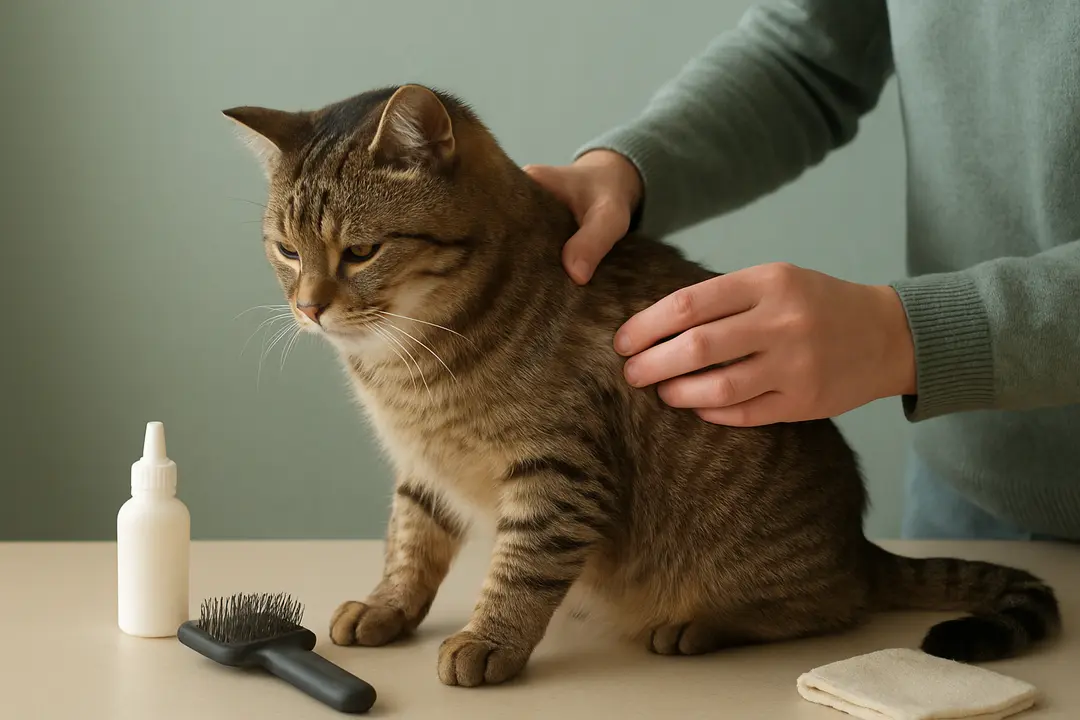
Choose a moment when your cat is comfortable beside you and you can see the coat in good light. There’s no need to restrain your cat or turn the check into a long grooming session.
- Look at the fur before you part it. Start with the area that caught your eye. Can you see skin through fur that used to cover it? Look beyond that spot, too. Hair loss can leave a single patch, but it can also make a whole area look less full without leaving a sharp edge.
- Compare with your cat’s usual appearance. Check the same spot on the other side, then look at an older picture if you have one. The two sides may match because they’ve always looked that way, or because both have grown thinner. A photo of your cat before the change is a better guide than another cat’s coat.
- Gently part the fur if your cat allows it. Seeing skin where you’ve made a part isn’t the same as seeing a bald patch. Look at the skin itself. Healthy skin generally looks clear rather than flaky, greasy, or bumpy. Notice whether the area is bare, has short hairs left on it, or has a sore beneath the fur. Stop if your cat seems uncomfortable.
- Watch where your cat grooms. Does your cat wash several areas, or keep going back to lick or chew the very spot that looks thinner? Note where it happens and whether you noticed the grooming before or after the coat changed. If you haven’t seen licking, that’s useful to say, too; you don’t need to guess what happens when you’re away.
One common exception to an otherwise full coat is the area in front of the ears. Many cats naturally have sparse fur there. If you’re noticing it for the first time, an older face-on photo may show that it isn’t new at all. Texas A&M’s guide to shedding and feline alopecia distinguishes this normal feature from new thinning, especially when there is itching or a sore. Alopecia means hair loss; it isn’t a diagnosis of the cause.
What licking a thin spot can tell you
It’s tempting to see a cat licking a bare belly and conclude that grooming is the whole problem. But knowing where a cat licks doesn’t explain why. Itching is worth reporting, and a cat may also lick an area that hurts. Neither the location of the patch nor the fact that your cat licks it is enough to put the change down to stress.
You don’t have to work out whether hair fell out or your cat chewed it short. Tell your vet what you can see: for example, that the hair on the belly is much shorter than the surrounding coat and that your cat keeps returning to one side. That description is useful even if the skin underneath looks clear. You don’t need to wait for scratching, redness, or a second patch to make the first one worth examining.
When to monitor, book a vet exam, or call today
| What you see | What to do |
|---|---|
| Loose fur, unchanged coat coverage, clear skin, and a cat who feels well | Monitor during ordinary grooming. Compare the coat with its usual appearance rather than counting brushfuls. |
| A new bald spot, more skin showing across a wider area, or repeated licking or chewing in one place | Book an exam with your veterinarian, even if your cat is eating and acting normally. Mention if the area is spreading. |
| A break in the skin or an open, painful sore | Call your clinic today. Tell them whether the area is wet, whether your cat is chewing it, and whether fur hides part of it. |
| A coat change and a cat who refuses food or seems ill | Call your veterinarian promptly about how your cat feels rather than waiting for a routine coat appointment. |
A mat can hide the extent of an injury, and licking or chewing can make a wet sore worse. Don’t pull apart a painful mat to get a better look or put cream or disinfectant on an open wound unless your vet directs you to. PetMD explains how wet, painful skin sores can develop, and Cornell’s urgent-care guide includes cuts and skin infections among problems that need prompt attention.
If your cat seems seriously ill, seek veterinary help right away. Go to an emergency clinic now if your cat needs immediate care that your regular clinic cannot provide. If you’re unsure where to go, call and lead with what your cat is doing right now, not how much fur you found. Changes in eating, drinking, weight, and activity matter; Cats Protection’s guide to recognizing illness also notes changes that are easy to overlook, such as hiding or sleeping more than usual.
What to show your vet and what the exam can tell you
Before the visit, jot down three things: when you first noticed the change, where it began, and what has happened since. The date you first saw the spot is useful even if you don’t know when it started. Describe whether it has grown, stayed the same, or appeared somewhere else. If the coat looks unchanged but the increase in shedding is persistent and unusual for your cat, say exactly that rather than trying to identify a bald spot you’re not sure is there.
If your cat is comfortable, take one photo from far enough back to show the body part and another close enough to show the hair and skin. Keep the date with the pictures. If the appearance changes before the visit, a second picture from the same angle is easier to compare. Follow PDSA’s advice on taking photos for your vet: don’t force a frightened or painful cat to pose. A missing photo is no reason to delay a call.
Your vet can look at the distribution of the hair loss, examine the skin beneath it, and use your observations to decide what to check next. Depending on the findings, that may include examining a hair or skin sample or choosing another test. The Merck Veterinary Manual’s guide to diagnosing skin disorders in cats explains why the history and the exam both matter: a picture shows the spot, but it can’t show when the change began or how often your cat chews there.
Before you leave, ask which change your vet wants to hear about first and when to send an update. Whether the licking has eased, whether the skin is still sore, and whether the thin area is spreading are all things you can report without having to judge how much hair has grown back.
Talk it through with Vicky
You can tell Vicky what you’re seeing right now: where the coat looks different, what the skin looks like, and whether your cat keeps licking the spot. Vicky will bring in Dr. Nadia (Virtual DVM, DACVD), our veterinary dermatologist, to help you sort through those observations.
Common questions
My brush fills up every day. Does it matter that my other cat sheds much less?
Use each cat’s own coat as the comparison. A full brush with no change in coverage can fit normal shedding, while a new thin spot on the cat who sheds less still deserves an exam.
Why is my cat’s belly going bald if I never see scratching?
Scratching isn’t the only clue. Watch for licking or chewing directed at the belly, but even if you see neither, new thinning is a reason to book an exam. Clear-looking skin doesn’t explain why the fur is missing.
Can I tell from a photo whether a bald spot is fleas or ringworm?
A photo can document the location and appearance of a patch, but it can’t establish the cause. If either is a concern, tell your vet; the exam helps determine whether a hair or skin sample or another test would be useful.
When should the fur start growing back?
The look of a patch alone can’t give you a regrowth date. Once your vet has assessed the cause, ask when to expect a visible change and when to get back in touch if the area stays bare or grows.
Sources
- A Thin Line: Normal Shedding vs. Feline Alopecia — Texas A&M Veterinary Medicine
- Coat and Skin Appearance in the Healthy Cat — VCA Animal Hospitals
- Hot Spots on Cats — PetMD
- How to take veterinary photos of your pet — PDSA
- Diagnosis of Skin Disorders in Cats — Merck Veterinary Manual
- Canadian Veterinary Medical Association — Why Cats Constantly Groom Themselves
- PDSA — Alopecia (Fur Loss) in Cats
- Cornell University College of Veterinary Medicine — Urgent Care
- Cats Protection — Common Cat Illnesses
- VCA Animal Hospitals — Care of Open Wounds in Cats



