Why is my dog so itchy, and when should I see a vet about the scratching?
Learn which signs of itching need emergency care, when to book a skin exam, and what to check if your dog keeps scratching, licking, or chewing.
In this guide (7 sections)
- Does my itchy dog need emergency care, a vet visit, or observation?
- What can cause scratching, paw licking, or face rubbing?
- Three things to check at home
- What can I safely do for mild itch?
- What the vet can check, especially if the itch comes back
- How a vet checks whether food is the trigger
- Talk it through with Vicky
Call an emergency vet immediately for sudden hives or facial swelling; go straight to an emergency hospital for trouble breathing, collapse, or vomiting during a suspected sudden allergic reaction, even without hives or swelling. More often, itching comes from fleas or other parasites, allergies, something irritating the skin, or an infection. Call your vet today if your dog is distressed and cannot stop chewing or scratching; book an exam if milder itching persists or keeps coming back.
Does my itchy dog need emergency care, a vet visit, or observation?
First, look at your whole dog, not just the spot that itches. Hives are raised welts on the skin. A suddenly puffy muzzle can also be a sign of an allergic reaction. PDSA’s guidance on allergic reactions recommends an immediate call rather than waiting for the swelling to pass. As VCA explains in its guide to severe allergic reactions, vomiting can mean the reaction is affecting more than the skin. Don’t wait for breathing trouble in that situation.
A dog who struggles to breathe or suddenly collapses needs emergency care whether or not you suspect an allergy. Cornell’s urgent-care guide distinguishes those emergencies from skin and ear infections, which can be seen in urgent care.
If there are no signs of a sudden reaction or other emergency, use your dog’s comfort and the condition of the skin to decide what to do:
| What you see | What to do |
|---|---|
| Your dog cannot settle, keeps biting one patch, or is scratching the skin raw. | Call your vet today. Describe the discomfort and tell the clinic if the patch is wet, sore, spreading, or smelly. Ask about urgent care if your dog cannot be seen. |
| Your dog can rest, but the itching continues or repeatedly returns. You may see redness, hair loss, or sores, or notice that an ear is bothering your dog again. | Book an exam. You don’t have to wait for bleeding or a large bald patch to ask for help. |
| Your dog scratches briefly, leaves the spot alone, and goes back to resting or playing. The skin looks intact. | Observe for now. Notice whether this stays an occasional scratch or becomes a pattern of returning to the same spot. |
VCA’s urgent-care advice for itchy skin highlights repeated scratching or chewing in a distressed pet. How your dog feels matters: even a small patch deserves a call if your dog cannot leave it alone.
What can cause scratching, paw licking, or face rubbing?
Itching is a symptom, not a diagnosis. The place your dog scratches is useful to show your vet, but it won’t tell you the cause by itself. Here are the main possibilities:
- Fleas and other parasites. Flea bites can irritate the skin, and some dogs are allergic to the bites. Mites are another parasite your vet may consider. If you see a flea, tell the clinic; if you don’t, describe what you saw rather than crossing parasites off the list yourself.
- Environmental allergies. Your dog may lick the feet or rub the face rather than scratch with a back leg. Dogs with environmental allergies can also have skin or ear infections. Cornell’s guide to environmental skin allergies explains why those signs are clues, not proof of an allergy.
- Food allergy. Food is one possible trigger, but an itchy evening after a particular meal doesn’t identify an ingredient as the cause. If your vet suspects food, there’s a more useful way to check than guessing which bag to buy next.
- Contact irritation. Something that touched the skin may have irritated it. If the scratching began after you used a new grooming product, note its name, where you used it, and when the itch started. The timing gives your vet a lead, not a definite answer.
- Skin or ear infection. An infection may be part of the problem even in a dog with a familiar allergy. For example, if your dog licks the feet every spring but now also has a sore ear, mention the ear separately rather than assuming it’s all the usual seasonal itch.
Three things to check at home
If your dog is comfortable enough for a gentle look, these checks can help you describe the problem. Skip them if your dog needs emergency care.
- Watch one episode. Note what your dog does, where, and what happens afterward. A dog who licks a foot once and falls asleep is showing you something different from a dog who gets up again and again to chew it. If your dog rarely scratches but spends much of the evening rubbing the face or licking the paws, count that when you describe the itch.
- Look where your dog is licking or scratching. If your dog allows it, gently part the hair. Is the skin intact, red, bare, or broken? Is there one patch or more than one? A photo can help you show the clinic what the area looked like when you first noticed it. If touching the spot bothers your dog, leave it alone and report what you can see.
- Put the changes in order. Write down when the itching began, where it started, and whether the skin changes came before or after you noticed the scratching. For a repeat flare, note what is familiar and what is new. A timeline that distinguishes weeks of paw licking from an ear that started bothering your dog yesterday is more useful than a single start date for both.
What can I safely do for mild itch?
For mild itching on intact skin, ask your vet whether a soothing dog shampoo is appropriate. A bath may ease the discomfort, but feeling better afterward doesn’t show what caused it. PetMD’s guide to itchy dogs distinguishes mild itch from persistent scratching, hair loss, redness, sores, or marked discomfort that warrants an exam. If your dog is chewing a patch raw, make the call rather than trying a bath first.
Ask your vet before giving any medicine, including human antihistamines or pain relievers, or using a human skin cream. Have the exact product name and package on hand when you ask. VCA’s guide to over-the-counter medicines for dogs explains why your vet should help make that decision. Don’t give an antihistamine and wait to see if it works during a suspected sudden allergic reaction.
What the vet can check, especially if the itch comes back
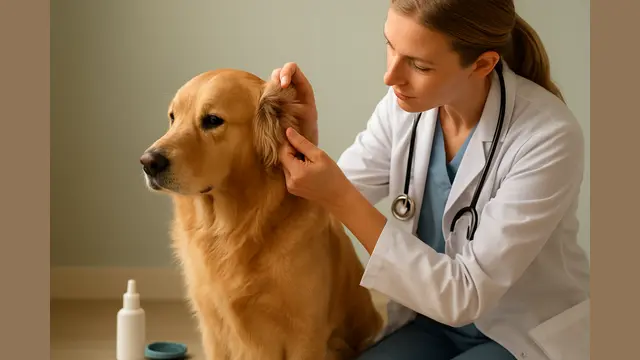
An exam can address two different questions: what started the itching, and what is bothering your dog now? Your vet can look at the coat and skin for signs of parasites or infection and examine an ear that seems uncomfortable. This matters even if a treatment helped last time. A dog whose sore patch cleared but whose paw licking never stopped has a different history from one who was comfortable for months before itching again.
Bring the names of flea preventives, shampoos, creams, and medicines you’ve used, with the dates if you have them. Explain what improved first, what never improved, and what came back. If you have photos from before treatment, bring those too. You don’t need to decide whether the original problem was fleas, allergy, or infection before making the appointment.
Before you leave, ask what improvement to look for and when your vet wants an update. At home, track comfort as well as appearance: can your dog sleep without stopping to chew, and is the sore area healing? If your dog becomes distressed and resumes chewing the skin raw, call rather than waiting for a scheduled recheck.
How a vet checks whether food is the trigger
A food trial has two parts. First, your vet helps select a trial diet and explains exactly what your dog can eat. Go over a whole day’s routine, including treats, chews, and flavored products. Changing the main meal but keeping the usual bedtime chew may make the result hard to interpret. If your dog gets into another pet’s bowl, note what happened and tell your vet so you can decide how to proceed.
Second, if the itch improves, your vet guides you through reintroducing the previous diet to see whether the signs return. That comparison is the part you miss if you switch foods whenever the itching changes. VCA’s guide to an elimination and food challenge trial explains both steps. Ask your vet for a plan you can follow with everyone who feeds your dog.
Talk it through with Vicky
You can tell Vicky what you’re seeing right now, including where your dog scratches, what the skin looks like, and whether your dog can rest. Vicky, our AI assistant, will bring in Dr. Nadia (Virtual DVM, DACVD), our virtual veterinary dermatology specialist, to help you organize those observations and prepare questions for your vet. For signs of a sudden allergic reaction, contact an emergency vet directly.
Common questions
How much scratching at night is too much?
Use interrupted sleep rather than a scratch count. If your dog repeatedly wakes to chew and cannot settle, call your vet today. If your dog can sleep but the itch returns night after night, book an exam.
Should I mention fleas if my dog takes a preventive and I can’t find any?
Yes. Give the clinic the preventive’s name, when you last used it, and what you saw in the coat. That gives your vet more to work with than reporting that your dog is on flea prevention.
Does year-round itching point to food rather than a seasonal allergy?
Not necessarily. Environmental allergies can cause itching in one season or throughout the year. The calendar alone can’t distinguish an environmental allergy from a food allergy or tell you whether an infection is also present.
Can I use Benadryl instead of the itch medicine my vet suggested?
Ask your vet about the exact product before giving a human antihistamine or substituting it for a recommended treatment. If cost is the concern, say so directly and ask which options are suitable for the problem your vet is treating.
What if my dog takes a flavored medicine during a food trial?
Show the vet planning the trial the name and flavor of the medicine. Flavored products need to be accounted for, so ask how to handle the medicine without stopping or changing it on your own.