
Are raw, cooked, or powdered onions toxic to cats, and what should I do if my cat ate some?
Raw, cooked, and powdered onions can poison cats. Learn when to call or go straight to the emergency vet, what details to give, and why blood tests may follow.
In this guide (6 sections)
Get urgent help
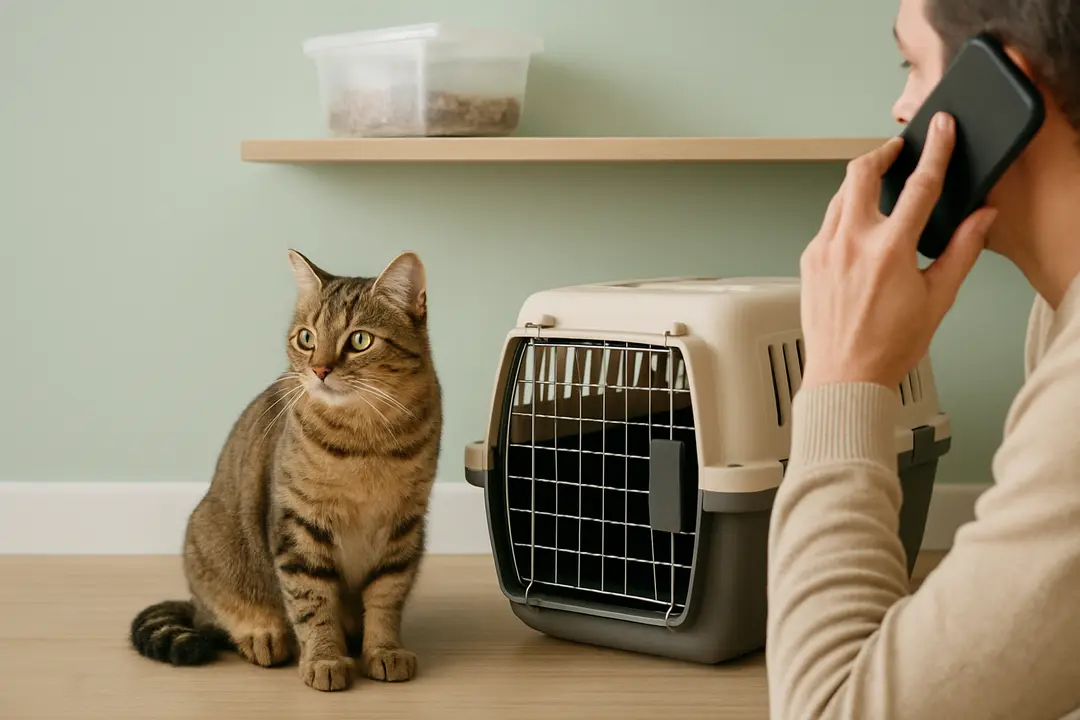
If your cat is struggling to breathe or is unconscious, go straight to an emergency veterinary clinic. Do not wait for a callback. Raw, cooked, and powdered onions can all poison cats. If your cat ate or may have eaten onion but seems well, move the food out of reach and call your veterinarian, an emergency vet, or an animal poison control service now, without waiting for symptoms.
Calling now does not mean every cat that licks a plate needs a hospital stay. It lets a professional assess what your cat ate and decide whether early treatment would help. The ASPCA’s first steps for a suspected poisoning and Pet Poison Helpline’s emergency guidance distinguish a pet that needs immediate transport from one that looks well but still needs prompt advice.
If your clinic is closed, you do not need to wait until morning. In the US, ASPCA Poison Control and Pet Poison Helpline take calls around the clock. The FDA’s pet emergency contact guide lists both services. Do not try to make your cat vomit or give a home remedy while you seek help.
Why the form of onion matters
Cooking does not make onion safe for cats, and onion powder is more concentrated than fresh onion. What changes from one exposure to another is how much onion your cat may have swallowed. A lick of finished gravy and a mouthful of the seasoning used to make it are not the same exposure, even if both ingredient lists say “onion.” VCA’s guide to onion poisoning in cats explains why both the preparation and the amount matter.
| What your cat reached | What to describe on the call |
|---|---|
| Raw or cooked onion | The size and number of pieces your cat could have eaten, and whether you saw your cat swallow any. |
| Onion powder or a dry seasoning mix | Whether it was plain onion powder or a blend, whether your cat reached the seasoning itself, and how much could be missing. |
| Soup, broth, gravy, or seasoned meat | The ingredients or recipe, whether your cat licked the liquid or also ate solids, and the largest portion your cat could have reached. |
Onion in prepared food is easy to overlook, even for a careful owner. Suppose you saw your cat lick gravy from a dinner plate, then noticed onion powder on the packet. You know the ingredient and the part of the meal your cat reached. You may not know how much powder was in those licks. Report what you know rather than converting the gravy into a guessed amount of onion.
What to tell your vet or animal poison control
Start with how your cat is acting right now and when the food was within reach. Make the call even if the package is gone or you did not see the bite. If someone is with you, they can find the label or recipe while you speak. A photo of the package or a food sample can help the clinic identify the ingredients, as this clinical guide to assessing a poisoning explains.
- Give your cat’s approximate weight if you know it. Use a recent weight from a clinic visit if it is handy. If you do not know, say so rather than delaying the call to weigh your cat.
- Give a time or a time range. If you saw the bite, say when. If you found a disturbed dish later, say when you set it down and when you found it. Tell the vet if your cat had access to the same food on earlier days, too.
- Separate the recipe from the portion. For a homemade dish, say how much onion went into the whole batch, then describe the portion your cat reached. For packaged food, read the ingredient list. The amount of food missing is useful even if the label does not say how much onion it contains.
- Distinguish what you saw from what might have happened. If a spoonful of food is gone but some spilled on the floor, mention the spill. If several cats had access, say which ones were there rather than assuming they split the food equally.
- Describe any changes and when they started. For example, tell the clinic if your cat vomited before you found the packet, after you saw the bite, or not at all. “Eating and acting as usual so far” is useful information, too. It is not a reason to wait before calling.
Why a cat that looks well may need blood tests
The concern with onion is not limited to what happens in the stomach. Onion can damage red blood cells, which carry oxygen through the body. As your cat loses those cells, they can develop anemia, meaning they have too few healthy red blood cells. It can take several days for that loss to become apparent. A cat’s behavior right after a meal cannot tell you what their blood count will look like later.
Your vet has two separate decisions to make. The first is whether your cat needs an examination or early treatment for a recent ingestion. That decision belongs with the clinic; do not attempt a treatment yourself because you think the meal was recent enough. The ASPCA’s guidance on making a pet vomit explains why household methods are not a safe substitute for veterinary care.
The second decision is how to check for red blood cell loss. Your vet may recommend a complete blood count, often called a CBC. It measures red blood cells along with other parts of the blood. The first sample gives the vet a starting point. A later sample helps answer a different question: is the red cell count staying steady or dropping? A normal first result and a recommendation to come back are not contradictory.
ASPCApro’s guidance on feline poisonings describes checking red cell measurements over several days. What happens next depends on the exposure and the findings. Some cats need monitoring; some need care in the hospital. If anemia becomes severe, a cat may need a blood transfusion to replace lost red blood cells.
What to do over the next few days
If your vet recommends monitoring at home, leave the call or clinic with a plan specific to your cat. Ask three questions: What changes do you want me to report? When is the next blood test or check-in? Where should I go if my cat gets worse after hours? Write down the answers so another person caring for your cat knows what to do, too.
Keep the recheck even if your cat is eating breakfast and moving around normally. What you observe at home and what the clinic measures in a blood sample are different kinds of information. If something changes, tell the clinic what you noticed and when rather than saving it for the appointment. Breathing difficulty or loss of consciousness means going directly to emergency care.
To prevent another exposure, check the ingredients before offering your cat broth, gravy, baby food, or meat cooked with seasoning. Look at the mix or stock used in the recipe, not only at the finished meal. Picking out onion pieces does not remove onion powder already mixed into a sauce. If you cannot confirm what went into the dish, do not share it with your cat.
Talk it through with Vicky
After contacting your vet or animal poison control, you can tell Vicky what you’re seeing right now. Vicky will bring in Dr. Nora (Virtual DVM, DABT), our AI veterinary toxicology specialist, to help you understand your clinic’s monitoring plan and organize questions for your cat’s recheck.
Common questions
My cat already vomited and I saw onion in it. Do I still need to call?
Yes. Seeing onion confirms your cat swallowed some, but it does not tell you how much they ate or rule out later red blood cell damage. Call now, report when the vomiting happened, and do not try to make your cat vomit again.
What if the label lists onion powder but gives no amount?
You can still make a useful report. Give the product name, read the ingredient list, and describe how much of the prepared food your cat could have eaten. Say that the amount of onion powder is unknown; you do not need to calculate it before calling.
Does it matter if my cat had small servings on several different days?
Yes. Include the earlier servings when you call so the vet can assess the full amount your cat may have eaten. Give the approximate portion, how often you offered it, and the time of the most recent serving.
What if I found my cat playing with an onion peel but didn’t see them eat it?
Finding your cat with the peel is not the same as seeing them swallow it. Move it out of reach and, if any may have been eaten, call your vet or animal poison control. Describe what you found, whether anything looks missing, and how long your cat had access.
Can I use an online onion-to-weight chart to decide if a bite was safe?
Do not use a chart to give your cat an all-clear. Even with an accurate weight, the size of a bite of seasoned food does not tell you how much onion it contained. Give the clinic your cat’s weight, the food details, and your best estimate of the portion instead.
Sources
- VCA Animal Hospitals — Onion, Garlic, Chive, and Leek Poisoning in Cats
- ASPCA — What to Do if Your Pet Is Poisoned
- FDA Center for Veterinary Medicine — Who Do You Call if You Have a Pet Emergency?
- Clinician’s Brief — General Approach to Intoxication
- Pet Poison Helpline — Are Onions Poisonous to Dogs?
- ASPCApro — Common Feline Toxic Exposures and Their Treatment
- PetMD: Can Cats Eat Onions?
- Pet Poison Helpline: Triaging a Potentially Poisoned Pet at Home
- Cornell University College of Veterinary Medicine: First-aid for poisonous substances
- ASPCA: Is It Ever Safe to Induce Vomiting?
- ASPCApro: 4 Harmful Thanksgiving Foods for Pets


