Are raw onions, cooked onions, and onion powder dangerous for cats to eat?
Raw, cooked, and powdered onion can poison cats. Learn when to go straight to the emergency vet, what to say when you call, and why signs can appear days later.
In this guide (8 sections)
- Get urgent help
- Raw, cooked, and powdered onion: what changes the risk?
- How to estimate the amount in gravy or leftovers
- What to tell your vet or animal poison control
- Why a cat can look well after eating onion
- What the clinic may do over the next few days
- How to avoid hidden onion next time
- Talk it through with Vicky
Get urgent help
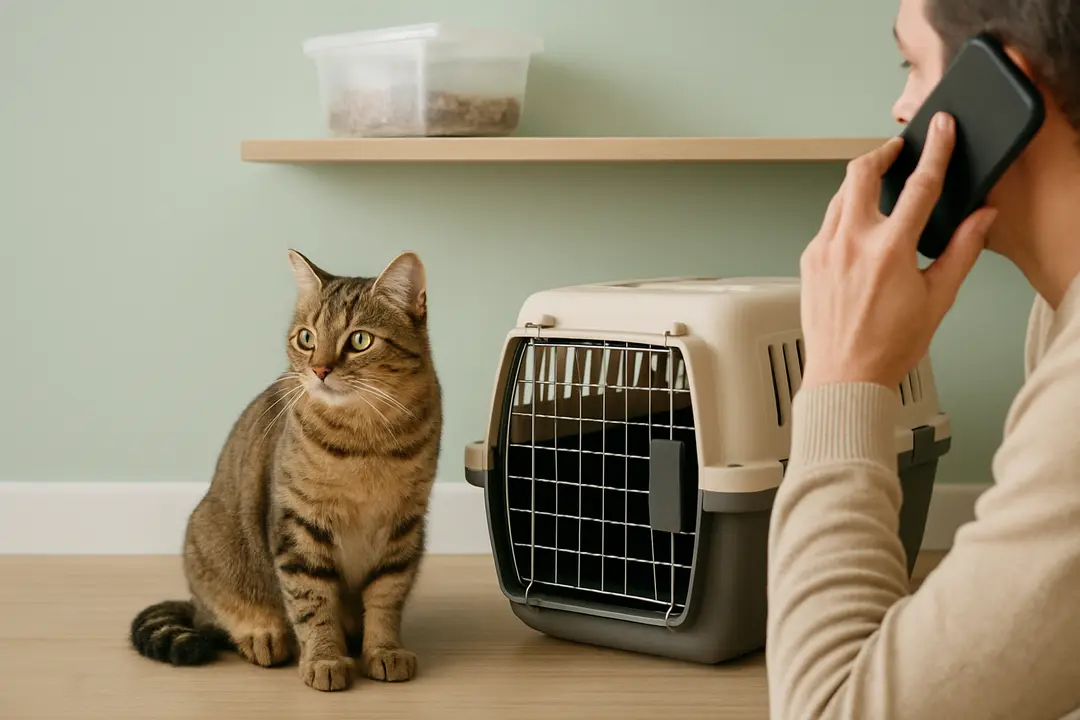
Go straight to an emergency veterinary clinic if your cat collapses, is having a seizure, is unconscious, or is struggling to breathe. Yes, raw onion, cooked onion, and onion powder can all poison cats. If your cat may have swallowed any of them, move the food out of reach and call your veterinarian, an emergency veterinary clinic, or an animal poison control line now, even if your cat looks well.
You don't need to know the exact amount or be certain your cat ate it before calling. If all you saw was your cat beside a tipped bowl, say so. If the package is handy, keep it, but don't delay a call or an emergency trip to look for it. The ASPCA's advice for suspected poisoning is to get help without waiting for signs.
Do not try to make your cat vomit. That includes giving hydrogen peroxide, salt, or salt water, even if you saw your cat take the bite moments ago. There is no safe home method for making a cat vomit. The Pet Poison Helpline's guide to poisoning first aid explains why advice about home remedies should not take the place of a call.
Raw, cooked, and powdered onion: what changes the risk?
Cooking does not make onion safe. What matters to the clinician is how much onion your cat may have swallowed, how concentrated it was, and your cat's weight. A possible exposure is a reason to call, not a prediction that your cat will become seriously ill.
| Form of onion | What to tell the clinic |
|---|---|
| Raw or cooked pieces | Describe the size and number of pieces. Say whether you saw your cat swallow them or noticed they were missing. |
| Onion cooked into a dish | Name the dish and describe the portion your cat ate. Onion still matters in gravy, sauce, or soup, even if you can't see pieces in your cat's serving. |
| Onion powder or dried flakes | Say whether your cat ate the dry ingredient itself or food seasoned with it. If it was a soup mix or seasoning blend, keep the label. |
Drying removes water and concentrates the onion. That makes a teaspoon of onion powder a different exposure from a teaspoon of chopped onion, as VCA's guide to onion poisoning in cats explains. A number you find online for fresh onion isn't a reliable way to decide whether a cat that ate seasoned food can wait.
How to estimate the amount in gravy or leftovers
For a mixed dish, separate the amount of onion in the recipe from the amount of finished food your cat ate. This is easy to miss when you're worried. Both details help; neither needs to be exact for you to make the call.
For example, imagine you used a teaspoon of onion powder in a pan of gravy and saw your cat lick gravy off a plate. Tell the clinic the teaspoon went into the whole pan, not the portion on the plate. If you know how much gravy the recipe made, give that amount. Then describe what you saw your cat lick and whether the plate had been unattended beforehand.
For packaged food, the label may tell you the type of onion but not the quantity. A photo of the ingredient list and a description such as “two licks of sauce, possibly more before I came in” are more useful than a guessed weight of onion. Don't count a missing serving as a witnessed meal, especially if another pet could have reached it.
What to tell your vet or animal poison control
Start with how your cat is acting and breathing right now. Then give the food details and the following information. You can use the units you know; there's no need to convert pounds to kilograms or stop to weigh your cat before calling.
- Your cat's weight. Give the most recent weight you know and say if it's an estimate. The same missing piece represents a different amount relative to body weight for a small cat than for a large one.
- The time or possible time window. If you didn't see a bite, say when you left the food out and when you found it disturbed. That gives the clinician more to work with than guessing a single time.
- Any earlier servings. Mention if your cat ate the same food on previous days. Describe the portions and when you last offered it, rather than reporting only today's meal.
- Any changes you've noticed. Say what changed and when. If your cat has not shown any signs, that is useful information too; it doesn't rule out a problem later.
The clinician's guide to assessing a possible poisoning distinguishes what an owner saw from what might have happened. Your job is to describe the exposure as best you can. The clinician can use that history to advise whether your cat needs to come in and what follow-up makes sense.
Why a cat can look well after eating onion
Onion can cause stomach upset, but the concern isn't only digestion. Onion can also damage the red blood cells that carry oxygen. As those cells break down, fewer are available to do that work. Vets call this hemolytic anemia. The MSD Veterinary Manual's guide to onion toxicity describes how red blood cell damage can become apparent several days after the meal.
Vomiting or diarrhea may be the first change you see. Other signs to report include loss of appetite, weakness, pale or yellow gums, faster breathing, and reddish urine. Tell your vet promptly about a new sign even if you've already called about the food. If your cat is working hard to breathe or collapses, go straight to an emergency clinic; don't stop to check gum color first.
A cat that eats breakfast and acts normally the next morning can still develop anemia later. PDSA's guide to onion poisoning in cats explains the difference between stomach upset and signs of anemia. That delay is a reason to call before your cat seems sick, not a reason to watch at home for several days before calling.
What the clinic may do over the next few days
The timing and details of the meal help your vet decide whether early treatment may help. A blood count lets the vet check for anemia. A result soon after the meal tells the vet about your cat's red blood cells at that moment; it cannot show how many cells will still be circulating several days later.
That's why your vet may schedule another blood count even if your cat looks comfortable. The results over time can show whether your cat is losing red blood cells. If the loss is severe, a cat may need a blood transfusion to replace them. ASPCApro's guidance on onion exposure describes both blood count monitoring and the role of transfusion in severe cases.
If your vet advises monitoring at home, make sure you know when the next check is due, which changes to report, and where to go if those changes happen after your clinic closes. Keep the recipe or label with those instructions. If you discover the food contained powder rather than fresh onion, or that your cat had an earlier serving, tell the clinic so it can reassess the exposure.
How to avoid hidden onion next time
It's easy to overlook onion in food that doesn't look or smell like onion. Before sharing broth, baby food, gravy, or seasoned meat, check the ingredients in the finished dish and in any stock, soup mix, or seasoning used to make it. Look for onion powder and dried onion flakes as well as onion itself. Related ingredients such as garlic, chives, and leeks are also a concern for cats. If you can't confirm what went into a dish, leave it off your cat's plate.
Talk it through with Vicky
After contacting your veterinarian or animal poison control, you can tell Vicky what you are seeing right now. Vicky, our AI assistant, will bring in Dr. Nora (Virtual DVM, DABT), our AI veterinary toxicology specialist, to help you organize the food details and understand your clinic's instructions. Your own veterinary team is the place for an examination, blood tests, and emergency treatment.
Common questions
My cat ate one small piece of cooked onion. What if I don't know how much it weighed?
Call your vet or animal poison control now rather than trying to weigh a matching piece. Describe its size, whether your cat swallowed the whole piece, and when it happened. A photo of a similar piece can help if you have one.
Can my cat have broth if I strained out the cooked onions?
No. Straining removes the pieces, but it doesn't make broth cooked with onion safe to offer. If your cat already drank some, call your vet and describe the amount of broth, not the weight of the onions you strained out.
I found onion powder on a baby food label after several feedings. What should I tell the vet?
Stop offering the food and call now. Keep the jar and tell the clinician the ingredient listed, how much of the jar your cat ate at each feeding, over how many days, and when the last feeding was.
My cat seems fine the next morning. Can I cancel the follow-up blood count?
Keep the blood test your vet scheduled unless the clinic changes the plan. Anemia can develop several days after onion exposure, so normal behavior the next morning doesn't answer the question the test is meant to check.
Sources
- MSD Veterinary Manual — Garlic and Onion (Allium spp) Toxicosis in Animals
- VCA Animal Hospitals — Onion, Garlic, Chive, and Leek Poisoning in Cats
- ASPCA — What to Do if Your Pet Is Poisoned
- PDSA — Onion and Garlic Poisoning in Cats
- Clinician’s Brief — General Approach to Intoxication
- Pet Poison Helpline — “Can I Use Peroxide on Cats?” Five At-Home First Aid Myths
- ASPCApro — 4 Harmful Thanksgiving Foods for Pets
- PetMD — Can Cats Eat Onions?
- FDA Center for Veterinary Medicine — Who Do You Call if You Have a Pet Emergency?
- Pet Poison Helpline — Five Pet Poisoning First Aid Misconceptions
- RSPCA — Poisoning in Cats
- Merck Veterinary Manual — Blood Groups and Blood Transfusions in Cats