Can my cat catch the flu from me, and how can I protect my cat while I'm sick?
Cats can catch seasonal flu from people. Learn how to handle meals and cuddles while you’re sick, what changes to watch for, and when to call your vet.

In this guide (7 sections)
- What if your cat already slept beside you?
- How to feed, comfort, and care for your cat while you’re sick
- A sneeze doesn’t tell you which “flu” your cat has
- What to watch for at meals and at rest
- When to call your clinic and when to go now
- Keep your cold and flu medicine out of reach
- Talk it through with Vicky
Yes, cats can catch some human seasonal flu viruses, including influenza A(H1N1), but a cuddle or a night on your pillow does not mean your cat is infected. While you’re sick, avoid face-to-face contact, wash your hands before and after caring for your cat, and let someone who feels well take over close-up care if possible.
What if your cat already slept beside you?
Waking up sick with your cat tucked under your chin doesn’t mean you missed your chance to protect them. Close contact often happens before you know you’re ill. If your cat is eating, acting like themselves, and breathing comfortably, you can start with the next thing you do together: wash your hands before breakfast, set down their bowl, and give them a place to rest near you rather than on your pillow.
There’s a difference between exposure and illness. Sharing your bed means there was contact; it doesn’t tell you whether your cat caught the virus. According to the CDC’s guide to influenza in cats, some infected cats show no signs. Others develop a mild respiratory illness. Less commonly, a cat can develop pneumonia, an infection in the lungs. Your cat’s behavior and breathing are more useful for deciding what to do next than the number of hours they spent beside you.
How to feed, comfort, and care for your cat while you’re sick
You don’t have to choose between caring for your cat and protecting them. The aim is to reduce close contact while keeping up the care they need. Iowa State’s advice for pet owners during the H1N1 pandemic focused on handwashing, less close contact, and help from a healthy caregiver. Here’s what that can look like in your home:
- Hand off the tasks that bring you close together. If someone else in your home is well, ask them to serve meals and spend time with your cat. Let them know what’s normal: does your cat finish breakfast in one sitting or return to it through the morning? That detail helps a helper recognize a change you would usually notice yourself.
- If you live alone, keep providing meals, water, and litter box care. Wash your hands with soap and water before preparing pet food and again afterward. Wash before and after handling your cat, too. If you stop to blow your nose while opening a can, put it down, discard the tissue, and clean your hands before you finish serving the meal.
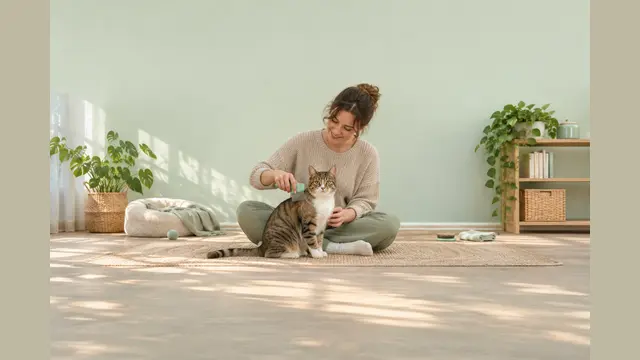
- Offer company without sharing breathing space. If your cat heads for your chest when you lie down, put their usual blanket on a chair beside you instead. Skip kisses, face licking, and shared pillows while you’re sick. When you need to pick your cat up, keep your face away from theirs. A cat who seeks you out can still have your company without settling nose to nose.
- Make coughs and sneezes easier to manage. Keep tissues and a wastebasket next to the place where you rest. Turn away from your cat, cover a cough or sneeze with a tissue, throw it away, and clean your hands. If you don’t have a tissue, use the inside of your elbow rather than your hand. These are the CDC’s cough and sneeze hygiene steps.
A sneeze doesn’t tell you which “flu” your cat has
Human seasonal influenza is one possible explanation for respiratory signs after close contact with a sick person. But what people call cat flu usually means a feline upper respiratory infection—an illness that affects areas such as the nose and throat. Two common causes are feline herpesvirus and calicivirus. Neither is a human flu virus. The Schwarzman Animal Medical Center’s guide to feline respiratory vaccines explains the distinction between these common cat viruses.
No single sign identifies H1N1 in a cat. Even if you both start sneezing on the same morning, the timing doesn’t establish that you have the same infection. You don’t need to solve that question at home. What your clinic needs to know is that someone has been sick and that something has changed for your cat.
What to watch for at meals and at rest
Use your usual routine to compare your cat with their normal self. You don’t need to wake them up repeatedly or pick them up to see how they’re doing.
- Watch breathing when your cat is resting. Does it look quiet and easy, as usual? Notice if it seems unusually fast, if their mouth is open as they breathe, or if each breath looks like work. Don’t spend time counting breaths if you can already see that your cat is struggling.
- Notice new nose, eye, or throat signs. If there’s sneezing, coughing, or discharge from the eyes or nose, note when you first saw it. Being able to say what you actually saw is more useful than trying to decide whether it looked like human flu.
- Check what happens at the food bowl. Coming to the kitchen is not the same as eating. Notice whether your cat eats their usual meal, takes a few bites, or walks away. If they stop eating, tell your vet rather than assuming they’re tired because you’re sick.
- Put extra sleep in context. A longer nap by itself can’t identify an infection. What’s different when your cat gets up? A cat who greets you and eats as usual gives you a different picture to report than one who stays apart, won’t eat, and has started coughing.
When to call your clinic and when to go now
If your cat is struggling to breathe, go to an emergency veterinary clinic now. Don’t wait for your regular clinic to return a message or for another sign of flu to appear. Cornell’s guide to breathing difficulty in cats explains why a cat who is working to breathe needs care regardless of the cause.
If your cat is breathing comfortably but develops new respiratory signs after someone at home has been sick, call your regular clinic right away. This includes a new cough or sneezing. Calling now lets the clinic decide how quickly your cat needs to be seen; don’t save it for a routine appointment. VCA’s guidance on H1N1 in household pets advises prompt veterinary attention in this situation.
Start the call with how your cat is breathing right now. Then describe the first change you saw, when you saw it, and whether your cat is eating and acting normally. Tell the clinic when you became ill and whether you had confirmed flu or flu-like symptoms. “I got sick on Monday, and my cat started coughing this morning” gives the team a useful timeline without assuming a diagnosis. If the clinic advises watching at home, ask which changes should trigger another call and when they’d like an update.
Keep your cold and flu medicine out of reach
If you’re keeping medicine beside the bed, move it somewhere your cat can’t reach. That includes pain relievers such as acetaminophen and ibuprofen, as well as cold and flu products with several ingredients. Keep your medicine for you; ask your veterinarian before giving your cat anything for a cough or other sign of illness. The FDA’s guide to household medication hazards explains why human pain relievers don’t belong in a cat’s home treatment plan.
If you think your cat swallowed any of your medicine, call your veterinarian or an animal poison control service now, even if your cat looks well. Keep the package handy so you can read the product name and ingredients. Get professional instructions rather than trying a home treatment or trying to make your cat vomit. Pet Poison Helpline’s guidance for suspected poisoning in cats describes that first step.
Talk it through with Vicky
If your cat seems well and you want help adapting meals, sleep, or cuddles while you’re sick, you can tell Vicky what you’re seeing right now. Vicky will bring in Dr. Ravi (Virtual DVM), our AI specialist in feline-friendly general practice, to help you work out a routine that fits your home.
Common questions
When can I cuddle with my cat again?
Use how you’re feeling as a guide: while you’re sick, keep your cat off your pillow and avoid close face-to-face cuddles. There’s no precise waiting period in the pet-care guidance that guarantees zero risk; sitting nearby is a way to keep each other company in the meantime.
Does my cat’s FVRCP vaccine protect against my flu?
No. FVRCP protects against feline viral rhinotracheitis (caused by feline herpesvirus), calicivirus, and panleukopenia, not human seasonal influenza. Use the same precautions even if your cat is up to date on that vaccine.
Does seasonal flu in my house mean my cat was exposed to bird flu?
No. Bird flu, also called avian influenza, is different from human seasonal flu. A seasonal flu illness in your household is not, by itself, evidence of bird flu exposure.
Do I need a positive flu test before calling about my cat’s cough?
No. If your cat develops a new cough after someone in your home has had flu-like symptoms, call your regular clinic right away. Tell them what you know about the household illness without waiting for a test result.
If my other cat starts sneezing too, does that confirm they both caught my flu?
No. Sneezing in two cats doesn’t identify the virus or tell you who infected whom. When you call the clinic, describe each cat’s signs and when they began, as well as the illness in your household.
Sources
- CDC — About Cat Flu
- VCA Animal Hospitals — Swine Flu and H1N1 Influenza
- Iowa State University Veterinary Medicine — Frequently Asked Questions Regarding Pandemic H1N1 Influenza Virus and Pets
- CDC — Healthy Habits: Coughing and Sneezing
- FDA — Tips for Safe Handling of Pet Food and Treats
- Cornell Feline Health Center — Dyspnea (Difficulty Breathing)
- FDA — Potentially Dangerous Items for Your Pet
- Pet Poison Helpline — My Cat Ate Something Toxic: What Should I Do?
- Schwarzman Animal Medical Center — Explaining the FVRCP in Feline Vaccines