Can cats safely eat sweet potatoes, and how should they be prepared?
Learn how to prepare a small sweet potato treat for your cat, which casserole ingredients to check, and when a stolen bite means you should call your vet.
In this guide (7 sections)
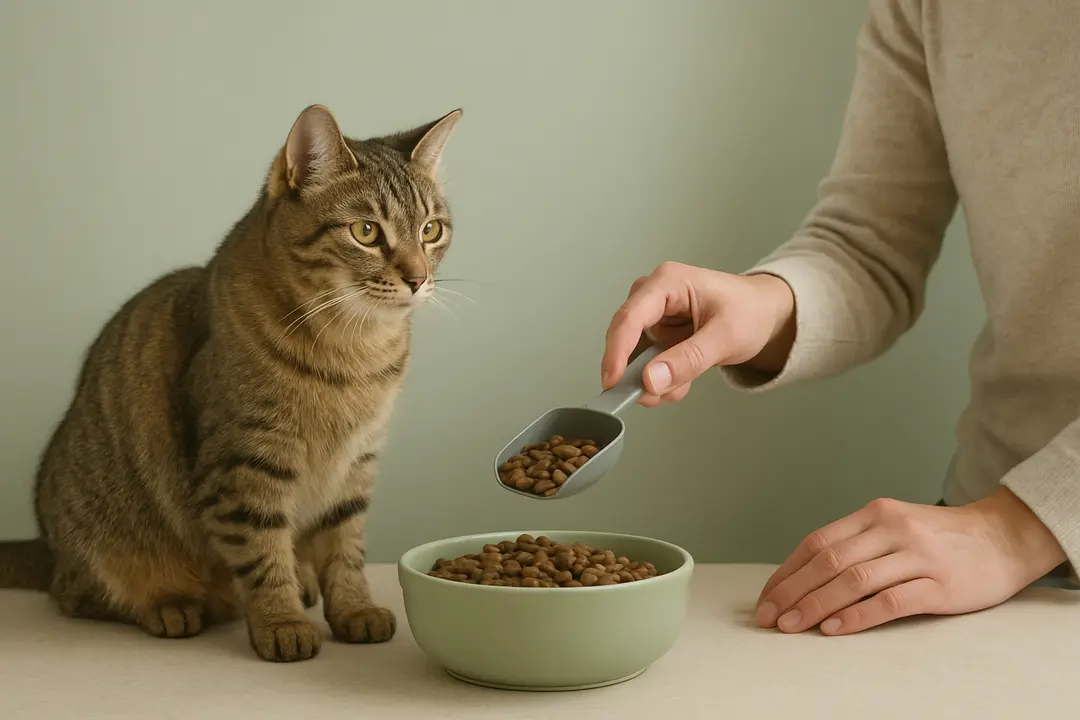
Yes. A healthy cat can have an occasional lick of plain, cooked sweet potato: peel it, cook it until it squashes easily with a fork, let it cool, and offer a little of the soft flesh. It’s an optional treat, not a replacement for complete and balanced cat food. If your cat already ate some, what else was in the dish matters more than whether the potato was baked, boiled, or mashed.
If your cat already ate sweet potato
If your cat is struggling to breathe or has collapsed, go to an emergency veterinary clinic now. Otherwise, start by identifying the food. A lick from a fork used to test a plain potato is different from a lick of finished Thanksgiving casserole. A stolen bite can happen even when you’re careful; you don’t need to know the exact amount to ask for help.
| What your cat ate | What to do |
|---|---|
| A small lick of plain, cooked flesh | If your cat is healthy and acting normally, put the rest away and observe. There’s no need to change the next meal or offer more. |
| A piece of plain, raw sweet potato | The plain root isn’t considered poisonous. The immediate concern with a hard chunk is whether your cat can swallow it. If your cat seems unable to swallow, seek urgent veterinary help. |
| A bite with butter, syrup, salt, or spices | Check the full recipe before deciding it was only a rich or sugary bite. If you can rule out toxic ingredients, watch for vomiting or diarrhea and call your vet if your cat becomes unwell. |
| Anything that may contain onion or garlic | Call your veterinarian or an animal poison control service now, even if your cat looks well. This includes onion powder and garlic powder. Don’t try to make your cat vomit. |
The Pet Poison Helpline’s guide to fall foods identifies sweet potato itself as safe for healthy pets. That distinction is useful: with a raw piece, think about its size and texture; with a seasoned piece, check the ingredients.
How to prepare sweet potato for your cat
The easiest time to save your cat a taste is before you season your own food. You don’t need a separate recipe, and you don’t need to cook a whole potato for your cat.
- Set aside a plain piece and peel it. Use the flesh rather than a strip of tough skin. Peeling is a way to get an evenly soft bite; it doesn’t mean that finding a bit of peel on the floor is evidence of poisoning.
- Steam or boil it in plain water. Leave out salt, bouillon, butter, and sweeteners. If you’re baking an unseasoned sweet potato for yourself, a little flesh from the inside works too.
- Test it with a fork and let it cool. The fork should flatten the flesh easily, without leaving a firm center. Mash a little onto a saucer, or break off a tiny, soft piece. Mashing isn’t a requirement; the point is to avoid a chunk your cat has to work to swallow.
- Offer a lick, not a spoonful. Put the saucer beside your cat’s usual food. That lets your cat choose without changing the whole meal. If your cat sniffs it and walks away, leave it there as an experiment you don’t have to repeat.
ASPCA Poison Control’s Thanksgiving guidance makes the same useful distinction between sharing a taste alongside dinner and sharing the seasoned dish on your plate.
How much sweet potato fits into a cat’s diet?
A first taste is a chance to see whether your cat likes it, not a serving size to work up to. Keep it occasional. There’s no need to give it every day, and a cat that never eats sweet potato doesn’t need another vegetable in its place.
Count all the day’s treats together, not each kind separately. For example, if your cat already had training treats and a snack from someone else in the household, the sweet potato is another extra. Skip it rather than cutting back a complete meal to make room. If several people like to share food with your cat, agreeing on who gives the day’s treats is easier than trying to reconstruct them at dinner.
The World Small Animal Veterinary Association’s cat treat guide explains how to limit treat calories and choose foods that are easy to swallow. If you want a regular treat allowance rather than advice about one lick, tell your clinic what your cat eats in a typical day, including snacks. That gives them more to work with than a teaspoon measure on its own.
When to ask your vet before offering a taste
The advice about a plain lick is for a healthy cat eating its usual diet. If your cat has a medical condition, a food sensitivity, or a prescribed diet, ask your veterinary team before adding sweet potato. A food can be safe in general without being a good addition to your cat’s particular feeding plan.
A useful question for the clinic is, “Can my cat have any extras with this food, and if so, which ones?” Have the name of the food handy. If you’re hoping the sweet potato will fix a symptom rather than provide a treat, describe the symptom first. That changes the question your vet needs to answer.
What to check in fries, candied yams, or casserole
For a fry, check both the seasoning and anything your cat dipped into or licked off the plate. For casserole, check what went into the potato, not only what was sprinkled on top. Savory mash may contain broth or bouillon; ask what was used and check its label. Onion or garlic may be listed as a powder even when you can’t see any pieces.
Butter, oil, syrup, and salty or spicy toppings are reasons not to serve a dish as a treat. Rich or heavily seasoned foods can cause stomach upset, as NC State Veterinary Hospital’s guide to human-food treats explains. Possible onion or garlic exposure is a reason to call, not a reason to wait for stomach upset. Cooking the dish doesn’t remove that concern. Signs of illness can be delayed, as the Merck Veterinary Manual’s guide to onion and garlic poisoning explains.
What to tell the clinic after a questionable bite
If a toxic ingredient is possible, make the call even if someone else cooked the meal. You can ask them for the recipe while you’re getting advice. Be ready to say:
- What the food was: plain flesh, a seasoned fry, mash from a mix, or a homemade dish. Save the package or take a picture of the ingredient list.
- How much and when: say whether you saw one lick, found a piece missing, or don’t know the amount. Give your best estimate of the time without presenting a guess as a fact.
- How your cat is now: mention any vomiting, diarrhea, or change in behavior. Say if your cat seems well, too; that helps describe the situation but doesn’t rule out poisoning.
Those details help the clinic decide whether your cat needs to be seen and what to watch for afterward. The University of Illinois guide to household toxin exposures explains what information to gather. Follow the clinic’s instructions rather than trying a home remedy. In particular, do not give a cat hydrogen peroxide to bring food back up. Pet Poison Helpline’s poisoning triage guide explains why you should call about a suspected exposure before symptoms appear.
Talk it through with Vicky
For a feeding question, you can tell Vicky what you’re seeing right now, including how the sweet potato was prepared and what your cat usually eats. Vicky will bring in Sam (Virtual PhD (Animal Nutrition)), our animal nutritionist, to help you decide whether this treat fits your cat’s diet. If onion or garlic may have been involved, call your vet or animal poison control first.
Common questions
Can my cat have canned sweet potato or canned yams in syrup?
Read the ingredients rather than relying on the name on the can. If sweet potato is the only ingredient and the flesh is soft, a healthy cat can have a small taste. Skip syrup-packed or seasoned versions.
Can I use sweet potato instead of pumpkin if my cat is constipated?
Don’t use a sweet potato serving as a constipation treatment or assume it can replace something your vet recommended. If your cat keeps straining or isn’t passing stool, call your vet and describe what you’re seeing rather than trying a different fiber source.
If sweet potato is in my cat’s food, should I add more?
No. Sweet potato in a complete and balanced cat food is part of that recipe. Anything you add at home counts as a treat, not a missing part of the meal.
Can I scrape the topping off sweet potato casserole and share the middle?
Only consider the middle if you know the potato itself was left plain. Removing a topping doesn’t remove salt, syrup, onion, or garlic mixed into the mash. If you’re not sure what went in, skip the casserole.