
Can cats get pink eye, and which eye changes mean my cat needs a vet?
Learn when a red, cloudy, or squinting eye needs a vet call, which changes mean emergency care, and what you can safely wipe from around your cat’s eye.
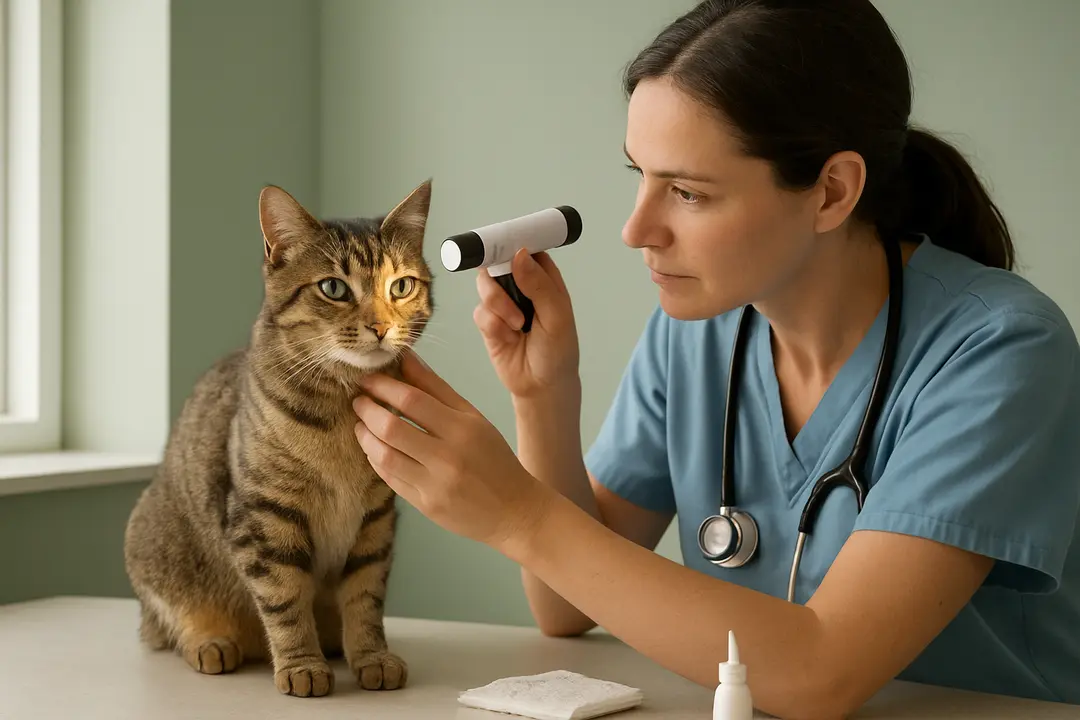
In this guide (7 sections)
- Which eye changes need help today?
- What to look for without touching the eye
- What causes pink eye, and why can it look like a scratch?
- What if a kitten’s eyelids are swollen or stuck together?
- What can you safely clean at home?
- What will the vet check, and what should you watch afterward?
- Talk it through with Vicky
Yes, cats get pink eye, or conjunctivitis: inflammation of the tissue lining the eyelids and covering the white of one or both eyes. Call your vet today for new redness, persistent tearing, swelling, or repeated squinting. If your cat suddenly seems unable to see or the eyeball has been pushed out of its socket, go to an emergency veterinary clinic now.
Which eye changes need help today?
You don’t have to identify pink eye before you call. What matters is whether your cat can see, whether they can keep the eye open comfortably, and what has changed since the eye last looked normal.
| What you notice | What to do |
|---|---|
| Your cat suddenly seems unable to see, the eyeball is displaced from its socket, or there is an obvious serious injury to the eye. | Go to an emergency veterinary clinic now. Suddenly bumping into familiar furniture can be a clue to lost sight; don’t delay to test it at home. |
| The eye is newly cloudy, your cat keeps it shut, or they repeatedly squint or paw at it. | Call promptly. If your vet is closed, call an after-hours clinic for help deciding where and when your cat should be seen. |
| The lining looks red or swollen, tears or thick discharge keep collecting, or the third eyelid stays visible at the inner corner. | Call your vet today to arrange an eye exam. You don’t need to wait for a second sign or for the other eye to change. |
Both the MSD Veterinary Manual’s eye emergency guide and the Royal Veterinary College’s guidance on red-eye emergencies identify sudden blindness and a displaced eyeball as emergencies. When you speak to the clinic, lead with any known injury or chemical splash, a sudden difference in pupil size, or blood visible inside the eye. Those details say more than “my cat has pink eye.”
What to look for without touching the eye
If there are no obvious emergency signs, watch your cat in familiar surroundings while you arrange care. Cats Protection’s guide to eye problems describes changes you can spot without handling the eye. Three observations are particularly useful on the phone:
- How your cat holds each eye. Is one eye half closed while the other is open? Does what looks like a wink keep happening on the same side? Tell the clinic if the eye opens between episodes or stays shut. If it’s shut, that’s enough to report; there’s no need to pull the lids apart to see underneath.
- Where you see the change. A pink flap coming from the inner corner may be the third eyelid, an extra fold of tissue beneath the outer lids. That looks different from a cloudy or blue-looking haze across the clear front of the eye. Describe which you see. Don’t try to wipe a haze off the eyeball.
- What is coming out, and when it started. Note whether you see watery tracks on the face, dry material on the fur, or fresh, thick discharge between the lids. A reddish-brown mark on the fur is a different observation from a red layer or clot visible inside the eye. If you can’t tell where the color is, say so rather than guessing.
Give the clinic a timeline in plain words. For example, “The left eye started watering this morning, and now my cat is holding it shut” tells them which eye is affected, how quickly it changed, and what your cat is doing now.
What causes pink eye, and why can it look like a scratch?
Pink eye describes where the inflammation is, not why it started. An infection can inflame the lining of the lids, but so can an irritant. Another possibility is a scratch or ulcer, a sore on the cornea, the clear front surface of the eye. Both conjunctivitis and a corneal ulcer can make a cat tear up and squint. Even a careful owner may not be able to tell them apart.
One infectious cause is feline herpesvirus. It can affect the nose as well as the eyes. Mention sneezing, a runny nose, eating less, or seeming unusually tired when you call. The combination helps your vet decide what to check, but it doesn’t prove your cat has the virus.
Herpesvirus can become active again after stress or illness. If your cat has had a similar episode, tell the vet when it happened, whether it affected the same eye, and what treatment your cat received. That history is useful; it doesn’t mean the current episode has the same cause.
What if a kitten’s eyelids are swollen or stuck together?
Call a vet urgently for a kitten whose lids are swollen or sealed together by pus. A newborn kitten’s eyes may not yet have opened naturally, but infection can develop behind the closed lids. The concern is the swelling or trapped discharge, not the fact that a newborn’s eyes are still closed.
As this guide to eye infections in newborn kittens explains, pus beneath the lids can damage the cornea and leave a scar that affects sight. Don’t pry the lids apart or wait for them to open on their own. Tell the clinic the kitten’s approximate age, whether the eyes had ever opened, and whether one or both now look puffy or stuck shut.
What can you safely clean at home?
You can clean discharge on the surrounding fur while arranging care. Wash your hands, use clean, damp material, and gently wipe away what comes off easily. Leave the eyeball alone and wash your hands afterward. If your vet has already prescribed medication for this episode, the American College of Veterinary Ophthalmologists’ eye medication tips explain how cleaning around the lids fits into giving it.
Cleaning and treating are different jobs. Wiping sticky fur may make your cat more comfortable, but it doesn’t heal an ulcer or treat the cause of the discharge. Don’t put homemade rinses, human redness drops, or medication left from another episode into the eye without your vet’s direction.
There’s a particular reason to avoid leftover steroid eye drops: they can make herpesvirus disease worse, slow healing, and allow a corneal ulcer to deepen. The college explains why a vet needs to check the eye before using a steroid. A bottle prescribed for this cat in the past is not necessarily safe for this eye today.
What will the vet check, and what should you watch afterward?
The exam helps your vet distinguish swollen eyelid tissue from damage to the clear surface beneath it. One test uses a dye called fluorescein to highlight a break in that surface. It can reveal an ulcer that wasn’t visible to you. VCA’s guide to herpesvirus-related eye inflammation describes this check. If the pupils look different in size, your vet may also measure the pressure in each eye. The dye and pressure checks answer different questions; not every red eye needs the same tests or treatment.
Before you leave, ask which change your vet expects to improve first and when to call if it doesn’t. At home, notice whether your cat keeps the eye open comfortably and whether fresh discharge collects again. Clean fur right after a wipe tells you less than how the eye looks and feels to your cat between cleanings.
If squinting continues despite treatment, the eye becomes cloudy, or signs return after treatment ends, contact the prescribing clinic rather than changing or restarting the drops yourself. Tell them what improved, what didn’t, and when you noticed the change. You don’t need to decide whether it’s a flare-up or a new problem before asking for a recheck.
Talk it through with Vicky
You can tell Vicky what you’re seeing right now, including which eye changed and whether your cat can keep it open. Vicky, our virtual assistant, will bring in Dr. Lena (Virtual DVM, DACVO), our virtual veterinary ophthalmology specialist, to help you organize questions for your vet. Virtual guidance can’t replace an eye exam; for emergency signs, go directly to an emergency veterinary clinic.
Common questions
My cat keeps squinting one eye but has no discharge. Could it be scratched?
Yes, a scratch or ulcer is one possibility. You don’t need to see a scratch mark or discharge to call your vet about repeated squinting, even if the eye opens normally between episodes.
How can I tell sleep crust from discharge that needs a vet?
A small dry mark alone doesn’t tell you the cause. Notice whether fresh tears or sticky material keep collecting and whether the eye is red, swollen, or partly closed. Call your vet about those changes rather than judging by the color of the crust.
Does green discharge mean my cat needs antibiotic drops?
No. Colored discharge warrants an exam, but its color can’t tell you whether an antibiotic is appropriate. Don’t start drops left over from a previous prescription.
Can my other cat or my family catch pink eye from my cat?
It depends on the cause. Feline herpesvirus can spread between cats through secretions, but that specific virus does not infect people; irritation is not contagious. If the cause is unknown, wash your hands after cleaning the eye and ask your vet what precautions your household needs.
Can I wait for pink eye to clear if my cat is still eating and acting normally?
A normal appetite doesn’t tell you whether the surface of the eye is damaged. Call your vet about new redness, persistent tearing, or repeated squinting even if meals and other routines haven’t changed.
Sources
- Conjunctivitis in Cats — VCA Animal Hospitals
- Eye Problems in Cats: Common Eye Issues — Cats Protection
- Overview of Ophthalmic Emergencies in Small Animals — MSD Veterinary Manual
- Anisocoria in Cats — VCA Animal Hospitals
- Hyphema in Cats: Symptoms and Treatment — PetMD
- Eye Infections in Newborn Kittens — PetMD
- Feline Herpes Viral Conjunctivitis — VCA Animal Hospitals
- Herpesvirus Infection in Cats (Feline Viral Rhinotracheitis) — VCA Animal Hospitals
- Tips for Eye Medication — American College of Veterinary Ophthalmologists
- Why Your Cat Should Not Receive Topical Steroid Eye Medication — American College of Veterinary Ophthalmologists
- PetMD — Conjunctivitis in Cats (Cat Pink Eye)
- Royal Veterinary College — The Red Eye: What Is an Emergency?



