What signs could mean my cat has an eye infection, and how soon should I see a vet?
Tell normal morning eye crust from discharge that needs an exam within 24 hours, and recognize when squinting, cloudiness, or sight loss needs faster care.
In this guide (6 sections)
Repeated tearing, sticky discharge, or red, swollen eyelid lining can suggest an eye infection: call your vet today for an exam within 24 hours, even if your cat seems comfortable. Seek an urgent exam today for yellow or green drainage, persistent squinting, an eye held shut, or a cloudy spot on the eye; a painful scratch can look like an infection. Go to an emergency veterinary hospital now if your cat suddenly seems unable to see, the eyeball is out of its socket, or the eye has been pierced or severely injured.
How soon should my cat’s eye be examined?
Use the most urgent sign you see. For example, if the discharge is clear but your cat keeps the eye half shut, follow the advice for squinting, not the advice for tearing alone.
| What you notice | What to do |
|---|---|
| A little familiar crust after sleep; both eyes open comfortably, look clear, and stay that way during the day | Monitor for a change from your cat’s usual pattern. This alone can be normal. |
| Tearing or sticky discharge keeps coming back, or the pink lining is newly red or puffy, without the signs below | Call today. Arrange an exam as soon as available, within 24 hours rather than at a later routine visit. |
| Yellow or green drainage, repeated squinting or pawing, an eye held shut, discomfort in light, or cloudiness on the clear surface | Call for urgent assessment now and have your cat seen today. If your clinic is closed or cannot see your cat, contact an urgent or emergency veterinary service. |
| Sudden apparent loss of sight, an eyeball displaced from its socket, or a deep wound or other severe injury to the eyeball | Go directly to an emergency veterinary hospital. Don’t wait for discharge to develop. |
PetMD’s guide to common cat eye problems recommends an exam within 24 hours for suspected conjunctivitis and immediate assessment for a suspected ulcer. VCA’s urgent eye care guide includes colored drainage as a reason for urgent care in its own right. Your cat does not have to be squinting for that discharge to matter.
What to look for when your cat is awake
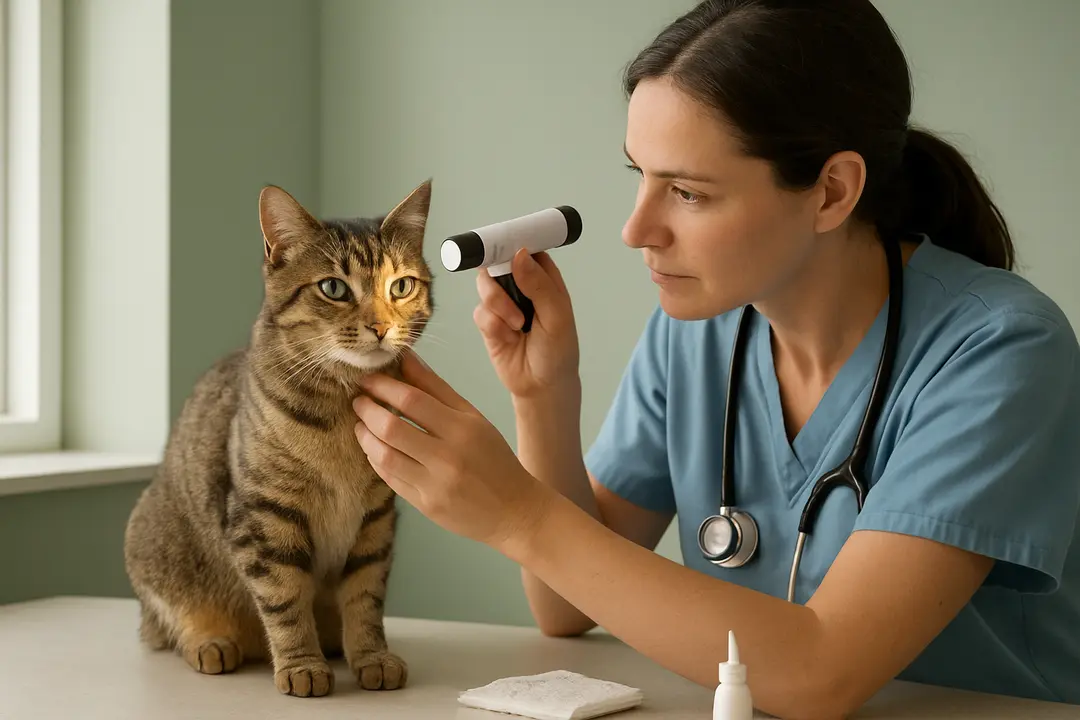
You don’t need to identify the condition before calling. Look at what your cat does naturally and compare it with what’s usual for them. These three observations are useful to the clinic:
- Does the discharge return during the day? A small dry fleck in the corner after a nap is different from tears repeatedly wetting the fur below the eye. Notice whether the material is watery or sticky and what color it is. If you’ve already wiped some away and it came back, tell the clinic that; you don’t need to wait for it to happen again.
- Where is the change? Look for redness or puffiness in the pink tissue around the eye. The third eyelid, a fold of tissue at the inner corner, may be more visible than usual. That’s different from a cloudy patch that appears to be on the clear front of the eyeball itself. If you’re unsure, describe where you see the change rather than trying to name it.
- How is your cat using each eye? Notice whether both eyes are comfortably open or one stays narrower than the other. Frequent blinking, rubbing the face with a paw, or turning away from ordinary light can indicate discomfort. It’s easy to overlook a partly closed eye when your cat still comes over for dinner. Report what the eye is doing, even if the rest of your cat’s behavior seems normal.
A change in how your cat finds their way around is a separate concern. Suddenly colliding with familiar furniture or seeming unable to find the usual food bowl can be a clue to sight loss, as the Cornell Feline Health Center explains. If your cat suddenly seems unable to see, you don’t need to prove it with a home vision test. The Merck Veterinary Manual’s guide to eye emergencies identifies sudden sight loss as an emergency, along with a displaced eyeball or a wound that cuts into the eye.
Is it pink eye, a scratch, or something else?
Conjunctivitis, sometimes called pink eye, means the lining around the eye is inflamed. The word describes which tissue is affected, not why. The lining and third eyelid can swell, and one or both eyes may water or produce yellow or green discharge. Infection is one possible cause, but material trapped against the eye can also cause irritation. VCA’s guide to conjunctivitis in cats explains why these signs can resemble those of other eye problems.
The cornea is the clear front surface of the eye. A scratch or sore there, called a corneal ulcer, can make a cat avoid light or hold the eye shut. You might expect to see a mark that explains the pain, but a small ulcer can be hard to see even when you know where to look. That’s why a persistent squint deserves urgent attention even when the eye looks clear.
Glaucoma, a condition involving high pressure inside the eye, can also cause a red, painful eye. Discharge color won’t distinguish these conditions, and treatment for one may be unsuitable for another. The useful decision at home is how quickly to get help, not which drops to choose.
What to tell the clinic and what to avoid while waiting
Start with the change that sets the timing: for instance, that your cat has kept the left eye half shut since breakfast, or that yellow drainage keeps returning even though both eyes are open. Then say when you first noticed it, which eye changed first, and whether the other one is affected now. Mention any injury you witnessed, trouble finding familiar objects, or new cloudiness. It’s useful to say you didn’t see what happened, too.
If you’ve used drops or ointment, have the package handy so you can read the name to the clinic. Don’t start human redness drops or reuse medication from an earlier eye problem without your vet’s approval. Even if the bottle was prescribed for this same cat, the cause may be different this time, and previously opened eye drops can become contaminated. For sticky lids, ask the clinic what, if anything, they want you to use while arranging the visit.
Steroid eye drops are a particular concern. They can delay healing, deepen a corneal ulcer, or worsen an infection caused by feline herpesvirus. The American College of Veterinary Ophthalmologists explains why cats need an ulcer check before steroid eye treatment. If you’ve already used an eye medicine, tell the vet which one rather than trying another product to see whether it helps.
What can the vet check, and what should I watch for afterward?
The vet can examine the eyelid lining and the clear surface separately and look for trapped material. A special dye can reveal a small ulcer that wasn’t visible at home. PDSA’s guide to corneal ulcers explains why finding and treating a surface wound promptly matters for your cat’s sight.
A pressure check answers a different question. An ulcer and glaucoma can both hurt enough to make the eye look red and partly closed. Measuring the pressure inside the eye helps the vet tell glaucoma from other causes, as the Schwarzman Animal Medical Center’s eye conditions guide describes. Those findings help your vet choose treatment rather than relying on how the discharge looks.
Before you leave, ask what improvement should look like for your cat’s particular problem and when the eye needs to be checked again. At home, notice both the drainage and how comfortably your cat uses the eye. If the fur is drier but your cat now holds the eye shut, or a new cloudy spot appears, call for urgent reassessment instead of waiting for a planned recheck.
Talk it through with Vicky
You can tell Vicky what you’re seeing right now, including when the discharge appears and whether your cat keeps both eyes open. Vicky will bring in Dr. Lena (Virtual DVM, DACVO), our AI specialist in veterinary ophthalmology, to help you organize your observations and questions. For urgent or emergency signs, contact the veterinary service directly rather than waiting for a reply.
Common questions
My cat is squinting but still eating and playing. Can this wait until my vet opens?
If the squint persists, contact an urgent or emergency veterinary service now rather than waiting overnight. Normal appetite and play don’t rule out a painful corneal ulcer.
Does clear drainage rule out a scratch? Does green discharge mean my cat needs antibiotics?
No to both. A scratched eye can water, and green discharge needs an urgent exam but does not establish which treatment your cat needs.
One eye was watering and now the other is too. Does that mean an infection has spread?
Not necessarily. Conjunctivitis can affect one or both eyes, but that pattern alone doesn’t identify the cause. Tell your vet when each eye changed and whether either eye looks painful or cloudy.
My cat opened the eye for a while, then started squinting again. Is it healing?
A brief period with the eye open doesn’t show whether a surface injury has healed. A returning squint is a reason for an urgent exam today, even if the discharge has stopped.
Sources
- PDSA — Weepy eyes in cats
- VCA Animal Hospitals — Conjunctivitis in Cats
- PetMD — Cat Eye Problems: Most Common Eye Issues in Cats
- PDSA — Eye ulcers (corneal ulcers) in cats
- VCA Animal Hospitals — Urgent Care for Eye Issues
- Merck Veterinary Manual — Overview of Ophthalmic Emergencies in Small Animals
- Cats Protection — Eye problems in cats: common eye issues
- Schwarzman Animal Medical Center — Eye Conditions in Dogs and Cats
- VCA Animal Hospitals — Safe Handling of Medications at Home
- American College of Veterinary Ophthalmologists — Why Your Cat Should Not Receive Topical Steroid Eye Medication
- Causes of Goopy Eyes: How to Help Your Pet — Preventive Vet
- Sudden Blindness — Cornell Feline Health Center