
Is turkey bacon a safe treat for puppies?
Learn why turkey bacon isn't a good puppy treat, what to check on the label after a stolen bite, when to call your vet, and what to offer for training instead.
In this guide (6 sections)
No. Skip human turkey bacon as a puppy treat: processed strips can be high in salt and fat, and some contain onion or garlic. If your puppy already stole a bite, a tiny cooked crumb is a much smaller exposure than a strip; what matters now is the amount eaten for your puppy’s weight, the ingredients, and how your puppy is acting.
My puppy ate turkey bacon. What should I do now?
- Look at your puppy first. Go directly to an emergency veterinary clinic if your puppy has a seizure, is vomiting repeatedly or severely, has obvious belly pain, or is severely lethargic rather than alert and responsive. Don’t delay the trip to look for a wrapper. PetMD’s guide to nausea in dogs explains why repeated or severe vomiting should not wait for a regular appointment.
- Move the food out of reach and work out what’s missing. A dropped crumb can get past a careful owner. If you saw your puppy eat it, you have useful information: you know the size of the bite. If you found a plate on the floor, note how much was on it beforehand, what remains, and whether your puppy could also have reached the pan drippings.
- Call about a possible harmful exposure, even if your puppy looks well. If the bacon contains onion or garlic, the amount could be large for your puppy, or you can’t rule out a substantial amount, call your veterinarian or an animal poison control service now. Keep the packaging if you have it. The ASPCA’s poisoning guidance recommends calling about suspected poisoning before signs appear.
One missing strip is not a poisoning threshold, and one tiny crumb of cooked bacon without onion or garlic is not the same as a fatty meal. After a small bite, an upset stomach is a more realistic concern than salt poisoning. If you’re unsure which situation you’re dealing with, describe what you saw rather than trying to decide whether a strip counts as a “small” treat.
How to read the turkey bacon label after a stolen bite
Start with the ingredients. Look for onion and garlic, including onion powder and garlic powder. If someone prepared the bacon, ask whether they added a seasoning blend that wasn’t in the package. Onion and garlic are a concern for dogs whether the meat was cooked or not. If either was present, tell the clinic the ingredient and your best estimate of how much bacon your puppy ate. The Merck Veterinary Manual’s guide to onion and garlic poisoning explains why these ingredients matter.
Read the serving size before the sodium number. The number on the Nutrition Facts label usually describes a serving, not necessarily a strip. For example, if a serving is two strips and your puppy ate half a strip, your puppy ate one-quarter of the listed serving. The same fraction applies to both the sodium and the total fat. You can also read the serving size and numbers straight to the clinic; you don’t need to finish the math before calling.
Use the label from the actual product. As the FDA’s guide to sodium labels explains, sodium can vary even between similar foods. An online estimate for “one slice of turkey bacon” may describe a different recipe or a different-sized slice. If you don’t have the package, say so. An honest estimate such as “up to two strips, plus some grease” is more useful than a precise sodium figure from another product.
What symptoms can turkey bacon cause?
The everyday concern is stomach upset. Bacon can cause vomiting or diarrhea, and processed turkey differs from plain meat because of its salt and fat content. An upset stomach after bacon does not by itself mean your puppy has salt poisoning. Salt poisoning is associated with excessive intake and can cause serious signs such as tremors or seizures. If you suspect your puppy ate a large amount of salty food, make the call based on what was eaten rather than waiting for shaking to start.
A fatty meal or access to pan grease raises a different concern: pancreatitis, or painful swelling of the pancreas. Signs can include vomiting, belly pain, poor appetite, and low energy. Pet Poison Helpline’s guidance on fatty table scraps notes that vomiting can be delayed after a fatty meal. A puppy who was playful when you cleared the breakfast dishes can still become unwell later. These signs are reasons to tell your vet what happened, not a way to diagnose pancreatitis at home.
What to tell your veterinarian, and what to watch for afterward
When you call, lead with how your puppy is acting, then give their most recent weight, the time they ate the bacon, the product, and the amount. Distinguish what you saw from what was possible. For example, seeing your puppy carry off half a strip tells the clinic something different from knowing that half a strip was left on a plate alongside a pool of grease. If vomiting has started, say when it began and how many times it has happened.
Those details help the veterinary team decide whether your puppy needs a visit or can be watched at home. Do not try to make your puppy vomit unless a veterinary professional tells you to. Cornell’s first-aid guide for suspected poisoning explains what information the team needs to make that decision.
If your vet recommends home observation, ask how long to watch and which changes they want reported. Use your puppy’s normal routine as a comparison: are they interested when their usual meal comes out? Are they alert and moving around comfortably? Note any diarrhea, vomiting, or change in appetite or energy, along with the time. If vomiting repeats, your puppy develops obvious belly pain, or their energy drops severely, go to an emergency clinic rather than waiting for the observation period to end.
What can I use instead of turkey bacon for training?
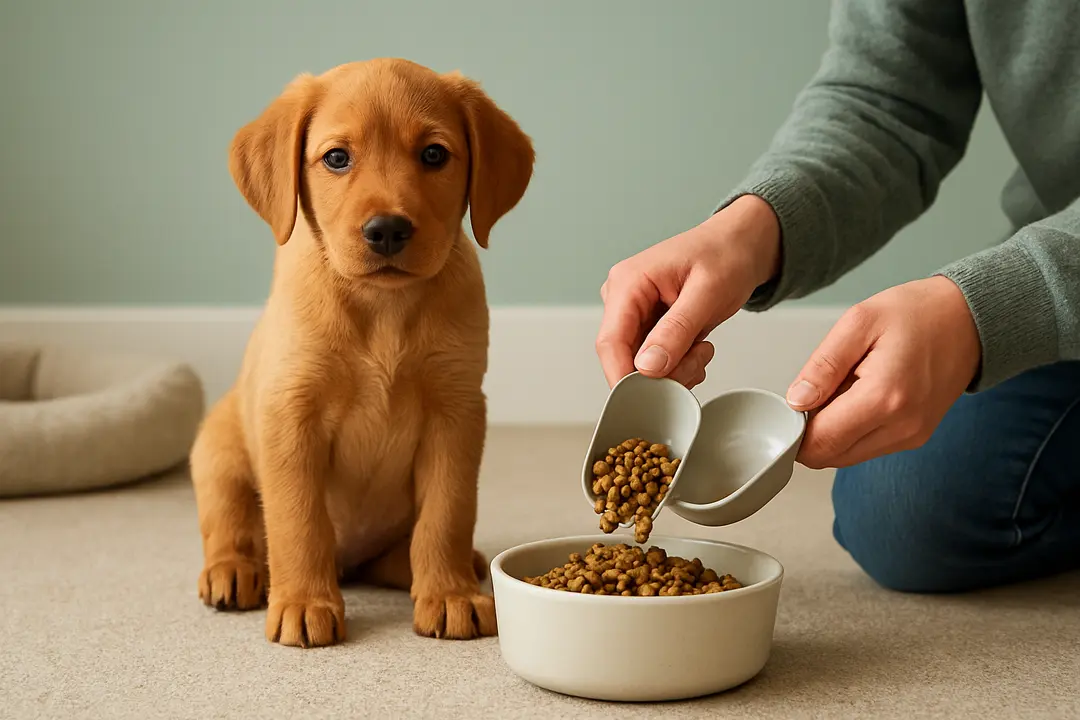
For frequent rewards, start with your puppy’s regular kibble. Measure the meal as usual, then set aside some pieces for practice. You can reward each success without adding a separate serving of treats. If several people train your puppy, have everyone take pieces from that same portion so you know what has already been fed.
If you want to share turkey on occasion, set aside a little fully cooked, unseasoned turkey breast. Remove the skin and bones and cut the meat into tiny pieces. Serve it without gravy, seasoning, or drippings. PetMD’s guide to turkey for dogs makes the useful distinction here: plain cooked meat is an occasional treat; processed breakfast strips are not its equivalent.
Keep extras to no more than 10% of your puppy’s daily calories, with the rest coming from a complete food made for puppies. That’s a limit for all extras combined, not an allowance for each type of treat. VCA’s guidance on training rewards recommends unseasoned choices if you use people food. On a day with lots of practice, using meal kibble for most rewards leaves room for an occasional tiny piece of plain turkey without displacing the food your puppy needs for growth.
Talk it through with Vicky
For help choosing training treats, you can tell Vicky what you’re seeing right now, including what your puppy eats at meals and how often you give rewards. Vicky will bring in Sam (Virtual PhD (Animal Nutrition)), our animal nutritionist, to help you choose a practical swap. For suspected poisoning, call your veterinarian or animal poison control first.
Common questions
Is reduced-sodium or uncured turkey bacon safer than pork bacon?
Neither label tells you enough to choose a puppy treat. Even a strip with less sodium can contain fat, onion, or garlic. Choose a tiny piece of plain cooked turkey instead of either type of bacon.
Does it matter if the turkey bacon was raw, cooked, or burnt?
Tell your vet how it was prepared. A burnt edge doesn’t tell you how much salt, fat, or seasoning your puppy ate, and cooking does not make onion or garlic safe. For a treat you offer on purpose, use fully cooked, unseasoned turkey rather than raw meat or bacon.
What if my puppy licked the grease but left the bacon?
Report the grease itself rather than saying your puppy ate no bacon. Fatty pan drippings can trigger pancreatitis; tell your vet how much grease your puppy could have reached and whether the pan contained any seasonings.
Are bacon-flavored puppy treats the same as human breakfast bacon?
A flavor name doesn’t tell you the ingredients or the calories in each piece. For training, choose very small, low-calorie rewards that fit into your puppy’s daily food plan; regular kibble is an option that doesn’t require buying a flavored treat.
Sources
- Can Dogs Eat Turkey? — PetMD
- Sodium in Your Diet — FDA
- Is Table Food Poisonous for Dogs? — Pet Poison Helpline
- Salt Toxicosis in Animals — Merck Veterinary Manual
- Garlic and Onion (Allium spp) Toxicosis in Animals — Merck Veterinary Manual
- First-aid for poisonous substances — Cornell University College of Veterinary Medicine
- What to Do if Your Pet Is Poisoned — ASPCA
- How to Choose Puppy Treats — VCA Animal Hospitals
- FDA — Serving Size on the Nutrition Facts Label
- Pet Poison Helpline — My Dog Ate Too Much Salt
- PetMD — Nausea in Dogs
- VCA Animal Hospitals — Using Food and Treats for Training Dogs
