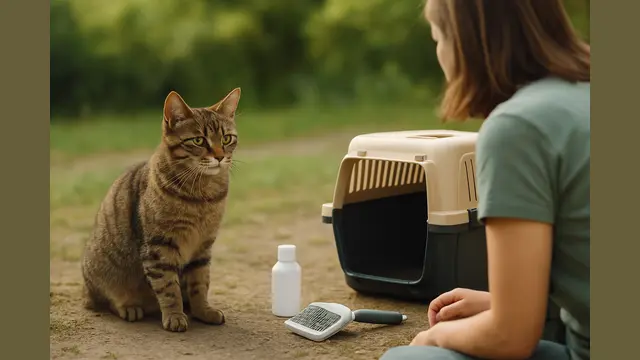
Do cats need baths, or is grooming themselves usually enough?
Find out when brushing or a damp cloth is enough, how to bathe a very dirty cat safely, and which changes in grooming are worth a call to your vet.
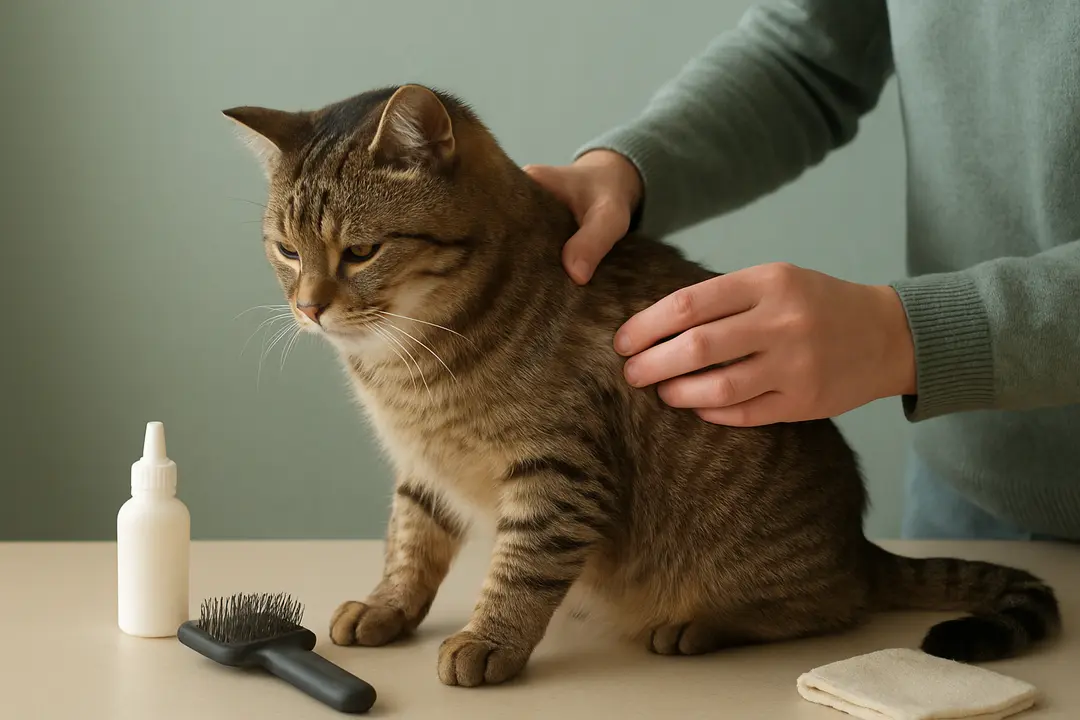
In this guide (7 sections)
- Choose between a brush, a damp cloth, and a bath
- How to clean stool or mud off one paw or back leg
- When an unknown substance on the fur needs urgent advice
- When less grooming calls for a regular vet visit
- How to bathe a very dirty cat if your vet recommends it
- Hairless cats and medicated baths are exceptions
- Talk it through with Vicky
Most healthy cats keep themselves clean and don’t need scheduled baths. If your cat grooms normally and the coat is clean, brushing is enough; for a muddy paw or a small patch of stool, use a damp cloth. If you suspect a harmful substance is on the fur, call your veterinarian or an animal poison control service right away rather than starting a bath.
Choose between a brush, a damp cloth, and a bath
Start with two questions: What’s on the coat, and how much of the coat is affected? Loose hair, a dirty back leg, and a splash from an unknown bottle call for different responses. The time since your cat’s last bath doesn’t help you choose between them.
| What you notice | What to do first |
|---|---|
| The coat is clean, with some loose fur | Brush rather than bathe. Long-haired cats benefit from daily brushing. |
| There’s ordinary dirt or stool on one small area | Wipe that patch with a damp cloth. Leave the clean fur dry. |
| Ordinary dirt covers much of the coat and won’t wipe off | Ask your vet whether a bath at home is appropriate. |
| Your cat repeatedly leaves part of the coat unwashed | Help with the dirty patch and arrange a regular veterinary appointment to discuss the change. |
| The residue might be a harmful product | Contact your vet, an emergency veterinary clinic, or animal poison control now for advice specific to the substance. |
There’s a benefit to leaving a clean coat alone. Frequent washing can strip the skin’s natural oils, leave the skin dry, and cause stress. Cats Protection’s bathing guidance favors brushing for routine care and a damp cloth for minor dirt. For a long-haired cat, the useful daily habit is working through the coat with a brush, not getting it wet.
How to clean stool or mud off one paw or back leg
A cat can step in fresh stool on the way out of the litter box even in a well-kept home. If you saw it happen, you have a useful piece of information: you know what the mess is. Before you fill the sink, look at where the dirty fur ends. Often the paw and a little fur above it need attention, but the belly, tail, and other legs are clean.
- Wipe the affected fur with a damp cloth. Focus on the dirty patch rather than wetting the whole leg. The same approach works for a paw you know is muddy.
- Check whether the mess is gone. If the fur is clean, you’re done. You don’t need to follow a successful spot cleanup with shampoo. If you find more stool across the legs and belly than you can wipe away, ask your clinic about the safest way to finish.
- Notice what happens afterward. A single misstep calls for a cleanup. If the same fur needs wiping again and again, notice whether your cat still reaches it during grooming. That observation is more useful to your vet than a count of how many baths you’ve given.
When an unknown substance on the fur needs urgent advice
If you find a smear after a paint or cleaner spill and can’t tell what touched your cat, don’t assume it’s safe to wipe away and forget. Cats can swallow material from their fur when they groom. If the substance might be hazardous, call your veterinarian or animal poison control immediately, even if your cat looks well. If your practice is closed, contact an emergency veterinary clinic now rather than waiting for a routine appointment.
While getting help, keep your cat from licking the area if you can do so safely. Have the container or product name handy if possible, and say when contact may have happened, where the residue is, and whether you saw your cat lick it. Don’t delay the call to identify the substance. Follow the clinic’s instructions about whether to come in or wash the coat; don’t try to make your cat vomit unless a veterinarian tells you to. ASPCA Poison Control’s guidance on suspected poisoning explains why you shouldn’t wait for signs before seeking help.
One exposure that’s easy to overlook is a dog’s flea treatment. A cat can pick up wet permethrin, an ingredient in some dog flea products, by touching a recently treated dog. You don’t have to have applied the product to the cat for contact to matter. Both the Pet Poison Helpline’s flea treatment guidance and PDSA’s guide to fleas on cats advise getting veterinary help immediately after accidental contact with a dog flea product.
When less grooming calls for a regular vet visit
An older cat may still wash the chest and front paws but leave the lower back untouched. That pattern is different from stepping in dirt. Arthritis can make turning to reach the back uncomfortable, excess weight can put some areas out of reach, and illness can interfere with grooming. A neglected patch by itself doesn’t tell you which explanation fits. Texas A&M’s veterinary guide to cat baths describes why cats that once kept clean without help may start to need it.
If grooming drops off or the back legs repeatedly become soiled, arrange an appointment with your regular vet rather than starting a weekly bath. Watch an ordinary grooming session if you can; there’s no need to bend or turn your cat to test their reach. Tell the clinic:
- When you noticed a change. Has your cat always needed help with one spot, or did a previously clean coat start looking neglected this week?
- Which areas your cat still washes. Skipping the lower back is a different observation from hardly grooming anywhere.
- What happens between cleanups. Tell your vet if you’ve seen a litter-box mishap, or if the fur keeps getting dirty and you don’t know why.
These details help your vet assess whether difficulty reaching the area or a health problem may be involved. In the meantime, you can clean a small patch of ordinary dirt with a damp cloth. You don’t need to solve the reason for the change before making the appointment.
How to bathe a very dirty cat if your vet recommends it
Animal care organizations differ a little on when to start a home bath. Texas A&M and the ASPCA describe bathing as an option for a very dirty cat; Cats Protection advises bathing only on a veterinarian’s recommendation. A practical approach when wiping hasn’t worked is to tell your clinic what’s on the coat, how far it spreads, and how your cat tolerates handling. If the clinic recommends an ordinary bath, here’s how to set up for it:
- Prepare before bringing your cat over. Put a nonslip mat in the sink or tub and use shallow, lukewarm water. Set out shampoo made for cats and a dry towel so you don’t need to leave midway through.
- Wet and wash the soiled fur. Keep water and shampoo away from the eyes and ears. If the mess is on the body, leave the head out of the wash.
- Rinse out all the shampoo. Once the visible dirt is gone, rinse every area where you used shampoo, then dry your cat with the towel. The ASPCA’s cat grooming guide gives guidance on washing, rinsing, and drying.
- Stop if handling becomes unsafe. If your cat panics, don’t hold on more tightly to finish. Get help from your clinic, and tell them if shampoo or dirt is still on the coat so they can advise you on the next step.
After a one-time mess, a successful bath doesn’t need a repeat date. If the coat stays clean and your cat is grooming as usual, go back to brushing.
Hairless cats and medicated baths are exceptions
A Sphynx can need help with oil that builds up on the skin. That’s a different job from washing mud out of fur. Ask your vet what skin care suits your cat and how often it’s needed, rather than borrowing a schedule from another hairless cat.
A prescribed bath also has a purpose beyond getting the coat clean. A veterinarian may prescribe medicated shampoo for a skin infection or an allergy. As VCA’s guide to medicated shampoo for cats explains, the diagnosis determines the product and treatment schedule. Follow your clinic’s directions even if the coat doesn’t look dirty. If your cat won’t tolerate the treatment, tell the clinic which part you’re having trouble with rather than changing the schedule yourself.
Talk it through with Vicky
If you’re unsure whether your cat needs spot cleaning, a bath, or help with a change in grooming, tell Vicky what you’re seeing right now. Describe the affected area and whether this is new for your cat. Vicky will bring in Dr. Ravi (Virtual DVM), our feline-friendly general practice veterinarian, to help you decide what to do next.
Common questions
Is it OK if my indoor cat has never had a bath?
Yes. If your cat grooms normally and the coat stays clean, there’s no need for a first bath simply because you’ve never given one. Brushing is still useful, especially for a long-haired cat.
My two cats spend about the same time grooming. Do they need the same care?
Not necessarily. Look at whether each cat’s coat stays clean and which areas they can reach, rather than comparing minutes spent grooming. One may need daily brushing for long hair while the other only needs help with an occasional dirty paw.
If my cat has fleas, does it need a flea bath?
A bath alone won’t control fleas. Ask your veterinary practice about a cat-safe treatment and how to address fleas in your home and on affected pets. Never use a dog-only flea product on your cat.
Can I use medicated shampoo left over from my other cat?
Check with your vet first. Two cats with similar-looking skin may need different treatment, and both the shampoo and how often to use it depend on the diagnosis.
Sources
- Should I bathe my cat? — Cats Protection
- When You Should—And Shouldn’t—Give Your Cat a Bath — Texas A&M Veterinary Medicine & Biomedical Sciences
- Cat Grooming Tips — ASPCA
- How to Bathe Cats with Medicated Shampoo — VCA Animal Hospitals
- Lovely Lilies and Curious Cats: A Dangerous Combination — U.S. Food and Drug Administration
- What to Do if Your Pet Is Poisoned — ASPCA Poison Control
- Common Flea and Tick Toxicity Questions and Answers — Pet Poison Helpline
- Fleas on cats — PDSA