What should I check if my dog keeps scratching one ear?
Check the ear for odor, discharge, crusts, soreness, or swelling. Learn what you can safely look at and which signs mean your dog needs urgent care.
In this guide (3 sections)
If your dog keeps scratching one ear, check the ear flap and the visible opening for odor, discharge, crusts, soreness, or swelling. Watch how your dog holds their head and walks. Call your vet if the scratching keeps happening, even if the ear looks normal. A lasting head tilt, unsteady walking, or pain that makes your dog cry calls for emergency care.
How to check the ear safely
Start by watching your dog before you touch the ear. Notice which side they scratch, whether they also shake their head, and whether they hold their head tilted to one side between bouts of scratching. A head that stays tilted is different from the brief movement you see during a head shake.
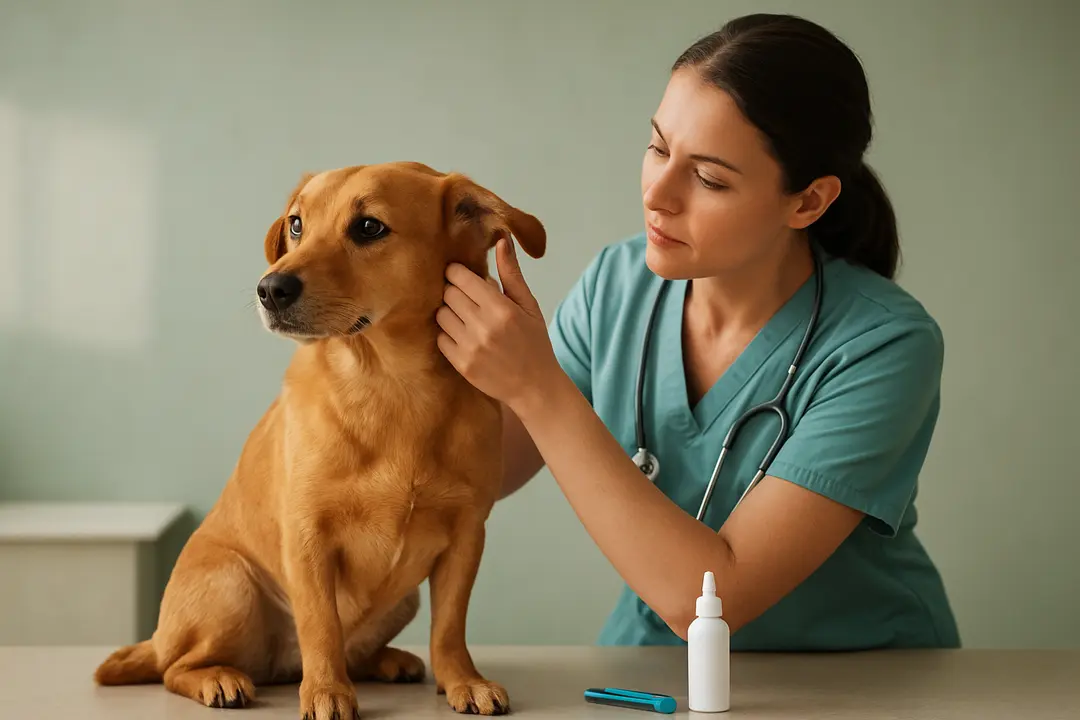
- Look at the ear flap. If your dog is comfortable, gently lift the flap in good light. Look at both sides of the flap and compare it with the other ear. Check whether the whole flap or just one part looks puffier than usual. You don't need to press on it to see if it's sore.
- Look at the opening, not deep inside. Check for discharge or crusts where you can see them. If there is discharge, note what it looks like and whether you notice an unusual smell. Don't put a cotton swab into the ear canal, the passage leading inward from the opening. You don't need to clean the ear to check it.
- Stop if your dog seems uncomfortable. If your dog pulls away when you try to lift the flap, don't hold it open for a closer look. Tell the clinic that your dog seemed sore when you approached or touched the ear. It's fine if you couldn't see the opening.
What your checks can tell you
Odor, discharge, crusts, or soreness are reasons to call the vet promptly. These signs help you describe what's happening, but they don't tell you the cause. For example, if your dog keeps scratching the right ear and you see crusts at the opening, report both details rather than assuming the crusts explain the itch. Your vet can look farther into the canal than you can at home.
Pay special attention if the flap itself has become puffy. A warm, soft swelling can be an aural hematoma, meaning blood has collected inside the ear flap. Scratching and head shaking can lead to this kind of swelling. Call your vet promptly if you notice it. The swelling is worth mentioning separately from any discharge or smell because it's a change in the flap, not just something you noticed at the opening.
A normal-looking flap doesn't settle the question, either. The part of the canal you can see at home is limited. If your dog keeps going back to the same ear, call your vet to arrange an exam rather than waiting for a smell, swelling, or discharge to appear.
When to call a vet
When you call, say which ear your dog is scratching and when you first noticed it. Then describe what you saw: for example, whether there was a smell, whether the flap had changed shape, or whether your dog pulled away before you could look. Say if the scratching comes in bouts and whether your dog also shakes their head. Those details are useful even if you never got a good look inside the ear.
When to go to an emergency vet
Seek emergency veterinary care now if your dog:
- Holds their head tilted to one side and the tilt doesn't go away.
- Walks unsteadily or has trouble keeping their balance.
- Cries because the ear is so painful.
If you see any of these signs, don't delay care to finish checking the ear. Lead with the urgent sign when you speak to the clinic. Saying that your dog is stumbling or that their head stays tilted gives the clinic more useful information about the urgency than saying only that your dog has an itchy ear.
Common questions
Can ear canal inflammation affect only one of my dog's ears?
Yes. Inflammation of the outer ear canal, called otitis externa, can affect just one ear. The other ear doesn't have to look or smell the same for there to be a problem.
Can a vet tell what's wrong from dark ear discharge alone?
Not reliably. Several conditions can cause dark discharge, so your vet may examine a sample under a microscope as well as looking inside the ear canal.
Can a swollen ear flap change my dog's ear shape permanently?
A pocket of blood in the ear flap can leave a lasting change in its shape. Getting the swelling checked early can help prevent that.