How long can my dog go without eating before I need to call a vet?
Learn when one skipped meal can wait, when continued food refusal warrants a vet call, and how drinking, vomiting, age, and diabetes change the decision.
In this guide (6 sections)
If your healthy adult dog skips one meal but is alert, is drinking, and keeps water down, you can watch briefly. If your dog keeps refusing all food, use about 12 hours as your cue to call your vet, rather than waiting a full day or two. Call sooner for a young puppy, after one missed meal in a diabetic dog, or if your dog is repeatedly vomiting or having diarrhea.
When to call about a missed meal
Two times matter: when you last saw your dog eat and when your dog first turned down food they would normally eat. Those aren’t always the same. A dog who usually eats breakfast and dinner hasn’t been refusing food all night because there wasn’t a meal on offer. On the other hand, putting down a fresh bowl doesn’t restart the clock for a dog who has been turning away from it.
The American Kennel Club’s guide to appetite loss advises calling if an otherwise well dog hasn’t resumed eating within 12 to 24 hours. VCA’s urgent care guidance uses time without food and recommends an evaluation after more than 12 hours. The useful takeaway is to call at the early end if refusal continues. You don’t have to decide which hour counts as the start before you pick up the phone. Give the clinic both times so they can advise you about an exam.
For example, if your dog refused dinner yesterday and is still refusing breakfast today, call this morning, even if they’re drinking. That’s different from finding one untouched breakfast and seeing your dog play and drink as usual. How long a dog might survive without food isn’t the measure you need for either decision.
When other signs matter more than the clock
Call your vet or an urgent care clinic now if your dog is repeatedly vomiting or having repeated diarrhea along with refusing food. This includes a dog who goes back to the water bowl but keeps bringing the water up. Drinking and keeping water down are different: water that comes back up can’t replace the fluid your dog is losing. Tell the clinic how often it’s happened, whether your dog still wants to drink, and whether they’re less active than usual. The AKC’s guide to vomiting in dogs explains the concern about fluid loss, and Cornell’s emergency care guide covers persistent vomiting or diarrhea.
If your dog may have swallowed something poisonous or an object that could block the gut, call immediately. Contact your vet or an emergency clinic; for a possible poison, you can also call an animal poison control service. Don’t wait for your dog to turn down a second meal, vomit, or start looking sick. Tell them what your dog may have swallowed and roughly when. If you’re not sure, say so rather than delaying the call to find out. As PetMD’s guidance on swallowed items explains, some items cause more harm on the way back up. Don’t make your dog vomit unless a vet specifically tells you to.
Puppies and diabetic dogs need a different plan
For a young puppy, call promptly when they lose interest in food. Don’t apply an adult dog’s observation window. Puppies have smaller energy reserves, and toy-breed puppies are particularly vulnerable to low blood sugar. Preventive Vet’s guide to puppies who won’t eat recommends veterinary assessment. Tell the clinic your puppy’s age, their usual meal schedule, and what you’ve actually seen them eat today.
For a dog with diabetes, call after one refused meal. Food intake matters to insulin safety: giving insulin after a skipped meal can cause blood sugar to fall too low. Cornell’s guidance on feeding diabetic dogs directs owners to call their vet when their dog isn’t eating. Get instructions from the clinic managing your dog’s diabetes before the next insulin dose rather than deciding on a change yourself.
If your dog is a senior or has another known illness, mention that when you call. Advice meant for a healthy adult who occasionally skips breakfast may not fit a dog whose appetite has changed during an illness.
What to check at the food and water bowls
If brief observation is appropriate, the goal is to find out what your dog willingly eats and drinks. You don’t need to persuade them to finish a bowl. These checks will give you something more useful to tell your vet than “my dog is being picky.”
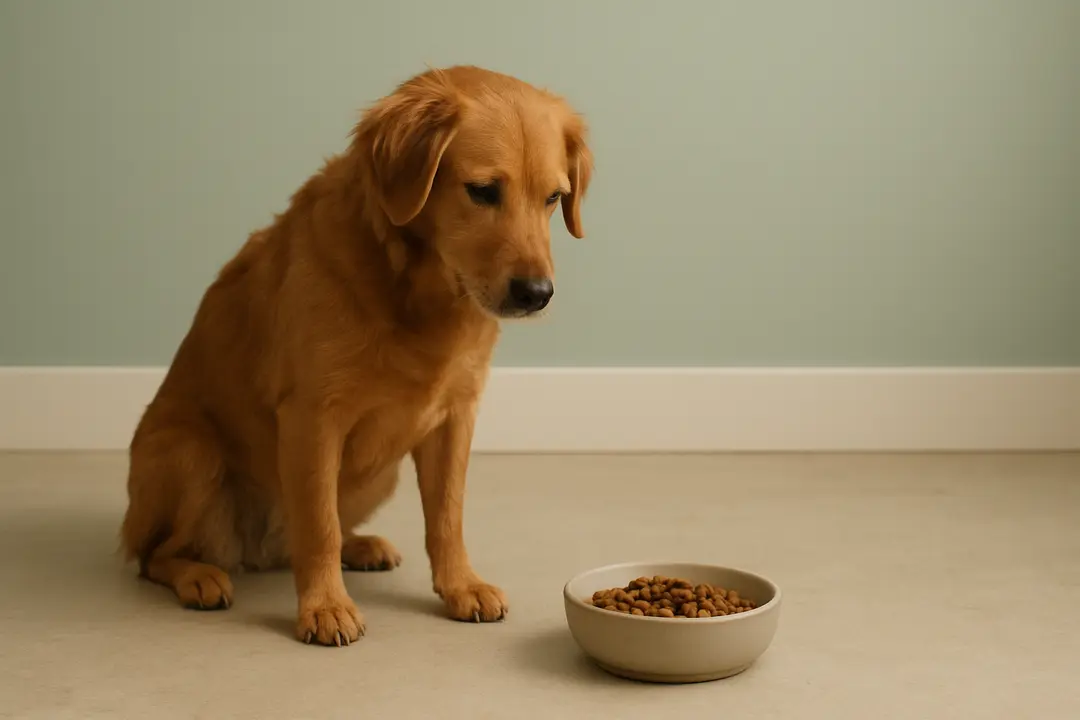
- Offer a small portion of familiar food and watch who eats it. In a home with several dogs, even a careful owner can mistake an empty dish for a finished meal. Offer your dog their portion away from the others so you can see how much they swallow. A few bites, half their usual portion, and no food at all are different observations. Count snacks, too.
- Notice where eating stops. Does your dog sniff and walk away, or come eagerly to the bowl, pick up food, and drop it? A dog can want to eat but have trouble picking up, chewing, or swallowing food. Pain in the teeth, gums, jaw, or throat is one possible reason. If eating looks painful, describe that to your vet rather than treating it as a food preference. You don’t need to find a sore spot yourself.
- Keep fresh water within reach. Watch for an actual drink, especially if pets share a bowl, then note whether the water stays down. A dog who drinks normally but continues to refuse food still needs an appetite assessment; a dog who repeatedly vomits after drinking needs urgent help. VCA’s home care guidance recommends tracking food and water separately.
- Let your dog take food from you, not the other way around. Offering a bite for your dog to take willingly is different from pushing it into their mouth. Don’t force food or squirt water down the throat. Food or liquid can enter the airway if your dog doesn’t swallow it properly. Get veterinary direction if your dog needs help eating or drinking.
What to tell the clinic and what to watch at the next meal
Start the call with the detail that most affects the decision. “My dog has diabetes and refused breakfast” or “My dog hasn’t eaten and keeps vomiting after drinks” tells the clinic more than a count of missed meals alone. Follow with the last confirmed meal, when the refusal began, anything your dog has eaten since, and any change in drinking or activity. If nobody saw the last meal, an honest “I don’t know” is useful.
Those observations help the vet decide what to check. If your dog seems hungry but drops food, the vet may pay particular attention to the mouth and whether chewing or swallowing hurts. If drinks keep coming back up, the more immediate question is how much fluid your dog is losing. There’s no single test or recovery timeline that you can predict from an untouched bowl.
If the clinic recommends watching at home, ask when they want an update and what change means you should call sooner. At the next meal, note not only whether your dog ate, but how much and how comfortably. One soft bite is worth reporting; it isn’t the same as returning to a normal meal. If the problem returns, let the clinic know the pattern rather than counting each missed meal as a separate event.
Talk it through with Vicky
You can tell Vicky what you’re seeing right now, including when your dog last ate and what happens when you offer food or water. Vicky, our AI assistant, will bring in Dr. Andy (Virtual DVM), our AI general practice veterinary specialist, to help you organize those observations. If your dog is due for a vet call or needs urgent care, contact your clinic directly rather than waiting for virtual guidance.
Common questions
My dog skipped breakfast but is playing. Can I wait until dinner?
You can watch an otherwise well adult briefly, but dinner isn’t the deadline. If food refusal continues, call around the early end of the 12–24-hour window and tell your vet both when your dog last ate and when they first refused food. If you’re unsure because the last meal was already many hours ago, call rather than adding another full waiting period.
Does eating treats or chicken count if my dog won’t eat a normal meal?
Yes, it counts as food, so tell the clinic what your dog took and how much. It doesn’t mean appetite is back to normal. For an otherwise healthy selective eater, stick to regular mealtimes rather than offering treats between meals; don’t assume a new change is pickiness.
My dog eats soft food but drops kibble. Does that rule out a sore tooth?
No. Being able to swallow a soft bite doesn’t show that chewing is comfortable. Tell your vet which textures your dog manages and whether they drop food before chewing or stop partway through; the teeth aren’t the only possible source of discomfort.
What if my diabetic dog ate only part of the meal before scheduled insulin?
Tell the clinic managing the diabetes how much of the usual portion your dog actually ate and ask for instructions before giving insulin. A few bites aren’t enough information to decide on an insulin change yourself.
Do I need to measure exactly how much my dog drank before I call?
No. Say whether you saw your dog drink, whether the water stayed down, and whether other pets use the bowl. Don’t delay a needed call to collect a measurement you don’t have.
Sources
- American Kennel Club — Why Is My Dog Not Eating? Common Causes of Loss of Appetite in Dogs
- VCA Animal Hospitals — Urgent Care for Loss of Appetite
- Cornell Riney Canine Health Center — When to Go to the ER
- PDSA — My Dog Has Eaten Something Harmful
- American Kennel Club — Tummy Troubles: When Does Dog Vomiting Require Veterinary Care?
- VCA Animal Hospitals — Anorexia in Dogs
- VCA Animal Hospitals — Caring for Your Sick Dog
- MSD Veterinary Manual — Pneumonia in Dogs
- American Kennel Club — Why Is My Dog a Picky Eater?
- Preventive Vet — Why Your Puppy Isn’t Eating & What You Can Do
- Cornell University College of Veterinary Medicine — Diets for diabetic dogs
- PetMD — What to Do If Your Dog Swallowed Something They Shouldn’t Have