Does my dog need anything for a gurgling stomach, and when should I call the vet?
Learn when a dog with a noisy belly can have their usual meal, which symptoms warrant an urgent vet call, and which signs mean go to an emergency clinic now.

In this guide (6 sections)
A gurgling stomach alone usually needs no treatment: if your dog is comfortable, alert, eating and drinking normally, and passing normal stool, offer the usual meals and keep fresh water available. Call your vet or an urgent care clinic now for repeated vomiting, several bouts of watery diarrhea, blood in vomit or stool, or vomiting that keeps your dog from holding down water. Go straight to an emergency vet if your dog tries to vomit but nothing comes up, their belly swells rapidly or is very painful, or they collapse.
Why your dog's stomach growls before or after a meal
An empty stomach can rumble, but normal digestion can be noisy after a meal, too. As PetMD's guide to stomach gurgling explains, either can happen in a well dog. Growling before breakfast doesn't prove your dog is hungry, and growling after breakfast doesn't mean the food disagreed with them. Whether a meal silences the sound isn't a reliable test.
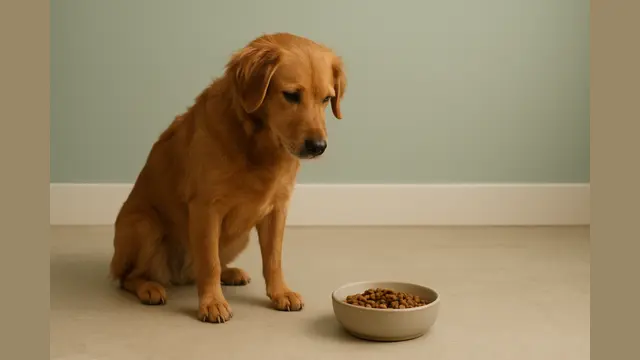
Picture a dog whose belly is loud enough to hear from across the kitchen. If your dog greets you as usual, passes a formed stool on the morning walk, and comes back ready for breakfast, you can keep the usual routine. If the same dog leaves breakfast untouched and lies down instead of joining you, the decision changes. Call your vet about the change in appetite and energy, even if the rumbling has stopped.
When to monitor, call your vet, or go to an emergency hospital
Look at your dog rather than trying to judge the volume of the noise. Texas A&M's guidance on stomach upset in dogs distinguishes brief digestive signs in an otherwise well dog from symptoms that persist or affect eating, drinking, or activity.
| What you notice | What to do |
|---|---|
| Occasional rumbling with normal appetite, drinking, energy, and stool | Monitor at home. No remedy is needed for the noise. |
| Your dog refuses a usual meal, loses interest in drinking, seems unusually tired or uncomfortable, or has digestive symptoms that aren't clearing up | Call your vet today. Tell them what's different from a normal day for your dog. |
| Your dog vomits repeatedly, can't keep water down, passes several watery stools, or has blood in vomit or stool | Call for urgent veterinary advice now. If your vet is closed, call an urgent care or emergency clinic rather than waiting until morning. |
| Your dog tries to vomit without bringing anything up, has a rapidly swelling or very painful belly, or collapses | Go to an emergency veterinary hospital now. Any one of these signs is enough. |
One vomit in a dog who is otherwise playful and drinking normally is different from vomiting each time they drink. A dog who can't keep water down can't replace the fluid they're losing. If vomiting or diarrhea is profuse, or your dog looks severely ill or is too weak to stand, go straight to an emergency hospital. VCA's guide to urgent care for vomiting and diarrhea explains when a dog needs hospital care rather than an urgent care visit.
Don't wait for visible swelling if your dog is dry heaving. Trying to vomit without bringing anything up can be a sign of bloat, a life-threatening condition in which the stomach can swell and twist. Cornell's guide to bloat describes other signs, including pacing and drooling. You don't need to see all of them or hear any particular belly noise: the Merck Veterinary Manual's emergency guidance lists unsuccessful retching itself as a reason for immediate evaluation.
What to offer a dog who has a noisy belly but feels well
- Offer the regular food when a meal is due. There's no need to skip breakfast because of growling. If your dog has already eaten and is comfortable, there's also no need for an extra meal to see if the rumbling stops. At the next mealtime, notice whether your dog willingly eats the food they normally want.
- Leave fresh water within reach. Notice whether your dog chooses to drink and, if they've vomited, whether the water stays down. Don't force food or water. If several pets share a bowl and you don't know who drank, tell the clinic you're unsure rather than trying to get your dog to drink on demand.
- Keep the food familiar. A rich leftover or a sudden food change can cause digestive upset. The Schwarzman Animal Medical Center's advice on healthy stools recommends a consistent diet and access to water. If someone gave your dog a new treat yesterday, note what it was rather than changing several more things today.
- Don't reach for a human stomach medicine. Ask your vet before giving any medicine. If your dog actually has vomiting or diarrhea, ask whether a temporary bland diet makes sense, what to feed, and for how long. That's a different decision from what to put in a well dog's bowl, and a diet change shouldn't delay an urgent call.
What if your dog got into something?
A new treat is useful feeding history. A missing piece of a toy is a different concern. Think about what your dog could reach, and ask anyone who fed or walked them what they saw. If your dog got into a bag or trash can, don't assume food was the only thing inside.
If a sock or part of a toy is missing and your dog may have swallowed it, contact your vet for advice rather than offering a meal to see what happens. Describe the item, how much is missing, and when your dog could have reached it. It's useful to distinguish what you saw from what you suspect: finding a chewed toy with a piece missing isn't the same as seeing your dog swallow the piece, but either detail is worth reporting.
If you suspect poisoning, call your vet or an emergency veterinary clinic immediately. Don't make your dog vomit unless a veterinarian tells you to. Cornell's first-aid guide for poisonous substances recommends reporting the substance, the estimated amount, the time of exposure, and your dog's weight. Give your best estimates; don't put off the call to work out an exact amount.
What to watch next and what to tell the clinic
If you're monitoring a comfortable dog, use the next regular meal and trip outside as checkpoints. Did your dog want their food? Was the stool formed, loose, or watery? Is your dog still interested in their usual activities? There's no need to keep listening for the last gurgle. If your dog starts acting ill, use the signs above rather than waiting for the next meal to decide what to do.
When you call, lead with the sign that prompted the call. The fact that your dog has vomited several times and can't keep water down tells the clinic more about urgency than how long the belly has been loud. Be ready to say when your dog last ate and drank, whether you've seen blood, and what your dog may have picked up. The clinic can use that history to advise you on where and how promptly your dog should be seen.
If episodes come and go, jot down the meal timing, appetite, stool, and behavior during each one. Occasional rumbling with no other change is different from a pattern of noisy mornings when your dog also skips breakfast or has diarrhea. Arrange a vet visit for recurring digestive symptoms, even if your dog seems comfortable between episodes. Your notes can help your vet see a pattern that isn't apparent on the day of the visit.
Talk it through with Vicky
If your dog seems comfortable but their belly sounds different today, you can tell Vicky what you're seeing right now. Mention the last meal your dog wanted and whether their stool or energy has changed. Vicky will bring in Dr. Andy (Virtual DVM), our general practice veterinary specialist, to help you decide what to do next.
Common questions
My dog takes a treat but won't eat breakfast. Does that count as a normal appetite?
Not if your dog normally wants breakfast. Taking a treat doesn't erase that change; tell your vet today what your dog declined and what they willingly ate.
Does my puppy need different food because I can hear their belly after meals?
Not for the sound alone. If your puppy is comfortable, eats and drinks normally, and passes formed stool, keep the food familiar. A sudden switch can itself cause digestive upset.
Should I give my dog an antacid or a probiotic for stomach growling?
Ordinary digestive sounds don't require either one. The noise doesn't tell you your dog has too much stomach acid, so don't give a human antacid unless your vet recommends it.
What if my dog eats grass and then throws it up?
Pay attention to the vomiting rather than assuming the grass explains it. One episode in an otherwise alert, playful dog who can keep water down can often be monitored. For repeated vomiting, blood, or water that won't stay down, call for urgent veterinary advice now.
If my vet suggests chicken and rice, should I stop as soon as the gurgling stops?
Ask your vet how long to use the temporary diet and when to return to regular meals. A quieter belly isn't a reliable guide: normal digestion can be noisy, and symptoms such as diarrhea still matter when you hear nothing.
Sources
- Why Is My Dog’s Stomach Gurgling? — PetMD
- Helping Your Pet Poop Perfectly: Vet Tips for Healthy Stool — Schwarzman Animal Medical Center
- First-Aid for Poisonous Substances — Cornell University College of Veterinary Medicine
- Emergencies in Dogs — VCA Animal Hospitals
- Best Foods to Soothe Your Dog’s Upset Stomach — American Kennel Club
- Gastroenteritis in Dogs — VCA Animal Hospitals
- Texas A&M Veterinary Medicine — When To See A Veterinarian For A Dog’s Stomach Ache
- PetMD — Upset Stomach in Dogs: Signs and What To Do
- VCA Animal Hospitals — Urgent Care for Diarrhea or Vomiting
- American Kennel Club — Tummy Troubles: When Does Dog Vomiting Require Veterinary Care?
- Merck Veterinary Manual — Initial Triage and Resuscitation of Small Animal Emergency Patients
- Cornell University College of Veterinary Medicine — Gastric dilatation volvulus (GDV) or “bloat”