What does normal puppy earwax look like, and when should a vet check it?
Compare normal puppy earwax with discharge that needs a vet check, learn which pain or balance signs mean go now, and know what to leave alone before the visit.
In this guide (7 sections)
- When can puppy earwax wait, and when should you act?
- What normal wax looks like compared with discharge
- How to check both ears without hurting your puppy
- Do dark crumbs mean ear mites or an infection?
- What to tell the clinic and what to leave alone
- What the vet checks and what to watch afterward
- Talk it through with Vicky
A small smear of pale yellow, tan, or light-brown wax near the ear opening can be normal if your puppy is comfortable and the ear isn’t red, swollen, or smelly. Call your vet if debris builds up or keeps coming back, or if your puppy is sore, scratches repeatedly, or shakes their head. Severe pain or sudden trouble standing or walking means go to an emergency vet now, whatever the wax looks like.
When can puppy earwax wait, and when should you act?
| What you notice | What to do |
|---|---|
| A little familiar wax, no new odor or swelling, and a puppy who leaves the ear alone | Keep an eye on it. You can ask about it at the next routine puppy visit. |
| Heavy or returning debris, yellow crusts, discharge, a new bad smell, redness, swelling, soreness, or repeated scratching or head shaking | Call your vet promptly. Describe the change rather than waiting for the wax to turn a particular color. |
| Your puppy starts holding their head tilted to one side and the tilt persists | Call your vet for urgent advice. Tell the clinic whether your puppy can stand and walk normally. |
| Your puppy is in severe pain, such as repeatedly crying out in pain, or suddenly staggers, falls to one side, or can’t stand or walk | Go to an emergency veterinary clinic now. Don’t wait for a routine ear appointment or stop to clean the ear. |
A puppy who shakes their head and then holds it level is doing something different from one whose head stays tipped to one side. Cornell’s guide to itchy ears explains that a persistent tilt, an unsteady walk, or crying in pain can go with a problem deeper in the ear. You don’t have to work out whether the ear is responsible before getting help. The Merck Veterinary Manual’s guide to when to see a vet distinguishes severe pain or staggering, which need immediate care, from ear discharge or excessive head shaking, which still warrant a prompt exam.
What normal wax looks like compared with discharge
Think of a light-brown streak on the skin you can see when you lift the flap. If there’s only a little and your puppy hasn’t been bothering the ear, that fits PDSA’s description of normal dog earwax. A healthy-looking ear doesn’t have to be spotless. Finding that streak doesn’t mean you missed a cleaning.
Yellow isn’t a diagnosis, either. A small yellowish smear in a comfortable ear is different from yellow crusts, pus, or material collecting in a sore ear. As PetMD’s guide to ear odor explains, yellow wax may not bother a dog, but a pronounced new smell, particularly with redness or discharge, matters. If you can’t tell wax from discharge, describe the amount and what your puppy is doing. You don’t need the right medical word to call.
For example, suppose you notice the same tan streak in your puppy’s left ear on two occasions. The first time, your puppy lets you lift the flap and goes back to playing. The second time, they keep pawing at that ear and pull away when you reach toward it. The shade hasn’t changed, but the discomfort is new. That’s a reason to have the ear checked.
How to check both ears without hurting your puppy
- Watch before you touch. Notice whether your puppy keeps scratching one side, shaking their head, or holding it at an angle. If they’re already showing severe pain or losing their balance, skip the rest of the check and get emergency help.
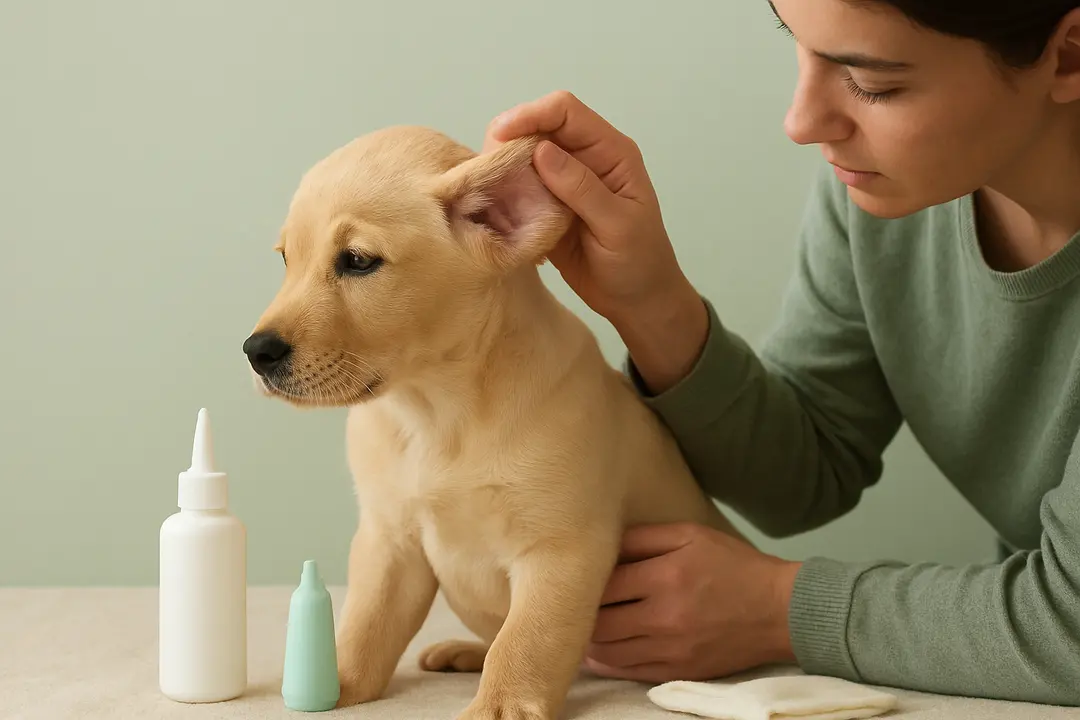
- Look only where it’s easy to see. In good light, gently lift the flap if your puppy allows it. Look at the opening and the underside of the flap. Is there a slight smear, a crust stuck to the skin, or a collection of loose crumbs? Is the skin red, or does the flap itself look puffy? Stop if your puppy guards the ear. Don’t press on it to see how much it hurts.
- Compare left with right, then with what’s usual. Note whether one ear has more material, smells different, or seems more tender. Two similar ears aren’t proof that everything is normal: inflammation can affect both. What’s changed for your puppy is more useful than how closely either ear matches a picture.
Do dark crumbs mean ear mites or an infection?
Dark specks that resemble coffee grounds make ear mites worth considering, especially in a puppy. But an ear infection can also cause black discharge and scratching. VCA’s guide to outer ear infections explains why age is a clue to mites, not a way to confirm them. A photo of the debris can show your vet what you noticed, but it can’t distinguish mites from yeast or bacteria.
If material keeps coming back in only one ear, don’t assume you didn’t wipe it well enough. The two ears may have different problems. For instance, your vet can look for something trapped in the ear that bothers your puppy. Tell the clinic which side has changed and how soon the material returned. That’s more useful than cleaning both ears again to make them look alike.
What to tell the clinic and what to leave alone
Lead with the sign that matters most. If your puppy can’t walk straight, say that first, not that you found brown wax. For a puppy who is walking normally but keeps scratching, tell the clinic when it started, which ear they scratch, and whether there’s an odor, swelling, or discharge. If you already wiped the ear or used a product, give its name and say when you used it.
Ask whether the clinic wants the debris left in place for a sample. Until you have instructions, don’t flush a sore, red, or swollen ear. Don’t use a cotton swab to dig out a dark speck: it can push material farther in or injure the ear. Skip peroxide and rubbing alcohol, which can irritate the canal. VCA’s ear-cleaning instructions distinguish cleaning under your vet’s direction from trying to clean an ear that already hurts.
Leave leftover ear drops alone, too, even if a previous ear problem looked the same. Some drops can damage hearing if the eardrum has ruptured. You can’t check the eardrum by lifting the flap, and the color of the discharge won’t tell you whether those drops are suitable.
What the vet checks and what to watch afterward
Your vet may use an otoscope, a lighted instrument for looking down the ear canal. This helps them look for inflammation or a trapped object and inspect the eardrum if it’s visible. You may hear the term otitis externa. It means the outer ear canal is inflamed; it doesn’t, by itself, tell you why.
A sample answers a different question. Examining debris under a microscope helps the vet distinguish parasites such as mites from yeast or bacteria, even when the material looks much the same. That’s why the clinic may want to collect it before cleaning and why a finding in one ear need not explain the other. The Merck Veterinary Manual’s guide to ear inflammation describes how the exam and the sample work together.
Before you leave, ask which ear needs care, whether to clean it, and when the clinic wants an update. Over the next few days, pay attention to comfort as well as appearance. If there’s less visible debris but your puppy is still scratching or won’t let you near the ear, report both facts. If the material returns, note when and on which side rather than restarting old drops.
Talk it through with Vicky
If you’re unsure how to describe your puppy’s ear, tell Vicky what you’re seeing right now, including which side has changed and whether your puppy seems uncomfortable. Vicky will bring in Dr. Nadia (Virtual DVM, DACVD), our virtual veterinary dermatology specialist, to help you sort through your observations and questions for your clinic.
Common questions
Can my puppy have an ear infection if the ear doesn’t smell bad?
Yes. A bad smell is one possible sign, not a requirement. Redness, pain, swelling, discharge, or repeated scratching is reason enough to call your vet even if you don’t notice an odor.
What if my puppy’s ear flap is puffy but there’s hardly any wax?
Call your vet promptly about the swelling itself. A pocket of blood under the skin can make part or all of the flap look puffy, and the vet can check both the swelling and what caused it.
Should I cancel the ear appointment if I already wiped the debris away?
No. Tell the clinic what the ear looked like beforehand and what you used. The vet can still examine the ear, and you can ask whether to leave any returning material in place for sampling.
If my puppy has ear mites, should I treat my other dogs or cats too?
If your vet confirms mites, tell them which other pets live with your puppy and ask what each pet needs. Don’t share ear drops or assume that similar-looking debris in another pet has the same cause.
Sources
- Ear problems in pets — PDSA
- Why Your Dog’s Ears Stink and What To Do — PetMD
- Ear Infections and Otitis Externa in Dogs — Merck Veterinary Manual
- Ear Infections in Dogs (Otitis Externa) — VCA Animal Hospitals
- Urgent Care for Ear Infections — VCA Animal Hospitals
- Ataxia in Dogs: What It Is, Symptoms, and Treatment — PetMD
- What to Do in a Dog or Cat Emergency — Merck Veterinary Manual
- Otitis Externa — Clinician’s Brief
- Instructions for Ear Cleaning in Dogs — VCA Animal Hospitals
- Itchy ear problems — Cornell University College of Veterinary Medicine
- Aural haematoma (swollen ear flap) in a dog — PDSA
- When to See a Veterinarian — Merck Veterinary Manual