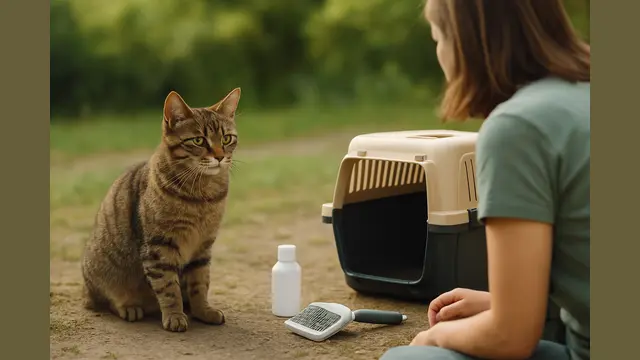
How can I teach my kitten to play without biting my hands or feet?
Learn how to switch from hand and ankle games to toy play, recognize when a nip means your kitten wants space, and get the right care if a bite breaks skin.
In this guide (7 sections)
Give your kitten a toy to chase or wrestle, and have everyone keep hands and feet out of play. Toss a soft toy for a kitten who stalks your ankles; offer a stuffed toy for one who likes to grab and kick. If your kitten bites you, calmly end the contact rather than turning your hand or foot into something to chase.
Change what your kitten gets to catch
Picture a kitten crouched beside the couch, watching a slipper cross the floor. From your end, you're walking across the room. From the kitten's end, there's something moving to stalk, chase, and pounce on. Those are normal parts of hunting play. The aim isn't to stop your kitten from pouncing. It's to give them something other than you to land on.
It's easy to teach the opposite lesson without meaning to. You wiggle your fingers, the kitten catches one, and you wiggle it again to keep the game going. Even if you're careful to stop when it hurts, the game still starts with a finger. VCA's guide to mouthy kittens recommends keeping body parts out of play and giving the kitten toys they can chase and kick instead.
Try thinking in terms of two jobs: your hand makes the game happen; the toy is what your kitten catches. You can still be an active playmate. There's no need to give up playing together because your kitten plays roughly.
Match the toy to the game
- For the ankle stalker, offer a chase. Toss a soft fleece toy across an open patch of floor, away from your feet. If your kitten is watching from a doorway, you can send the toy through their field of view without reaching down toward their face. The point of the toss is to give them something moving to follow other than your shoe.
- For the hand wrestler, offer something to hold. A kitten who wraps both front paws around your wrist and kicks with the back feet is playing a different game. Try a soft stuffed toy, sometimes called a kicker. It gives your kitten something they can grip, bite, and kick at the same time. Leave the toy with them rather than offering your sleeve to wrestle alongside it.
- Let the kitten's choice guide your next turn. If they follow the fleece toy and look for it again, another toss keeps that game going. If they settle down with the stuffed toy, there's no need to make it move. A kitten who wants to hold on to a catch may not be looking for another chase.
Put a toy where you'll actually use it. If most of the wrestling happens while you sit on the couch, keep the stuffed toy within reach of your seat. If someone in the family likes to make toes dart under the bedcovers, give them a toy to toss instead. The blanket may protect toes from a little nip, but the toes are still the target of the game.
What to do when teeth are already on you
Once your kitten has hold of a hand or foot, the task is to end contact safely, not to get them to perform a different behavior. Avoid sudden movements or a tugging contest. Stop your part of the game, disengage calmly as soon as you safely can, and give the kitten space. Don't reach in with your other hand to start wrestling them off.
Then check where the teeth landed. If a tooth broke your skin, wash the bite immediately with soap and running water and contact a human healthcare provider now. A tiny puncture counts. Taking care of the wound comes before working out why the game got rough.
If the bite happened while you were petting rather than playing, don't assume the kitten wants a livelier game. Stopping the touch may be all they're asking for at that moment.
Get everyone playing by the same rule
Agree on a rule you can show someone in a few seconds: toss this toy for chasing, offer that one for wrestling, and don't use fingers, slippers, or toes as either toy. That's clearer than asking everyone to judge how much biting is too much. A visitor doesn't need to know how hard your kitten usually bites to know which game to play.
Over the next few days, notice what happened just before the pounce and what your kitten chose to catch. For example, did the kitten follow a toy across the hall, or did the game end up back between someone's shoes? On the couch, did your kitten grab the stuffed toy, or did a dangling sleeve become part of the game? These details tell you what to keep and what to change. A useful first sign of progress is a whole game your kitten enjoys without needing a hand or foot as the target.
When a bite means “stop touching me”
A kitten who turns to nip after several strokes is giving you different information from one who runs after a passing ankle. Cats Protection explains several reasons cats bite, including hunting play, unwanted contact, and stress. Look at what you and the kitten were doing, rather than trying to judge the cause by how hard the bite felt.
- Your kitten was following something that moved: Look for a way to play that chase with a toy instead.
- Your kitten was resting and turned toward the hand petting them: Take your hand away calmly and let them choose whether to stay beside you. You can share the couch without continuing to stroke them.
- Your kitten was trying to get away: Give them room. Don't follow them with a hand or a toy to see if they'll engage again.
Discuss new biting or sensitivity in one particular spot with your kitten's veterinarian. Preventive Vet's guide to biting during contact makes this distinction especially useful: wanting a petting session to end is not the same observation as repeatedly reacting when one area is touched. You don't need to press on the spot again to prove it. Tell the clinic where you touched, what your kitten did, when you first noticed it, and whether they used to accept that touch. That gives your veterinarian more to go on than saying your kitten has started playing rough.
If a bite breaks your skin, don't wait for infection
After washing the bite, contact your own healthcare provider immediately, even if the mark looks minor. If you can't get immediate advice from your regular provider, urgent care is an option. The CDC's advice after a cat bite is to wash the wound and get medical advice without waiting for signs of infection.
When you call, say a cat tooth broke the skin, where the bite is, and when it happened. Mention a hand or finger puncture specifically. VCA explains why small cat-bite punctures matter: the opening can close while bacteria remain underneath. The Animal Medical Center's guidance on hand bites also notes that a tooth can injure a tendon even when there's little to see on the surface. Whether your kitten was playing or wanted you to stop touching them doesn't change the need to get care for a broken-skin bite.
Talk it through with Vicky
You can tell Vicky what you're seeing right now. Describe one moment: what your kitten was watching or doing, where your hands and feet were, and whether you were playing or petting. Vicky will bring in Dr. Hana (Virtual DVM, DACVB), our veterinary behaviorist, to help you choose a game that fits your kitten and keeps your skin out of play.
Common questions
Should I allow gentle nibbles if they don't hurt?
Keep fingers out of games even when the nibbles are soft. That way your kitten has one thing to learn—which objects are toys—rather than having to learn how much pressure each person will tolerate.
Will offering a toy after a bite teach my kitten to bite for attention?
You can't tell from one bite what your kitten has learned. Focus on what you control: start games with a toy instead of a body part, and calmly end unwanted contact. Your kitten doesn't have to nip you to get an invitation to play.
What if my kitten ignores the toy and comes straight back to my feet?
Look at what they did at your feet. If they chased a passing shoe but ignored a stationary stuffed animal, try a fleece toy you can toss. If they grabbed your slipper and held on to kick it, a stuffed wrestling toy offers a closer match.
Can I tell if my kitten is teething from the way they bite?
A hand bite alone doesn't tell you that your kitten is teething. The more useful clue is the context: chasing your fingers suggests play, while turning to nip during touch is a reason to stop touching. Tell your veterinarian if the biting is new or tied to contact with a particular spot.
Should I wait for my kitten to grow out of biting?
Start using toys for play now rather than relying on age to change the game. Every time you toss a toy instead of wiggling your fingers, your kitten gets a chance to practice the kind of play you want to keep.