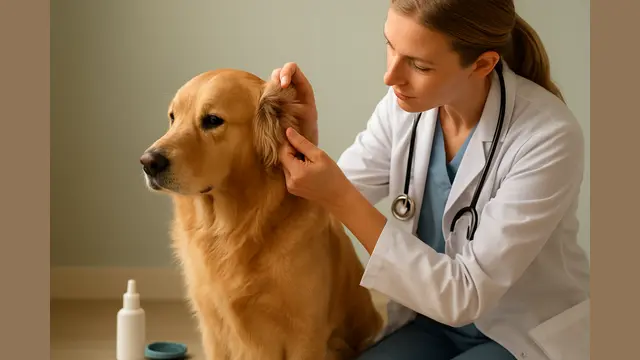
What are the signs of a tooth abscess in a dog, and what care does it need?
Learn which chewing changes and facial swellings suggest a tooth abscess, when your dog needs emergency care, and how your vet can treat the infected root.
In this guide (8 sections)
- A swollen face: when to go now and when to call your vet
- How to spot tooth pain in a dog that still eats
- Why an infected tooth can cause a lump under the eye
- What to do while arranging care
- How the vet finds the affected tooth
- Extraction or root canal: what actually treats the infection?
- Feeding, rechecks, and dental care after treatment
- Talk it through with Vicky
Call your veterinarian today if your dog starts dropping food or chewing on one side, especially if you see swelling below one eye, a lump along the jaw, or a sore draining pus. A tooth root abscess can hurt even if your dog still eats; a lump that bursts still needs assessment because treating the infected tooth usually means extraction or root canal treatment. If your dog has difficulty breathing or swallowing, go to an emergency animal hospital now.
A swollen face: when to go now and when to call your vet
Look at your dog's breathing before trying to look inside the mouth. Newly noisy breathing or visible effort with each breath can mean swelling is affecting the airway. Swelling near the lower jaw or throat can also make it suddenly hard to swallow. You don't need to decide whether a tooth is responsible before getting help, and you shouldn't wait for breathing to become difficult if your dog already can't swallow normally.
Cornell's guide to breathing distress in dogs advises going directly to the nearest emergency animal hospital for trouble breathing. PetMD's guide to swelling near the throat likewise advises immediate veterinary care when swelling interferes with swallowing or breathing.
If your dog is breathing and swallowing comfortably but has facial swelling, a draining sore, or a painful change in chewing, call your regular clinic today. Ask for an exam, even if a dental procedure isn't available that day. Your vet can assess the lump and discuss pain relief before the tooth itself is treated.
How to spot tooth pain in a dog that still eats
Watch what happens between the first bite and the empty bowl. For example, a dog may come running at dinner, pick up kibble, let a few pieces fall, then finish the meal using the other side of the mouth. If you saw only the empty bowl afterward, you'd miss the change. These signs are easy to overlook, even when you know your dog's habits well.
At an ordinary meal, notice whether your dog:
- Drops food after picking it up. This is different from showing no interest in dinner.
- Favors one side. You may see your dog shift food across the mouth rather than bite down where it first landed.
- Changes what they're willing to chew. A dog may take soft food but leave crunchy pieces, turn away from a hard treat, or stop using a favorite chew toy.
As PDSA explains in its guidance on dental disease, dogs often continue to eat despite mouth pain. A change in chewing doesn't identify a particular tooth or prove there's an abscess. It does give your vet more useful information than appetite alone. There's no need to offer something hard to test which side hurts.
Why an infected tooth can cause a lump under the eye
A tooth root abscess is a pocket of infection below the gumline. Bacteria can get inside a fractured tooth or travel down beside a tooth through diseased gum tissue. A break or a darkened tooth is worth mentioning to your vet, but the part of the tooth you can see may look intact even when there's damage around the root.
An infected upper tooth can cause swelling on one side of the face below the eye. A lower tooth may cause swelling along the jaw. Pus can drain into the mouth or find a path through the skin of the face or chin. That means the first thing you notice may look like a skin sore, not a problem inside the mouth. VCA's guide to tooth root abscesses explains how infection at the root can drain some distance from the tooth.
Keep the appointment if the lump opens. A smaller swelling means some of its contents may have drained; it doesn't tell you that the tooth has healed. Tell the clinic where the lump first appeared and where you saw discharge, even if there's little left to see. PetMD's guide to tooth root abscesses in dogs recommends prompt assessment even when dental treatment can't take place immediately.
What to do while arranging care
- Give the clinic a short account of what changed. Start with whether breathing and swallowing are normal. Then describe the side and location of the swelling, when you first saw it, whether it drained, and how your dog handles food. Mention a broken tooth if you've already seen one. Don't force the mouth open to look for it.
- Leave the swelling alone. Don't press on it, squeeze it, or puncture it. Opening and cleaning an abscess, when needed, is a veterinary procedure. Draining a facial lump at home would not treat the infected root.
- Ask your clinic what your dog can have for pain. Don't give ibuprofen, naproxen, acetaminophen, or a prescription left over from another pet. The FDA's advice on pain relievers for pets explains why another dog's medicine may be unsafe for yours. Pet Poison Helpline's guide to common medicine hazards identifies all three human pain relievers as potential poisons for pets.
- Ask about food before the visit. Tell the clinic which textures your dog has been able to manage. Put hard chews away. If the clinic might be able to do a procedure, follow its instructions about whether to offer a meal before you arrive.
How the vet finds the affected tooth
The first exam is usually done while your dog is awake. Your vet can look at the face and the visible parts of the teeth and gums. The location of the swelling and your account of painful chewing may point toward a dental cause. If the lump doesn't appear to come from a tooth, your vet may recommend a different check, such as taking a sample of the swelling.
For a complete dental assessment, your dog needs general anesthesia, meaning they're asleep for the procedure. The team can check the tissues alongside each tooth with a small probe and take dental X-rays of the whole mouth. Cornell's dentistry and oral surgery service distinguishes this detailed exam from what the vet can see while your dog is awake.
Even an obvious break shows only part of the problem. An X-ray can reveal loss of bone around the root, including damage beneath a tooth that looks normal at the surface. Ask your vet to show you which root is affected and what the bone supporting it looks like. Those findings matter more to the treatment decision than the size of the lump.
Extraction or root canal: what actually treats the infection?
Extraction removes the affected tooth and its roots. Root canal treatment removes infected tissue from inside the tooth and seals that space, allowing a suitable tooth to stay in place. If you'd like to save the tooth, ask whether the exam and X-rays show that this is an option and whether your dog would need to see a veterinary dentist.
Pain relief and antibiotics have different jobs from dental treatment. Pain medicine can make your dog more comfortable. Antibiotics, if your vet prescribes them, may reduce signs of infection without curing the tooth. The University of Illinois explanation of infection inside a tooth describes why improvement on antibiotics doesn't replace extraction or root canal treatment. If your dog is going home before the procedure, leave with two plans: how to manage pain now and when the infected tooth will be treated.
Feeding, rechecks, and dental care after treatment
Before you take your dog home, ask what food to offer, how long to use soft food if recommended, and when regular food can resume. Get instructions for each prescribed medicine and the follow-up visit. Keep hard chews away while the mouth heals rather than testing recovery with a hard biscuit.
At home, pay attention to the changes you can describe: whether the swelling is getting smaller or larger and whether meals are getting easier or harder. If swelling or pain worsens, or your dog won't eat, contact the treating clinic so it can decide whether to move the recheck forward. For longer-term care, ask when it's safe to resume daily toothbrushing. Brushing and regular dental exams support gum health, and avoiding very hard chews helps protect teeth from fractures.
Talk it through with Vicky
You can tell Vicky what you're seeing right now, including where the swelling is and what your dog does with the first bite of food. Vicky will bring in Dr. Theo (Virtual DVM, DAVDC), our AI specialist in veterinary dentistry and oral surgery, to help you prepare questions for your dog's clinic.
Common questions
Could the lump under my dog's eye be a sting rather than a tooth problem?
You can't tell from its location alone. Swelling below one eye is a clue to an upper tooth problem, especially with changes in chewing or a draining sore, but your vet needs to examine it to distinguish a dental infection from other causes.
Why did my dog's swelling come back after antibiotics?
If a tooth was the source, antibiotics may have reduced the swelling while infection remained inside or around the tooth. Tell your vet when the swelling returned and whether the tooth has had dental treatment, not only which medicine your dog took.
What if I already gave my dog a human pain reliever?
Call your veterinarian or an animal poison control service now. Have the package ready so you can report the medicine, how much your dog swallowed, and when. Don't try to make your dog vomit unless a veterinarian tells you to.
How can I compare the cost of a root canal with extraction?
First ask whether both options are suitable for your dog's tooth. If they are, request written estimates that identify the exam, dental X-rays, anesthesia, procedure, and follow-up so you can compare the full plans, including any referral visit.
Sources
- Tooth Root Abscess in Dogs — PetMD
- Dental Disease in Dogs — PDSA
- Tooth Root Abscess in Dogs — VCA Animal Hospitals
- Cervical Abscesses in Dogs — MSPCA-Angell
- Recognizing and Responding to Canine Respiratory Distress — Cornell University College of Veterinary Medicine
- Dentistry and Oral Surgery — Cornell University College of Veterinary Medicine
- Treating Endodontic Disease in Veterinary Patients — University of Illinois College of Veterinary Medicine
- Care of Open Wounds in Dogs — VCA Animal Hospitals
- Get the Facts about Pain Relievers for Pets — US Food and Drug Administration
- Swelling of the Salivary Gland in Dogs — PetMD
- Cold and Flu Medications Can Be Toxic to Pets — Pet Poison Helpline
- Oral Swellings in Dogs — VCA Animal Hospitals