What are the signs of an upper respiratory infection in cats, and when should my cat see a vet?
Learn which cat cold symptoms can wait for office hours, how to spot a breathing emergency, and what to tell your vet about meals, energy, and eye discharge.
In this guide (7 sections)
- Stuffy or struggling? Watch your cat between sneezes
- What a feline upper respiratory infection looks like
- When to call your vet about sneezing and poor appetite
- How to help a congested cat at home
- Protect other cats without guessing who is sick
- What to tell the clinic and what recovery looks like
- Talk it through with Vicky
Common signs of an upper respiratory infection in cats include repeated sneezing, a stuffy or runny nose, and watery, red, or crusted eyes. If your cat has mild signs, breathes comfortably, and is alert, eating, and drinking, call your regular vet during office hours. If your cat is breathing through an open mouth at rest or visibly working to draw each breath, go to an emergency veterinary hospital now.
Stuffy or struggling? Watch your cat between sneezes
The most useful distinction is between the sound of breathing and the work of breathing. A congested cat may sound snuffly. Look at your cat while they're resting between sneezes: are they taking easy breaths, or can you see a pronounced push from the belly with each breath? A cat can sit quietly and still be in distress. A closed mouth doesn't cancel out visible effort.
The Cornell Feline Health Center's guide to breathing difficulty explains why open-mouth breathing is serious. Tufts' guide to recognizing labored breathing shows what extra effort from the belly looks like. If you already see your cat struggling, you don't need to count breaths or work out whether an infection is the cause. Go directly to the emergency hospital, even if your cat ate recently. Don't try humid air first or wait for an online appointment.
What a feline upper respiratory infection looks like
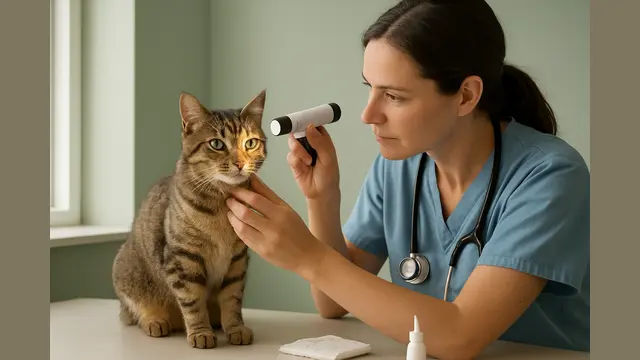
An upper respiratory infection, often shortened to URI or called a “cat cold,” can affect both the nose and the eyes. You might notice sneezes in bursts, moisture around the nostrils, or a nose that sounds blocked. The eyes may water, the tissue inside the eyelids may look red, or discharge may dry into crust on the lids or nearby fur. These signs can fit a URI, but they don't confirm the cause on their own.
Look beyond the nose and eyes to see how your cat is managing. For example, a cat who sneezes several times, then eats breakfast and returns to their usual activities, gives you a different picture from one who has stopped eating and barely responds when you bring the dish. Both might have a runny nose. What changes the decision isn't the number of sneezes; it's how comfortably the cat breathes and whether appetite and alertness are holding up.
When to call your vet about sneezing and poor appetite
If breathing looks comfortable, use food, water, and energy together to decide what to report. This guide to upper respiratory infections in cats distinguishes an alert cat with mild signs from one who is listless and no longer eating. Cats Protection's guidance on food intake also explains why it matters whether a cat who misses a meal is drinking.
| What you see | What to do |
|---|---|
| Your otherwise healthy adult cat has mild sneezing or watery eyes but is breathing easily, eating, drinking, and acting normally. | Call your regular clinic during office hours and ask when to come in. If this is what you're seeing at night, calling when the clinic opens is reasonable. |
| Your cat is eating less, has stopped eating or drinking, or is much less alert than usual. | Contact your vet for advice on how soon your cat needs an exam. Be specific: eating a smaller meal is different from eating nothing, and a missed meal with no water intake is especially important to report. |
| Your cat has stopped eating and is listless, showing little interest in food or their surroundings. | Call your vet or an emergency clinic now. This combination may need emergency care; don't wait for a routine appointment. |
Tell the clinic if your cat is a kitten, a senior, or has a chronic illness. These cats are more vulnerable when intake drops. If you aren't sure when your cat last drank, say so. You don't need to delay the call to collect a perfect food and water record.
How to help a congested cat at home
For a cat who breathes comfortably, supportive care means helping with everyday needs while you follow your vet's plan. Start with what you can observe at the next meal. VCA's sick-cat care guide recommends monitoring actual food and water intake, offering small meals, and gently cleaning discharge.
- Offer a small portion and watch what happens. Try slightly warming your cat's usual wet food, as suggested in Cats Protection's cat flu guide. Notice whether your cat sniffs and walks away, takes a few bites, or finishes. Approaching the food isn't the same as eating it.
- Set out fresh water and keep track of whose bowl it is. In a home with several cats, an empty food dish or a lower water level won't tell you which cat ate or drank. Give the sick cat their own dishes where you can watch without crowding them.
- Soften crust rather than pulling at it. Dampen a soft cloth with water and gently wipe discharge from the fur around the nose or eyes. When you describe the eyes to your vet, distinguish what came away on the cloth from what you can still see afterward.
- Use plain humid air only if your cat is comfortable with it. A supervised visit to a humid bathroom may ease congestion. Let your cat leave when they want; there's no need to keep them in a room they want to escape. Humid air is a comfort measure for stuffiness, not a treatment for labored breathing.
Ask your vet before giving any medicine, including antihistamines or pain relievers. If your clinic has already prescribed treatment, follow its directions and tell the clinic what has changed rather than changing the treatment yourself.
Protect other cats without guessing who is sick
A kitten can start sneezing after meeting a resident cat even when you've been careful. If the cats have already shared a room, there are still useful steps you can take. Keep the sick cat apart for now, use separate food and water bowls, and wash your hands after handling them and before tending to another cat. VCA's overview of feline upper respiratory infection explains how shared bowls can spread infection.
Let the clinic know when each cat's signs began, if the other cat has any. Separate meals serve a second purpose here: you'll be able to tell the vet which cat finished dinner instead of having to guess from one empty dish.
What to tell the clinic and what recovery looks like
Lead with the most important change rather than the label “cat cold.” For instance: “Her breathing looks easy, but she ate only two bites this morning. Last night she finished dinner.” Then describe when the sneezing started, what you're seeing around the nose and eyes, and whether your cat is behaving normally. If your cat has already been seen, compare today with the day of the visit so the clinic knows what's new.
Ask whether your cat needs an exam, what improvement to look for, and when the clinic wants an update if that improvement doesn't happen. Texas A&M's guide to feline respiratory infections notes that many uncomplicated viral infections run their course in seven to ten days with supportive care. Most cats recover within about one to two weeks. That's a guide to what recovery can look like, not a reason to put off the first call.
During recovery, a short note at mealtimes can be more useful than a tally of sneezes. Record how much your cat ate, whether you saw them drink, and whether they're more interested in their usual activities. If the picture changes during treatment, describe the change to your clinic so it can advise you about a recheck. New breathing difficulty is an emergency regardless of the original plan.
Talk it through with Vicky
If your cat is breathing comfortably, you can tell Vicky what you're seeing right now, including how your cat looks between sneezes and what happened at the last meal. Vicky will bring in Dr. Ravi (Virtual DVM), our feline-friendly general practice veterinarian, to help you sort through those observations and prepare your questions for your clinic.
Common questions
My kitten has stopped eating. Should I call even if the sneezing just started?
Yes. Contact your vet about a kitten who has stopped eating rather than waiting to see how long the sneezing lasts. Say when your kitten last ate, whether they've had water, and whether they're alert. A kitten who is listless as well as not eating may need emergency care.
Does green nasal discharge mean my cat needs antibiotics?
Describe the color to your vet, but don't use it to choose a treatment. Many uncomplicated viral respiratory infections run their course with supportive care. Your vet can assess whether your cat needs treatment beyond that.
Can my vaccinated cat catch a respiratory infection from a new kitten?
Yes. Vaccination lowers the risk of severe illness but doesn't rule out infection. Use separate bowls and wash your hands between cats even if your resident cat is vaccinated.
When can my cats share a room and bowls again?
Ask your vet when to reunite them rather than using the last sneeze as the cutoff. Some cats can still carry the infection after they look well, so the usual recovery time isn't a reliable date for sharing bowls again.
Sources
- Dyspnea (Difficulty Breathing) — Cornell Feline Health Center
- Upper Respiratory Infection in Cats: What Pet Parents Should Know — PetMD
- Caring for Your Sick Cat — VCA Animal Hospitals
- Cat flu — Cats Protection
- Feline Upper Respiratory Infections — Texas A&M Veterinary Medicine & Biomedical Sciences
- How long can cats go without food? — Cats Protection
- Cold and Flu Medications — Pet Poison Helpline
- Essential Oils and Cats — Pet Poison Helpline
- Tufts Cummings School of Veterinary Medicine — Difficulty Breathing (Dyspnea)
- VCA Animal Hospitals — Feline Upper Respiratory Infection