What can I do about my cat's dandruff, and when does flaky skin need a vet visit?
Check what’s under the flakes in your cat’s coat, learn when gentle brushing can help, and know which changes call for a vet visit or emergency care.
In this guide (6 sections)
A few loose flakes on a comfortable cat who eats, acts, and grooms normally are not usually an emergency; part the fur, and if the skin looks healthy, try gentle brushing. Book a vet visit if flakes build up, spread, or keep coming back. If you find sore skin or a painful swelling, or your cat seems unwell, call your vet rather than treating the flakes at home.
Check what’s under the flakes before you brush
Start where you first noticed the specks. In good light, gently part the hair until you can see the skin. The most useful distinction is whether you’re looking at loose material in the coat or a change in the skin underneath.
- Look at the skin and hair together. A few flakes that lift away from a full coat, with clear skin beneath, are different from scales over a red patch, a sore, or an area of broken or missing hair. If the area looks sore or your cat pulls away as though it hurts, stop there. You don’t need to remove a crust to describe it to your vet.
- Check the color and shape of the specks. Dandruff is shed skin that you can see. Flea eggs are also pale, but they are oval rather than shaped like irregular flakes. Flea droppings, often called flea dirt, are dark and can look like pepper near the skin. Cats Protection’s guide to cat dandruff explains why not every pale speck is a skin flake.
- Use damp white paper for dark specks. Put a few loose crumbs on a wet white paper towel. A reddish-brown stain suggests flea dirt because flea droppings contain blood. As VCA’s guide to spotting flea dirt explains, this is a check on the dark material. It won’t tell you what’s causing white flakes elsewhere on your cat.
When flaky skin needs a vet visit
You don’t need to count flakes or wait for your cat to scratch. What changes the decision is whether this is an occasional finding, a coat that’s changing, or a cat who feels sick or painful.
| What you notice | What to do |
|---|---|
| A few loose flakes, clear skin, and no change in eating, behavior, or grooming | Monitor at home. Gentle brushing can help remove the loose scales. |
| Flakes that keep returning, increase, or cover a larger area, even without itching | Book a regular vet visit. Mention how the pattern has changed. |
| A newly greasy or clumped coat, or a cat who no longer grooms normally | Contact your clinic when you notice the change. Don’t wait to see if repeated brushing fixes it. |
| Frequent scratching or licking, bald spots, crusts, or scales that seem to move | Call your vet for an assessment. Point out any red or sore skin when you call. |
| A hot, tender swelling, a draining wound, loss of appetite, or a cat who seems unusually listless | Call your vet about the swelling or illness, not just the dandruff. If your cat seems markedly unwell and your clinic is closed, contact an emergency clinic for guidance. |
If your cat is in severe pain, go to an emergency veterinary clinic now. This applies even if there’s little to see under the fur. A small bite wound can close over while infection builds beneath it, forming a painful pocket called an abscess. You don’t need to find a tooth mark or wait for the swelling to drain before seeking care. PDSA describes the signs of a cat bite abscess, and the Merck Veterinary Manual lists severe pain as an emergency.
Why dandruff collects on the lower back or near the tail
Flakes can build up for two different reasons: your cat’s skin may be shedding more scales, or your cat may no longer be grooming the usual scales away. The lower back, just ahead of the tail, is a common place to notice dandruff. Its location alone doesn’t tell you which explanation fits.
For example, suppose your cat washes their chest and front legs as usual, but you keep finding flakes in a strip along their back. Watch the next time they wash. Do they turn comfortably to reach that strip? Did they used to wash there but now stop short? That change is worth telling your vet about, along with any new difficulty turning or jumping. Excess weight, painful joints from arthritis, and illness can all interfere with grooming, according to Texas A&M’s overview of feline dandruff.
If your cat can reach the spot but keeps licking or scratching it, tell your vet that instead. Dry indoor air can contribute to flakes, but so can allergies, parasites, infection, or an unbalanced diet. A greasy coat can flake, too. The word dandruff describes what you see; it doesn’t tell you that your cat needs a moisturizer or a different food.
What you can safely do at home
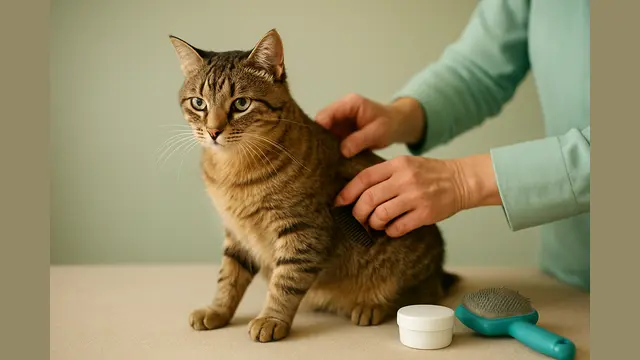
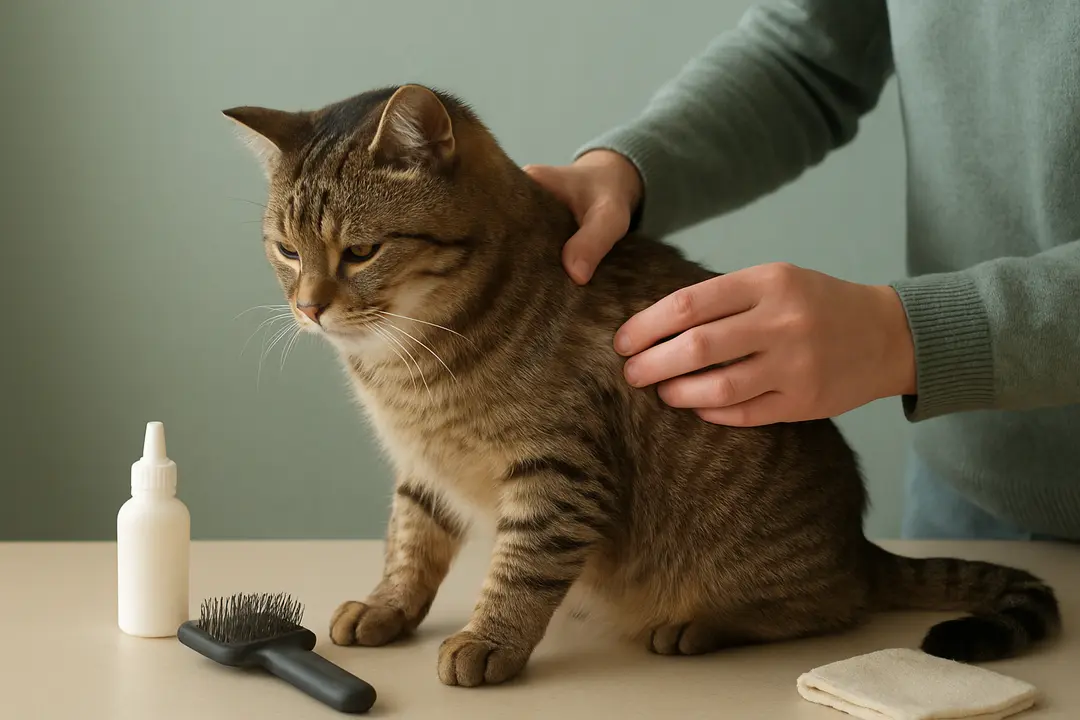
For occasional loose flakes on healthy-looking skin, gently brush your cat if they enjoy it. The goal is to remove loose scales, not to make every trace disappear in one sitting. At your next usual grooming session, look at the same spot before brushing. Is there an occasional flake, or has the same buildup returned? Is your cat still washing that area comfortably?
Brushing can make a coat look better without changing the reason it became flaky. If the buildup keeps returning, getting a photo before you brush is more useful than brushing more often. You don’t have to try several treatments before booking a visit. A coat change can happen even with attentive care.
Keep to a complete, balanced cat food, and check with your clinic if you’re unsure which flea prevention is appropriate for your cat. Avoid human anti-dandruff shampoo; it can worsen dryness. Banfield’s guide to dandruff and dry skin covers grooming, diet, and the problems with using human shampoos on pets. Skip homemade flea treatments, and don’t rub essential oils into flaky skin or fur. Cats can be exposed through the skin and by licking the treated coat; the ASPCA advises against applying essential oils directly to pets.
What to tell your vet and what the visit can clarify
When you call, lead with the finding that concerns you most. “My cat has stopped eating and there’s a painful lump under the fur” gives the clinic different information from “I keep finding loose flakes in the same place, but my cat is comfortable.” For a routine appointment, note when the flakes began, where they started, and what changed after brushing. Bring the names of any flea products, shampoos, foods, or supplements you’ve tried. Don’t delay a call about a sick or painful cat to gather photos or product labels.
Your vet can examine the skin beneath the coat and consider the pattern alongside your cat’s grooming and movement. Mention if another pet is scratching or someone at home has developed itchy spots. Scales that appear to move can be a clue to mites called Cheyletiella, or “walking dandruff.” Flaking with crusts, broken hairs, or bald patches can occur with ringworm, a fungal infection described in Cornell’s feline ringworm guide. A photo can show the pattern, but a white speck in a picture can’t establish either cause.
What improvement looks like depends on the problem. If reaching the back is difficult, a useful question is whether your cat can wash comfortably again, not just whether the coat looks cleaner. If the skin itself is sore or itchy, ask your vet what changes to look for in the skin and scratching, and when to report back if those signs persist.
Talk it through with Vicky
You can tell Vicky what you’re seeing right now, including where the flakes collect, what the skin looks like underneath, and whether your cat can reach the area. Vicky will bring in Dr. Nadia (Virtual DVM, DACVD), our AI veterinary dermatology specialist, to help you think through the next step.
Common questions
Is visible cat dandruff the same as dander?
Both come from the skin, but dander is usually too small to see. Dandruff means flakes of shed skin large enough to notice in the coat or on a brush.
Can I or my other pets catch whatever is causing the flakes?
Ordinary shed flakes aren’t contagious, but some causes of flaking are. Cheyletiella mites can spread between pets and cause temporary itchy spots on people. Ringworm can also spread to other animals or people, so tell your clinic about new skin problems in the household.
Will switching to wet food or adding salmon oil help?
Flakes alone don’t tell you that your cat needs wet food or an oil supplement. Ask your vet to look at the whole diet before changing it. If excess weight makes grooming difficult, a weight-management plan may help, while a cat who finds turning painful also needs that discomfort assessed.
Does my cat need a bath if the flakes don’t brush out?
A bath isn’t the next step for material that sticks to the skin or forms greasy clumps. Ask your vet about what you’re seeing rather than trying to wash it off with human dandruff shampoo, which can make dryness worse.
Sources
- Texas A&M Veterinary Medicine & Biomedical Sciences — Don’t Brush Off Feline Dandruff
- Banfield Pet Hospital — Dandruff and dry skin in pets
- Cats Protection — Can cats get dandruff?
- VCA Animal Hospitals — Fight Wound Infections in Cats
- PDSA — Cat bite abscesses
- VCA Animal Hospitals — How to Spot Fleas and Flea Dirt on Cats
- Pet Poison Helpline — Updates on Essential Oils
- PetMD — Walking Dandruff in Cats
- Cornell Feline Health Center — Ringworm: A Serious but Readily Treatable Affliction
- PDSA — Ringworm in cats
- Merck Veterinary Manual — What to Do in a Dog or Cat Emergency
- ASPCA Animal Poison Control — The Essentials of Essential Oils Around Pets