
What should I do if a bee stings my dog's paw, and which signs mean it’s an emergency?
Learn how to check and cool a bee-stung paw, when a limp needs your vet, and why vomiting after a sting is an emergency even if your dog breathes normally.
In this guide (6 sections)
Get urgent help
Go to an emergency veterinarian now if your dog has trouble breathing or swallowing, vomits or has diarrhea soon after the sting, becomes very weak, or develops widespread hives or rapidly increasing swelling. Don’t wait to find the stinger. If your dog is alert, breathes normally, and has only a sore, mildly swollen paw after one sting, move away from the insects, cool the paw with a cold cloth, and watch your dog closely.
Any one of these changes is enough to leave for emergency care:
- Breathing or swallowing changes. Listen for a new wheeze or whistle, and look for extra effort with each breath. A swelling tongue or throat, or trouble swallowing, is also an emergency. If possible, have someone call the hospital on the way, as Cornell’s guide to breathing distress advises.
- Sudden vomiting or diarrhea. A severe whole-body allergic reaction, called anaphylaxis, can affect a dog’s stomach and intestines even when breathing looks normal. You do not need to see a second episode, hives, or a swollen face before you go. The Merck Veterinary Manual’s guide to allergic reactions in dogs explains why this sign matters.
- Pale gums, marked weakness, or collapse. Holding up one painful foot while standing steadily on the other three is different from seeming weak all over or being unable to stay upright.
- Widespread hives or substantial or worsening swelling. Hives are raised bumps or welts on the skin. Welts appearing across the body or a muzzle that is visibly getting bigger after a paw sting are not signs to manage with a cold cloth.
The number and location of stings also change the decision. Call your veterinarian immediately for advice if you suspect several stings or a sting inside the mouth or throat, even if your dog still seems well. If your dog was caught in a swarm, call your dog away from the insects and go directly to the nearest veterinarian rather than trying to count the stings. Battersea’s bee and wasp sting guide explains why a suspected mouth sting needs different care from a single sore toe.
How to check the paw if your dog seems well
Even a careful owner can miss the instant a dog steps on an insect. Suppose your dog comes back from the yard licking one paw and walking with a limp. A sting is one possibility, but the limp alone can’t tell you whether there’s a stinger, a puncture, or something caught between the toes.
- Watch before you touch. Note when it happened or when you first noticed the limp. See whether your dog puts the foot down and takes some weight on it. Check your dog’s face, breathing, and alertness before focusing on the sore spot.
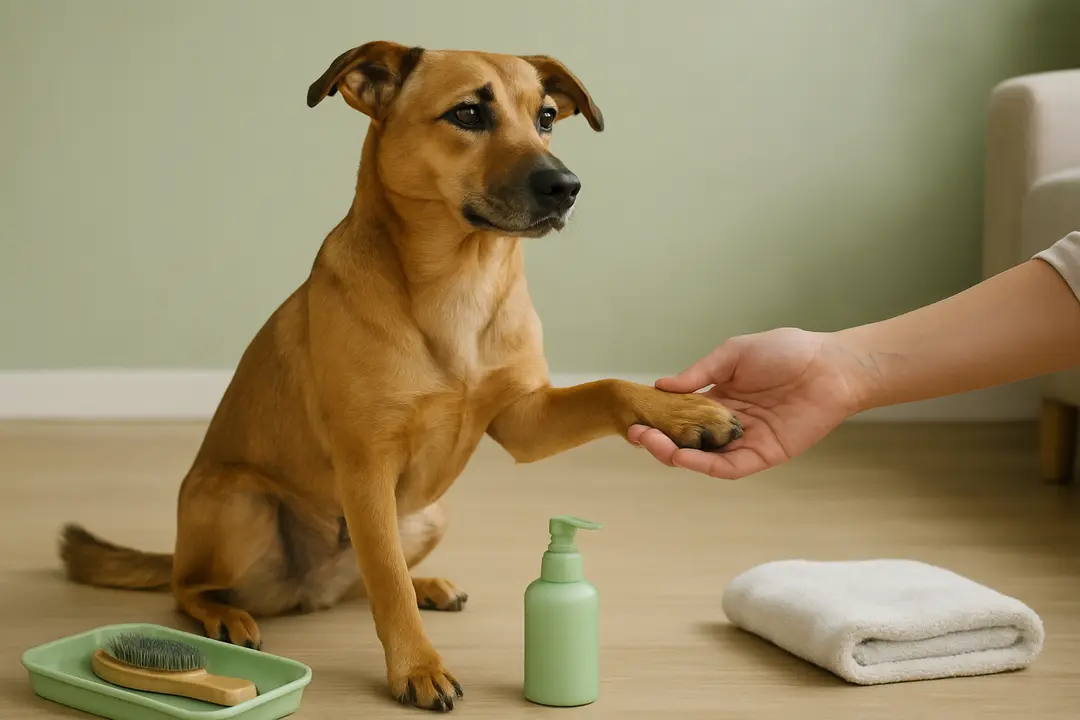
- Look at the pads and between the toes. If your dog lets you hold the paw comfortably, check the edges of each pad and the space beside the sore toe. Look for a visible stinger or other material. Stop if it hurts your dog to have the paw handled; you don’t need to force the toes apart to decide whether your dog needs help.
- Scrape out a visible stinger. Slide the edge of a card across the skin to flick it away without squeezing the attached venom sac. If you can’t see a stinger, don’t dig for one. You can still cool the sore spot, and you don’t need to identify the insect to recognize an emergency.
How to soothe a mildly swollen paw
Hold a cold, wet cloth gently against the sore spot if your dog tolerates it. Let your dog rest and keep necessary walks short. Avoid a walk around the block to test the limp; noticing how your dog places the foot when getting up from rest gives you useful information without asking your dog to walk farther on it.
Keep your dog from licking or chewing the sore toe. If your dog pulls away when you try to cool it, stop rather than gripping the paw more tightly. VCA’s first-aid guidance for insect stings describes how to remove a visible stinger and cool the site. These steps are for a mild reaction where the insect stung, not a treatment for a reaction elsewhere in the body.
Ask your veterinarian before giving any medicine, including an antihistamine such as Benadryl (diphenhydramine). Don’t give a human pain reliever for the limp. If your vet recommends an antihistamine, have the package in hand so you can confirm the exact product and the amount for your dog. ASPCA Poison Control’s guide to human allergy medicines explains why products sold for similar symptoms aren’t interchangeable.
What to watch over the next several hours
Watch the whole dog, not just the toe. A reaction can begin within minutes, but signs can also appear hours later. Normal breathing when you first look is useful information, not an all-clear. The American Kennel Club’s guide to bee and wasp stings describes this variation in timing.
When you check again, compare what you see with your first look. Is the same small area of the paw still puffy, or are there welts in places that weren’t stung? Is your dog alert and breathing comfortably? Has there been vomiting or diarrhea? A toe that looks less swollen does not cancel out a new sign elsewhere.
Pay particular attention to where swelling appears and whether it’s increasing. A little puffiness around the sore toe can fit a local reaction. New puffiness around the eyes or muzzle after a paw sting is in a different place; call your vet promptly rather than assuming it’s part of the sore foot. If facial swelling is substantial or increasing, welts are widespread or worsening, or breathing or swallowing changes, go to an emergency hospital. Preventive Vet’s sting guidance distinguishes mild swelling at the sting site from a progressing reaction.
When the limp itself needs your vet
If the problem stays limited to the paw, use comfort, weight on the foot, and the direction of change to guide your next step. A dog who starts setting the foot down more comfortably after rest, with only mild swelling and no other signs, can continue to be watched. There’s no need to press the toe to see whether it still hurts.
Call your vet promptly if your dog won’t bear weight, the paw is very painful or significantly swollen, or the limp gets worse or doesn’t start to improve. Don’t wait for a set number of hours if your dog is getting more uncomfortable. PetMD’s guide to limping in dogs explains why a mild limp that eases with rest is different from refusing to put a foot down.
When you call, lead with what your dog is doing now. “She’s holding up one foot but is alert and breathing comfortably” describes a different need from “She was stung on the foot and has now vomited.” Say whether you saw a single sting or suspect more, and whether the mouth might have been involved. If nobody saw a sting, say so. That lets the clinic consider a painful pad, a puncture, or something between the toes rather than assuming the limp came from a bee. You don’t need to finish examining the paw or gather every detail before seeking care.
Talk it through with Vicky
If your dog is comfortable apart from a mildly sore paw, you can tell Vicky what you’re seeing right now, including whether your dog is putting weight on the foot. Vicky will bring in Dr. Ivan (Virtual DVM, DACVECC), our team’s AI specialist in emergency and critical care. If an emergency sign appears, go directly to an emergency veterinarian rather than waiting for a reply.
Common questions
What if my dog snapped at the bee and I think they swallowed it?
The immediate concern is a possible sting inside the mouth or throat. Call a veterinarian now even if your dog looks well; if the tongue or throat swells or your dog struggles to swallow or breathe, go directly to an emergency hospital.
My dog had a severe sting reaction before. Should I wait for symptoms this time?
No. Contact a veterinary clinic immediately after another suspected sting, even if your dog seems well and you don’t have a rescue plan. If emergency signs are already present, leave for the emergency hospital rather than waiting for a call back.
Which ingredients make some Benadryl or cold medicines unsafe for dogs?
Combination products can contain a decongestant such as pseudoephedrine or an added pain reliever. Some liquids contain xylitol, a sweetener that is dangerous for dogs. Ask your vet to check the exact label before giving anything, even if you recognize the brand.
What if my dog develops hives after I’ve already given an antihistamine?
Widespread hives, worsening welts, or substantial or increasing swelling still warrant an emergency visit. Don’t give another dose and wait for it to work; tell the emergency veterinarian what your dog received.
Sources
- Recognizing and responding to canine respiratory distress — Cornell University College of Veterinary Medicine
- Disorders Involving Anaphylactic Reactions (Type I Reactions, Atopy) in Dogs — Merck Veterinary Manual
- What to do if your dog is stung by a bee or wasp — Battersea
- What to Do if Your Dog Is Stung by a Bee — Preventive Vet
- First Aid for Insect Stings in Dogs — VCA Animal Hospitals
- What to Do if Your Dog Is Stung by a Bee or Wasp — American Kennel Club
- First Aid for Limping Dogs — VCA Animal Hospitals
- Why Is My Dog Limping? — PetMD
- Are over-the-counter medications safe for my dog? — VCA Animal Hospitals
- Can Human Allergy Medication Be Harmful for Pets? Our Experts Explain! — ASPCA Poison Control



