
Why does my dog lick its paws, and how can I tell normal grooming from a problem?
Learn how to tell a quick paw cleanup from itch or pain, check your dog’s toes and pads safely, and decide when licking calls for a veterinary exam.
In this guide (7 sections)
- Look at what your dog does after licking
- One paw or several? The pattern helps narrow the search
- How to check the pads, nails, and spaces between the toes
- Why licking can keep going after it starts
- When to monitor, call your vet, or seek emergency care
- What to tell the clinic and what your vet may check
- Talk it through with Vicky
A dog that briefly cleans dirty feet after a walk, stops on its own, and walks normally on healthy-looking paws is usually grooming. Licking that keeps drawing your dog back to one spot, interrupts rest or play, or leaves the skin sore is different. Itch, irritation, an injury, or pain farther up the leg can be responsible, even when the paw looks normal.
Look at what your dog does after licking
The most useful distinction is whether the licking has a clear end. Picture a dog coming in from a sandy path, licking grit from its toes, and settling down for the evening. That fits the American Kennel Club’s description of normal paw grooming. Now picture the same dog getting up from its bed several times to chew one front toe after the sand is gone. The walk is the same; what happens afterward changes the advice.
Rather than counting licks, notice what they interrupt. Does your dog finish cleaning and go back to playing? Or does your dog leave a toy to work on the foot again? A dog can still enjoy a walk and have itchy skin. If the licking is new or keeps recurring, you don’t need to wait for a limp or an open sore before bringing it up with your vet.
One paw or several? The pattern helps narrow the search
One foot, especially after a walk: Look first for something local, such as grit between the toes, a cut pad, a lodged thorn, or a damaged nail. Notice whether your dog targets a particular toe or licks the foot more generally. If you see nothing, watch how your dog stands and walks. Pain elsewhere in the leg can draw attention to the paw, so a clean pad doesn’t rule out an injury.
Several itchy feet: Notice what else bothers your dog. Chewing the feet along with scratching elsewhere or having ear trouble can fit an environmental allergy. The itch may return around the same season each year. As Cornell explains in its guide to allergic skin disease, the skin can look normal at first. That makes early itch easy to miss, even when you check your dog’s feet regularly.
Licking after a particular route: Think about what touched the paws. A salted sidewalk gives you something specific to rinse off. If the same licking happens after indoor rest or on days you take a different route, that’s useful to know, too. Neither the number of paws nor the timing proves the cause.
How to check the pads, nails, and spaces between the toes
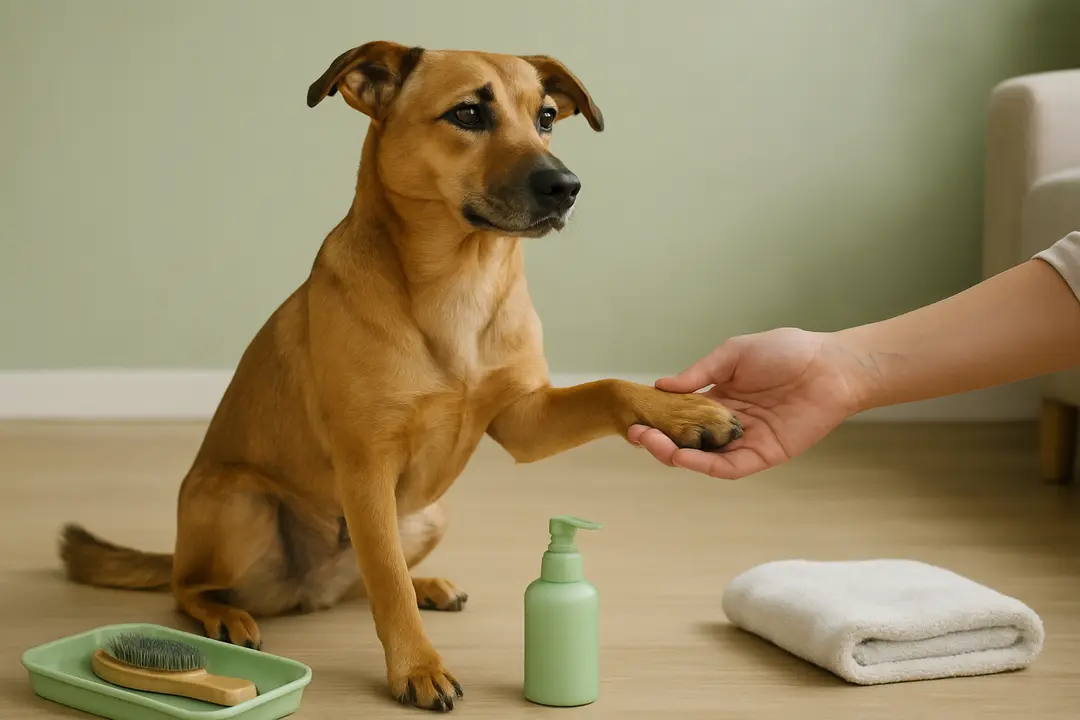
- Watch before you handle the foot. Note which paw your dog licks and whether they put it down normally when they get up. You don’t need to take another walk to test a sore leg. If your dog is willing to let you look, choose a spot with enough light to see between the toes.
- Check the whole paw, not only the largest pad. Look across each pad for a cut or crack, along the nails for damage, and between the toes for loose material. Compare the spot your dog licks with the same area on another foot. Look for redness, swelling, missing hair, or fluid. Follow VCA’s advice for examining a painful foot: if handling hurts, stop. Tell the clinic what you could see without forcing the exam.
- Rinse what’s on the surface; leave what’s stuck. Plain water can wash away loose dirt or road salt. Pat the pads and the spaces between the toes dry. The ASPCA’s guidance for winter walks also recommends looking for pad cracks and irritation between the toes. A thorn lodged in the skin is different from grit that rinses away. Leave it for your veterinarian rather than digging or pulling at it.
- Notice the result. If the paws are clean and dry, your dog walks comfortably, and the licking ends, monitoring makes sense. If your dog goes straight back to the same spot, note which one. That observation is more useful to your vet than another round of washing.
Why licking can keep going after it starts
The problem that keeps a dog licking isn’t always the one that started it. Repeated licking can wear away the skin on a limb. Bacteria can then infect the damaged area, giving your dog another reason to lick. Clinician’s Brief describes this cycle of licking, skin damage, and infection. A spot that has become raw deserves attention even if the original trigger seemed minor.
Yeast normally lives on dogs’ skin. Moisture between the toes can favor overgrowth, especially when an underlying problem such as allergy is already affecting the skin. Parasites, allergies, and infections can all cause itch, and more than one problem can be present. As the Merck Veterinary Manual’s guide to itching explains, a bacterial or yeast infection can keep skin itchy and may cause odor, hair loss, or discharge. Those changes are worth reporting; they don’t tell you which treatment to use.
When to monitor, call your vet, or seek emergency care
| What you notice | What to do |
|---|---|
| A brief cleanup ends on its own. The skin looks healthy and your dog walks normally. | Monitor at home. Notice whether your dog leaves the feet alone once they’re clean. |
| Licking keeps coming back, interrupts sleep or play, or leaves hair loss or irritated skin. | Book a veterinary exam, even if your dog isn’t limping. Mention any odor, discharge, ear trouble, or itch elsewhere. |
| Your dog is favoring the leg, the paw hurts to touch, or you find a lodged object. | Call your clinic for guidance about the injury rather than continuing the home check. Say whether your dog can put weight on the foot; that’s more informative than saying only that the paw looks sore. |
For a serious paw injury, go to an emergency veterinary clinic now rather than waiting for a routine appointment. If a pad is bleeding, apply pressure with a clean towel while getting help, as described in VCA’s first aid guide for injured pads. Tell the clinic whether bleeding is continuing despite pressure. Don’t delay the trip to search between the toes or take photos.
What to tell the clinic and what your vet may check
For recurring licking, a short video can show something that may not happen in the exam room. Note which feet, when it started, and what your dog stops doing to lick. Include any recent change in walking route, whether rinsing made a difference, and whether the ears or other skin seem itchy. If you remember a similar spell last year, mention the season. For a sudden problem in one foot, lead with what happened on the walk and how your dog has used the leg since.
Your vet may examine the pads, nails, and toe spaces, then check the leg if walking is painful or look at the ears and other skin if itch is the main concern. You may hear the term pododermatitis. It means inflammation of the paw; it describes what the vet sees, not why it happened. VCA’s guide to paw inflammation explains how a skin sample can help distinguish problems that look alike from the outside.
Over the following days, track comfort as well as appearance. Is your dog leaving the foot alone between walks and resting without stopping to chew? If a red spot looks better but your dog still targets it, tell your vet both things. Improvement in the skin and relief from the original itch or pain aren’t necessarily the same.
Talk it through with Vicky
You can tell Vicky what you’re seeing right now: which paws your dog licks, how they walk, and whether the licking stops once the feet are clean. Vicky will bring in Dr. Nadia (Virtual DVM, DACVD), our AI specialist in veterinary dermatology, to help you make sense of those observations and prepare questions for your own veterinarian.
Common questions
Is licking before bed different from waking up to lick?
A short cleanup followed by undisturbed sleep is different from waking repeatedly to chew a foot. Bedtime itself doesn’t prove the licking is a way to relax; a change in your dog’s usual sleep is the more useful clue.
If my dog’s paws and ears itch, does that tell me which food to avoid?
No. Environmental allergies can affect both the feet and ears, so the location of the itch doesn’t identify a food or ingredient. Tell your vet whether the itch comes and goes with the seasons rather than choosing a food to cut out based on those signs alone.
Does a corn-chip smell or rusty fur mean my dog has a yeast infection?
Neither the odor nor the fur color confirms yeast. If a smell is new or your dog keeps chewing, your vet can examine the skin under the hair and check a sample for yeast rather than relying on smell or appearance.
Can I use peroxide or wrap a raw paw to stop the licking?
Use plain water or saline to rinse a raw spot, not peroxide or rubbing alcohol, which can delay healing. Ask your clinic before wrapping the paw; a bandage that is too tight can interfere with blood flow.
Sources
- American Kennel Club — Why Does My Dog Lick Their Paws?
- Cornell University College of Veterinary Medicine — Atopic dermatitis (atopy)
- VCA Animal Hospitals — Pododermatitis in Dogs
- Merck Veterinary Manual — Itching (Pruritus) in Dogs
- Clinician’s Brief — Canine Acral Lick Dermatitis
- American Kennel Club — Yeast Dermatitis (Malassezia) in Dogs: Signs, Symptoms, Treatments
- ASPCA — Walking Your Dog in a Winter Wonderland? Protect Your Pet’s Paws with These Tips
- VCA Animal Hospitals — First Aid for Limping Dogs
- VCA Animal Hospitals — First Aid for Torn or Injured Foot Pads in Dogs
- VCA Animal Hospitals — Wound care dos and don’ts
- PetMD — Excessive Licking, Chewing, and Grooming in Dogs
- PetMD — Yeast Infection in Dog Ears, Skin, and Paws



