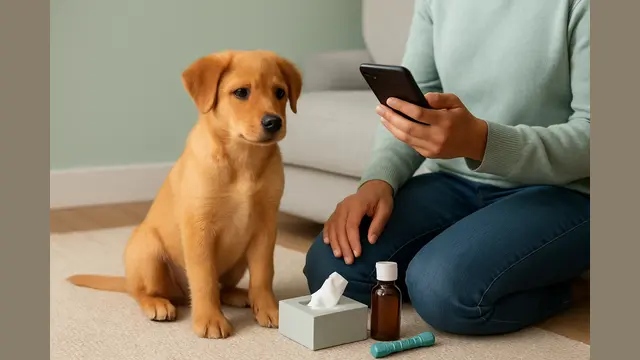
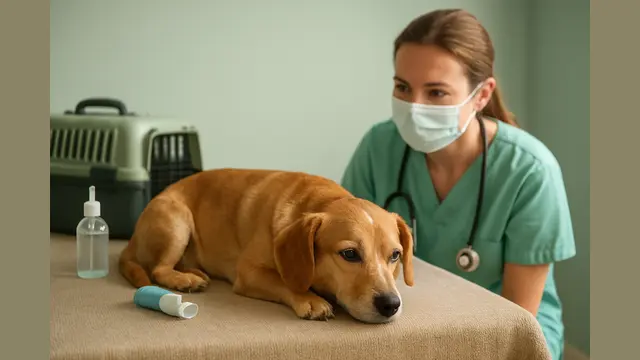
My dog is coughing up blood. What should I do right now?
Even a streak of blood after a cough needs emergency care. Learn how to move your dog safely, what to avoid, and what the ER needs to know on the way.
In this guide (8 sections)
Get urgent help
Take your dog to the nearest emergency veterinary hospital now. Even one streak of blood after a cough needs an immediate visit, day or night, even if your dog has stopped coughing and is playing again. If someone is with you, have them call ahead and say, “My dog coughed up blood, and we’re on our way.”
Tell the ER immediately if your dog is struggling to breathe. Look for the belly working hard with each breath or the neck stretched forward as if your dog is reaching for air. Mention pale or blue gums if you can already see them, or if your dog becomes weak or collapses. You do not need to open your dog’s mouth to check, and you do not need to see any of these signs to leave. Preventive Vet’s guide to coughing in dogs recommends immediate care for blood brought up after coughing; there is no minimum amount you need to see.
How to get your dog to the ER safely
- Keep the trip quiet and the car cool. Focus on getting your dog into the car calmly rather than trying to examine the mouth or recreate the cough. If your dog is working hard to breathe, do not put on a muzzle. Avoid a muzzle if your dog is vomiting, too.
- Use the call ahead to describe how your dog is doing right now. “She’s awake, but her belly pulls in hard with every breath” tells the team more than “She’s acting strange.” If you’re unsure what you’re seeing, use your own words. If you’re alone, do not delay departure for a long call or try to watch your dog while driving.
- Report a change as soon as it’s safe. If your dog was walking when you left but is now too weak to stand, have a passenger tell the ER. At the entrance, lead with that change rather than starting the story from the beginning. Cornell’s guide to breathing distress in dogs explains the signs and why calm transport matters.
Was it coughing, gagging, or vomiting blood?
Tell the vet what happened immediately before you saw the blood. Even a careful owner can hear a hack, turn around, and find a bloody spot without seeing how it got there. “I heard a cough but didn’t see what came out” is useful information. You don’t have to decide where the bleeding started before seeking help.
| What you noticed | What to tell the ER |
|---|---|
| Blood appeared as your dog coughed | Describe the cough and what came out: for example, mucus with a red streak, pink foam, or a clot. |
| Your dog retched or vomited | Say whether retching came first and whether food or liquid came up with the blood. If coughing happened too, give the order you remember. |
| You saw blood at the nose, lips, or in saliva | Say where you first saw it and whether it was there before the cough. Do not probe the nose or mouth to find its source. |
| You found a spot afterward | Describe the spot and when you found it. Be clear that you did not see the episode itself. |
A rough description is enough. “One streak about ten minutes ago” or “several spots after two coughing spells” is more helpful than guessing an exact volume. If you already have a photo, show it at the hospital. Do not wait for another episode to take one.
What not to try at home
Do not give a cough suppressant or a human cold medicine. Treating the cough at home does not tell you why there is blood. Some human cough and cold products also contain decongestants that are unsafe for dogs, as Pet Poison Helpline explains in its guide to human medicines. Ask your vet before giving any medicine.
Do not reach blindly into the throat. Gagging may make you think something is stuck, but hearing a gag is not the same as seeing an object. If something is visible but not safely within reach, leave it for the emergency team. Tell them what you saw and whether anyone tried to remove it. Banfield’s pet first-aid guidance limits removal attempts to objects you can see and safely reach.
Tell the ER if rat or mouse bait is possible
One possible cause is a problem with blood clotting. Some rodent baits are anticoagulants, meaning they interfere with the body’s ability to stop bleeding. Affected dogs can cough up blood or bleed from the mouth or nose. Pale gums and trouble breathing are other possible signs. This is one reason the vet needs to know about possible bait access, but coughing up blood alone does not prove poisoning.
If bait might be involved, call the ER or an animal poison control service now, without delaying the trip. Say whether you saw your dog eat bait or know only that your dog could reach it. Give the approximate time if known. Bring the package or a photo of its label if it’s handy; don’t stay behind to search. Do not make your dog vomit unless a veterinary professional directs you to. VCA’s guide to anticoagulant rodenticide poisoning explains why suspected exposure warrants immediate contact.
What the emergency team will do first
On arrival, start with two facts: your dog brought up blood, and this is how your dog is breathing now. Next, give the time of the first episode, whether it happened again, and any possible exposure to bait or medicine. If your dog looks better than during the episode, describe both moments. The team cannot see the effort it took your dog to breathe in the car unless you tell them.
The first assessment is about immediate needs: Is air moving freely? Can your dog breathe adequately? Is blood circulating? Staff may give oxygen if needed. If they take your dog for breathing support before asking for the whole history, the order is deliberate. As the Merck Veterinary Manual’s guide to emergency evaluation explains, stabilizing a patient comes before a detailed exam or imaging.
Once your dog is stable, the vet can look more closely at where the blood may have come from and decide whether imaging, such as chest X-rays, would help. Blood seen at a nostril before a cough is a different clue from blood first seen in material your dog coughed out. A history of possible bait exposure raises a different question: could your dog be having trouble forming clots? Your observations help the vet choose what to investigate rather than assuming every bloody cough has the same cause.
What to ask about the next few days
There is no reliable recovery timeline based on the size or color of the spot you saw. The next step depends on your dog’s breathing, the examination, and what the team finds about the bleeding. Ask, “Do you know where the blood came from, or is that still uncertain?” That distinction will help you understand what the plan is meant to address.
If your dog is going home, ask the clinic to spell out three things before you leave: what changes they expect, what should bring you straight back, and when they want to recheck your dog. Make sure you know whom to contact overnight. If you see fresh blood after another cough or your dog starts working hard to breathe, contact the emergency team immediately rather than waiting for a scheduled recheck.
Talk it through with Vicky
Emergency care comes first. Once your dog is with the ER team, you can tell Vicky what you’re seeing right now. Vicky will bring in Dr. Ivan (Virtual DVM, DACVECC), our Emergency & Critical Care Specialist, to help you organize your observations and questions for your dog’s vet.
Common questions
Does pink foam mean something different from bright red blood or dark, grainy vomit?
Describe the color and texture, but don’t use either to decide on a cause. Whether you saw the material come up with a cough or with vomiting is a more useful detail to give the ER. Pink foam with a cough is not a reason to wait if you suspect blood.
Could kennel cough or a cut in the mouth explain the blood?
Don’t assume a familiar cough or a visible sore explains the blood. Tell the ER about any earlier cough and whether you noticed mouth bleeding before the episode. A vet needs to assess the source.
What if my dog might have eaten mouse bait several days ago?
Tell the ER now, even if you are unsure your dog ate it or don’t remember the exact day. Some baits interfere with clotting. Give the product name or show the label if you have it, and distinguish the last possible exposure from when you first noticed blood.
What if I already gave my dog a human cough medicine?
Tell the ER or an animal poison control service exactly which product you gave, how much, and when. Human cold products can contain ingredients that are unsafe for dogs. Take the label if it’s handy, give no more medicine, and do not induce vomiting unless a veterinary professional directs you to.