How can I safely stop bleeding from my dog's nail bed, and when does the nail need veterinary care?
Learn how to apply pressure to a bleeding dog nail, when to use styptic powder, and which signs mean the toe needs a vet even after the bleeding stops.
In this guide (6 sections)
Keep your dog still and, if it’s safe to touch the paw, press clean gauze or a folded clean cloth directly against the bleeding spot for five full minutes without lifting it. For heavy bleeding or severe pain, go to an emergency vet now; don’t wait for the five minutes to pass. A small clipping nick can usually be watched at home once bleeding stops and your dog is comfortable, but a deep split or a nail torn away from its base needs veterinary care today.
How to stop a dog’s nail from bleeding
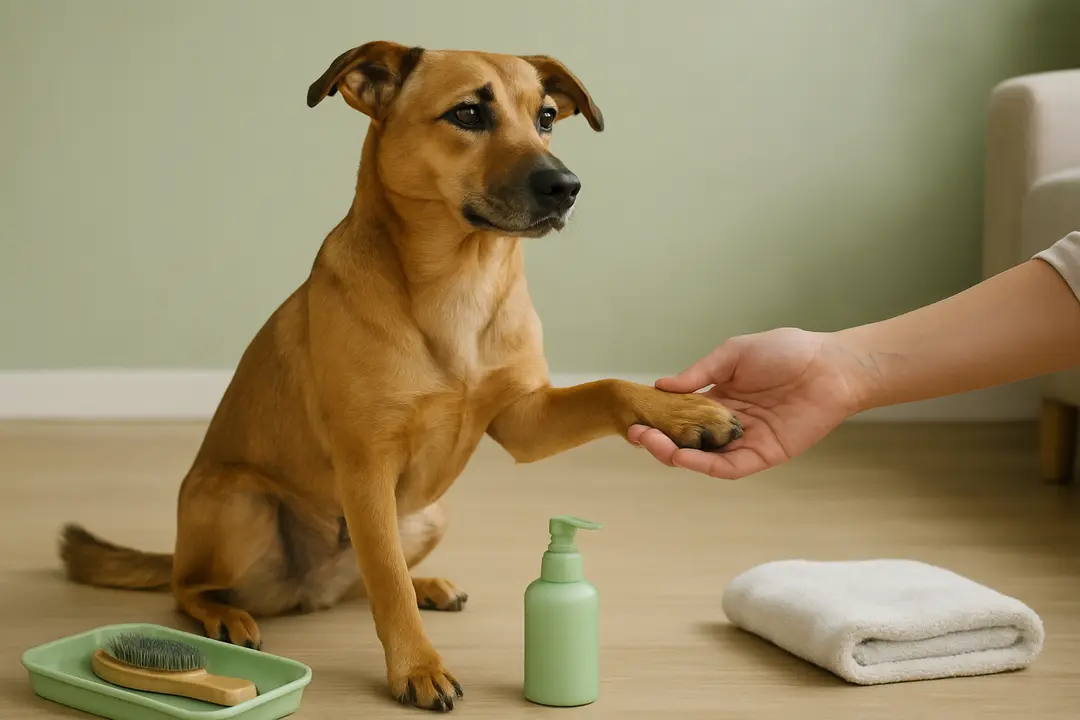
- Let your dog keep the foot in a comfortable position. Reach for the toe only if your dog will let you. Even a gentle dog may bite when a nail hurts. If your dog pulls away or tries to bite, don’t wrestle over the paw. Call the clinic for handling advice, and tell them if the bleeding is heavy or your dog is in severe pain.
- Press on the source of the blood. For a clipped nail, hold the cloth against the cut end. If the nail has torn off, hold it against the bleeding spot on the toe. Start a timer once the cloth is in place. Wiping blood from the paw or pressing for a few seconds at a time is not the same as holding steady pressure.
- If blood comes through, add a layer. Put more gauze or another folded cloth on top and keep pressing in the same place. Leave the first layer alone: lifting it can disturb the clot that’s forming underneath. The Merck Veterinary Manual’s emergency first-aid guide recommends adding material rather than replacing a soaked pad.
- At five minutes, check a small bleed once. What matters is whether fresh blood is still appearing, not whether there’s a red stain on the cloth. If the tip is still oozing, resume pressure and call your vet for advice. If it’s still actively bleeding at ten minutes despite steady pressure, seek urgent veterinary care. If the flow becomes heavy or you can’t control it, go to an emergency clinic immediately. Keep pressure on the toe during transport if someone can safely do so. VCA’s guide to bleeding in dogs explains how to protect a bleeding paw on the way.
When styptic powder or cornstarch can help
If the bleeding started the moment you clipped the tip, you may have nicked the quick. That’s the living part inside the hard nail shell. It contains nerves and blood vessels, so even a tiny cut can hurt and bleed. This can happen during a careful nail trim. Look for a single bleeding spot on the freshly cut end, with the rest of the nail whole and sitting in its usual position.
For that small nick, press pet styptic powder directly onto the cut tip. Styptic powder is made to stop minor bleeding. If you don’t have it, plain cornstarch is an alternative described in PetMD’s guide to clipped nail tips. Start with a cloth rather than leaving your dog bleeding while you search for powder. If the whole nail came off, use the cloth and contact your vet; powder for a nicked tip won’t address the injury underneath.
The bleeding stopped. Does the nail still need a vet?
The nail bed is where the nail attaches to the toe. Blood from a clipped tip and blood from a tear at the nail bed can leave similar footprints. Once bleeding is under control, look at where the shell is damaged and whether your dog can stand comfortably. There’s no need to bend the toe, tug on a fragment, or touch pink tissue to find out what it is.
| What you see once the bleeding stops | What to do |
|---|---|
| A pinpoint of pink at a freshly clipped tip; the rest of the nail is intact and your dog walks comfortably | Home monitoring is reasonable. Check the toe daily and watch for fresh blood. |
| A little sliver at the edge of the nail, without an obvious deep split | A loose sliver is different from a break through living tissue. If you can’t tell how it’s attached, leave it alone and ask your vet before trimming. |
| A split that reaches toward the base, a firmly attached piece that moves painfully, or a strip of exposed pink tissue | Call your vet today for an exam, even if the toe is dry now. A fragment may need veterinary trimming. |
| Most or all of the shell is gone, leaving a raw nail bed | Seek veterinary assessment today. If your dog is in severe pain, seek emergency care now even if there’s no more blood. |
The distinction is how much living tissue has lost its cover, not the color pink by itself. A dot at a clipped tip may need nothing more once it stops bleeding; a length of uncovered quick is a different injury. PetMD’s guide to broken nails explains why deep splits and exposed tissue warrant an exam. If your dog won’t put the foot down or it starts bleeding each time your dog walks, call your vet today rather than assuming it’s a minor nick.
What to tell the clinic and what the vet can check
Start with what’s happening now: whether fresh blood is coming from the toe, whether your dog can use the foot, and how painful it seems. Say how long you held pressure without lifting the cloth. There’s a useful difference between a toe that never stopped bleeding and one that stayed dry until your dog stood up. If you couldn’t touch the paw safely, tell the clinic that instead.
Next, describe what you can see in ordinary words: “only the cut end,” “a crack down one side,” or “the shell is missing.” You don’t need to decide whether a hanging piece is nail or living tissue before calling. At the visit, your vet can examine the attachment, check the exposed area, and decide whether a broken piece needs to be trimmed. VCA’s broken-nail guidance distinguishes a loose sliver from a break best handled by a veterinarian. Leave an uncertain fragment in place for that assessment.
How to protect the toe over the next few days
After a minor nick stops bleeding, protect the clot. Keep bathroom trips short and on a leash, and choose a clean, dry spot if you can. When you come back inside, look for new blood without rubbing the cut end. If your dog keeps licking the nail, a cone can keep the mouth away from the toe.
If there’s dirt on the paw, wait until bleeding has stopped, then gently rinse the dirt away with clean water or saline. Don’t scrub the nail or clean it with hydrogen peroxide or rubbing alcohol. VCA’s wound-care guide explains what to use for cleaning. Afterward, keep the area clean and dry and check it daily, as advised in PDSA’s guide to minor wounds.
Compare the toe with how it looked and felt to your dog the day before. Call your vet if the skin at the nail base gets redder or more swollen, you see pus, the toe seems more tender, or a limp persists. These can be signs of a nail infection. You don’t need to press on the sore area to test it; how your dog stands and walks is useful information for the clinic.
Talk it through with Vicky
If the bleeding is controlled but you’re unsure whether you see a clipped tip or a deeper split, you can tell Vicky what you’re seeing right now. Describe where the shell is damaged and whether your dog will put the foot down. Vicky will bring in Dr. Andy (Virtual DVM), our general practice veterinarian, to help you understand the next step. A conversation can’t replace an exam of a torn nail. For heavy or uncontrolled bleeding or severe pain, go directly to an emergency vet.
Common questions
Can a broken dewclaw wait until morning?
Judge it by the bleeding, pain, and depth of the break, not by which claw it is. Go to an emergency vet tonight for heavy or uncontrolled bleeding or severe pain. If bleeding has stopped but the claw is split near its base or raw tissue is showing, call the after-hours clinic tonight to arrange prompt assessment.
What if a dangling piece falls off by itself?
Look at what remains without touching or pulling it. If a length of pink tissue or the raw nail bed is visible, arrange a veterinary exam today even if the piece is gone and the bleeding has stopped.
Does my dog need a sock, a bandage, or a cone?
They serve different purposes. For active bleeding, hold a clean pad directly on the spot; to prevent licking after the bleeding stops, use a cone. For a deeper tear, ask the clinic whether it wants the toe dressed rather than relying on a sock to protect it.
What can I give my dog for pain from a broken nail?
Call your veterinarian for pain-relief advice before giving a human pain reliever or medication left over from another pet. Either can harm your dog. Severe pain needs emergency care, even when the nail is no longer bleeding.
Why does my dog keep splitting nails?
A single snag doesn’t explain a pattern of repeated breaks or changes in several nails. Tell your vet which nails have changed and whether they look brittle or split; that pattern warrants an exam rather than repeated first aid alone.
Sources
- VCA Animal Hospitals — First Aid for Bleeding in Dogs
- Merck Veterinary Manual — What to Do in a Dog or Cat Emergency
- PetMD — How to Stop a Dog’s Nail From Bleeding
- PDSA — Wounds and skin injuries
- PetMD — First Aid for Broken Nails on Dogs
- VCA Animal Hospitals — Wound care dos and don’ts
- PetMD — Nail Infections in Dogs
- First Aid for Broken Nails in Dogs — VCA Animal Hospitals
- Get the Facts about Pain Relievers for Pets — US Food and Drug Administration