How can I tell if the skin around my dog's nail is infected, and when does it need veterinary care?
Learn where to look for signs of a dog nail infection, how to protect a sore toe, and which changes mean a call to your vet today or a trip to the ER.
In this guide (6 sections)
Look at the nail fold, the skin where the claw comes out of the toe: new swelling, warmth, tenderness, pus, or a bad smell can signal infection even when the claw looks normal. Call your vet today for pus, a painful swollen nail fold, worsening redness, or a split claw with the sensitive tissue inside it exposed. If your dog suddenly can't bear weight, is in severe pain, or has heavy bleeding or bleeding that won't stop, seek veterinary care now.
Does this need a vet today or an emergency clinic now?
Call today for a sore, swollen, or draining nail fold. Say what you see when you call, especially if there's pus. You're asking the clinic to decide how soon your dog needs to be seen, not booking a routine nail appointment. If the swelling has spread since you first noticed it, tell them how far and how quickly. If your clinic is closed, call its after-hours service for guidance.
For example, a dog might walk to the food bowl as usual, then lie down and lick one toe. The claw looks intact, but there's a bead of pus where it meets the skin. The pus is reason enough to call today. You don't need to wait for your dog to limp or lose interest in dinner. As PetMD's guide to nail infections explains, some of the most useful clues are around the claw, not in the claw itself.
Go now if your dog suddenly won't use the leg, the limp becomes severe or suddenly gets much worse, your dog shows severe pain, or the toe is bleeding heavily or keeps bleeding despite steady pressure. If your regular clinic cannot see your dog immediately, go to an emergency veterinary clinic now. Don't spend time cleaning the toe or trying to find the exact spot that hurts. Cornell's guide to when dogs need the ER lists sudden loss of use of a leg and severe pain; PDSA's wound guidance distinguishes heavy or persistent bleeding from a minor wound.
How to check the skin around each claw without hurting your dog
- Watch before you touch. When your dog gets up, notice whether they put the foot down normally. When they settle, see where they lick: beside one claw, between two toes, or on several feet. You don't need to make your dog walk back and forth to prove there's a limp.
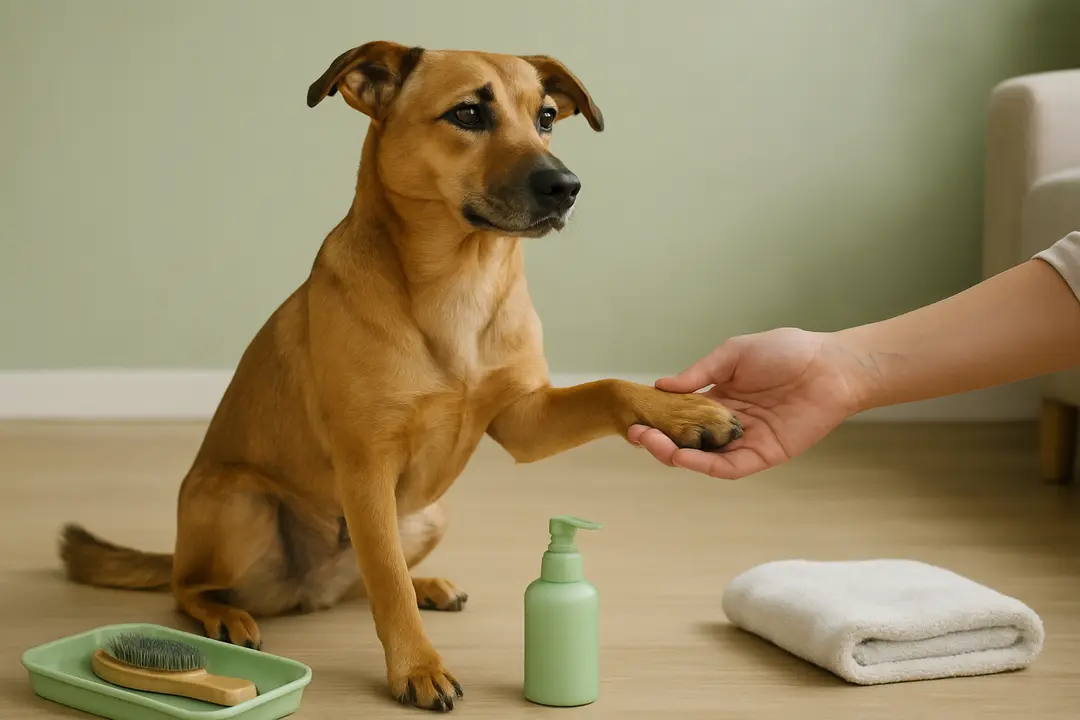
- Look at the base as well as the tip. If your dog is comfortable with handling, move the fur aside in good light. Compare the sore nail fold with the one next to it. Look for a puffy edge, redness, or fluid coming from beside the claw. Then look at the claw itself for a split or a loose piece. A change at the cut end of a nail is a different finding from discharge at its base.
- Notice tenderness; don't test for it. If the fold feels warmer than its neighbor during gentle handling, or your dog pulls the foot away, that's useful to report. Don't press the swelling, squeeze out fluid, or lift a loose piece of claw to see underneath. You won't need to do any of those things to describe the problem.
- Stop if it hurts. Even a gentle dog may bite when a painful foot is handled. If your dog is already in severe pain, skip the inspection. As VCA's first aid guide for limping dogs advises, checking between the toes and around the nails is useful only if your dog tolerates it. It's enough to tell the clinic which foot your dog won't use.
What else can look like a nail bed infection?
A swollen nail fold tells you where to look, not what caused it. A split or torn nail can hurt because the quick, the sensitive tissue inside the claw, is exposed. If your dog pulled back the moment the claw broke, the injury itself can explain that pain. It doesn't prove an infection has already developed. A painful torn claw still needs prompt attention, even without pus.
A splinter or other material caught near a claw can also make one spot sore. If several nail folds look inflamed, the vet may consider allergies or a problem involving the immune system as well as infection. VCA's guide to paw inflammation explains why these causes can look alike. Count the toes that actually look different, rather than assuming every paw your dog licks has the same problem.
How to protect a sore toe while you arrange care
- For bleeding, use pressure rather than a rinse. If you can do so safely, hold clean gauze against the toe with steady pressure. If the bleeding is heavy, arrange emergency care right away rather than waiting to see whether washing or wrapping the foot helps.
- For visible dirt on a minor, nonbleeding wound, rinse gently. Use saline or sterile water to wash away surface dirt, then pat the area dry. Don't scrub inside the nail fold or dig for anything embedded there. Skip alcohol and hydrogen peroxide; they can hurt and slow healing. Texas A&M's pet first aid guidance covers gentle rinsing and preventing licking.
- Use a fitted cone to keep your dog from licking. Check that your dog can't reach the toe while wearing it. Don't tightly wrap the paw to keep it covered: a tight bandage can itself cause swelling and pain. If your dog already has a bandage from the clinic, tell the clinic about any new swelling or change in how your dog uses that leg.
- Leave a dangling claw for the vet. Don't pull it off or trim farther back to see how much is still attached. Ask your vet about pain relief instead of giving a human over-the-counter pain medicine.
If all you find is a small surface scrape, your dog walks comfortably, and there's no swelling or discharge, keep it clean and dry and watch for changes. That's different from a toe that was draining before you rinsed it. Even if the skin now looks cleaner, tell your vet what came out and where you saw it.
What to tell the clinic and what the vet can do
Lead with the detail that affects the decision: “There's pus beside one claw, but my dog is walking,” or “The nail is torn, and now my dog won't put the foot down.” Then mention when it started, whether it followed a trim or break, and whether one or several toes look different. Say what you've put on the paw and whether the swelling, bleeding, or limp has changed. If handling hurt too much to get a good look, say that rather than trying again.
Your vet can check for a damaged piece of claw or something caught beside it, address pain, and decide whether antibiotics are needed. A vet can remove a painful broken fragment if that's the problem; cleaning the skin won't fix the break. Preventive Vet's guide to claw disorders explains why claws that look similar may need different treatment. If the exam doesn't settle the cause, a skin sample may help, particularly when more than one toe is affected.
Before you leave, ask what improvement to expect and when the clinic wants an update. Over the next few days, track what you noticed in the first place: whether the fold is less swollen, discharge has stopped, and your dog is using the foot more comfortably. If the same spot stays swollen or starts draining again, report that rather than assuming it needs more of the same medicine.
Talk it through with Vicky
You can tell Vicky what you're seeing right now, including whether the change is at the nail tip or in the skin beside it. Vicky will bring in Dr. Nadia (Virtual DVM, DACVD), the veterinary dermatology specialist on our AI team, to help you sort out what to describe to your vet. For emergency signs, don't wait for a chat: go to an emergency veterinary clinic now if your regular clinic can't see your dog immediately.
Common questions
My dog's nail is dark. Does that mean it's infected?
Claw color alone doesn't tell you whether the surrounding skin is infected. Look for a new difference from nearby toes, such as swelling, tenderness, warmth, discharge, or an odor at the nail fold.
After a nail trim, how can I tell an exposed quick from pus?
The quick is tissue inside the claw; pus is fluid that may drain from the skin beside it. Note whether you're seeing blood at the cut end or discharge at the base. If you can't tell, don't probe the claw; describe the location and timing to your vet.
Would a photo of the toe show whether my dog needs antibiotics?
A photo can show where the swelling or discharge is, but it can't show warmth or tenderness. A break, a trapped splinter, and an infection can look alike, so your vet may need to examine the foot or take a skin sample before choosing treatment.
Does licking several paws mean my dog has allergies?
Not necessarily. Allergies are one possible cause of paw inflammation, but licking doesn't identify the cause. Tell your vet whether several nail folds actually look swollen or whether your dog is licking several feet with only one visibly sore toe.
If the same toe is still swollen after antibiotics, does that mean the infection is resistant?
Persistent swelling alone can't tell you that. Ask your vet to recheck the toe for a damaged claw, trapped material, or another cause of inflammation, and whether a sample would help guide the next step.
Sources
- PetMD — Nail Infections in Dogs
- Clinician’s Brief — Necrotizing Cellulitis in a Dog
- PDSA — Wounds and Skin Injuries
- Texas A&M Veterinary Medicine & Biomedical Sciences — Basic First Aid for Pets
- Texas A&M Veterinary Medicine & Biomedical Sciences — Recognizing a Pet Emergency
- Schwarzman Animal Medical Center — How to Care for Your Pet’s Bandage
- VCA Animal Hospitals — Pododermatitis in Dogs
- Amputate that digit! — MSPCA-Angell
- First Aid for Limping Dogs — VCA Animal Hospitals
- Nail Diseases in Dogs and Cats — Preventive Vet
- First aid for wounds, cuts and grazes — PDSA
- When to go to the ER — Cornell Riney Canine Health Center