Are baby wipes safe for cleaning my dog's skin and paws?
Learn when a baby wipe has a place, how to clean mud or road salt off your dog’s paws, and what to do if you notice redness or licking after wiping.
In this guide (6 sections)
For everyday cleaning, use a soft washcloth and lukewarm water rather than baby wipes; if you need a disposable wipe, choose a grooming wipe labeled for dogs. Some baby wipes have a place in specific situations, but that doesn’t make every formula suitable for your dog’s skin. If you’ve already used one, rinse off the residue with plain water and check the package so you know what touched your dog.
If you’ve already used a baby wipe
First, distinguish a baby wipe made for human skin from a cleaning wipe made for household surfaces. The packages can look alike. Knowing which one you used is more useful than counting how many times you passed it over the paw.
- If it was a baby wipe, stop using it and rinse the area you wiped. For a paw, let lukewarm water run over the pads and between the toes, then pat dry. For an ordinary patch of dirty fur, there’s no reason to follow the rinse with another cleaning product.
- Look where the wipe touched. Part the fur enough to see the skin. Note any redness or itching and whether your dog keeps licking one spot. Those signs can occur with contact irritation, but they don’t prove the wipe caused it. If they continue, arrange a visit with your veterinarian.
- If it was a household cleaning wipe, keep the package. Rinse the exposed skin thoroughly and get product-specific advice from your veterinarian. Tell the clinic whether the product was on the skin only or also got into your dog’s mouth. A rinse addresses residue on the outside; it doesn’t settle whether your dog needs emergency care. The ASPCA’s guidance on chemical exposure explains why the substance matters.
If someone else wiped the paws, ask for a photo of the front and back of the pack. “Fragrance-free baby wipe used on the left front paw” gives your clinic a better starting point than “some kind of wet wipe.”
How to clean paws after mud, road salt, or ice melt
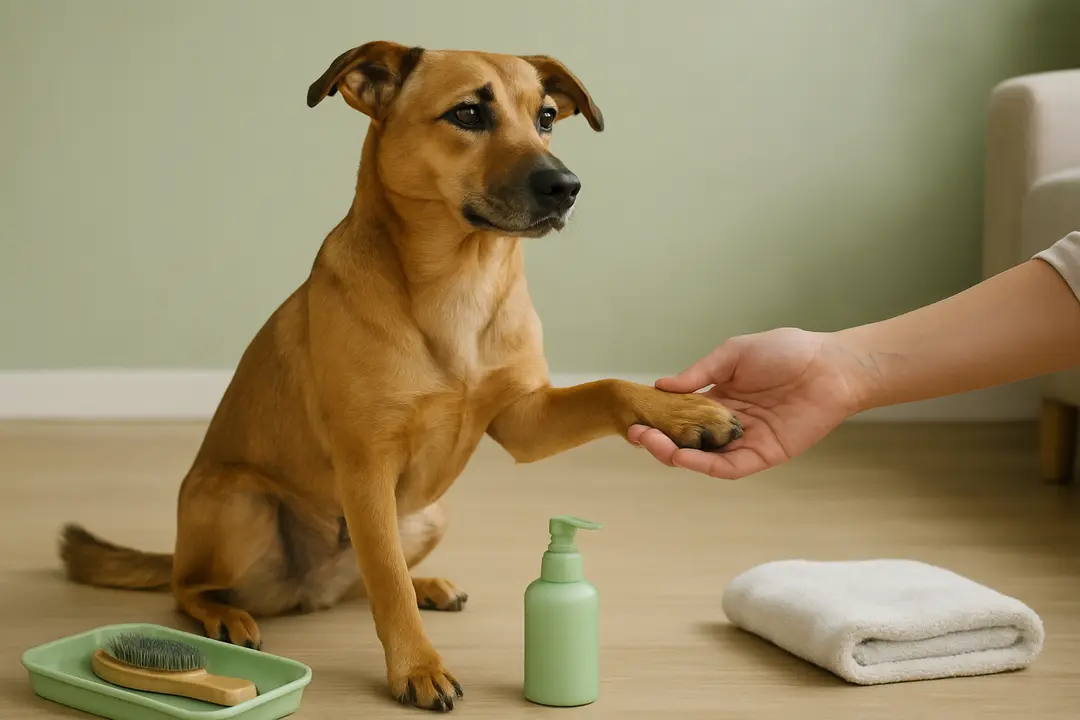
For ordinary dirt: Wet a washcloth with lukewarm water and wring it out. Lift one foot, wipe the pads, and check the spaces between the toes. Turn to a clean part of the cloth as you go. If you’re moving mud around instead of lifting it off, rinse the foot with water and towel-dry it. PetMD’s paw-cleaning guide recommends a warm, damp cloth for minor dirt. You don’t need a disposable product for each walk.
For road salt or ice melt: Clean the feet when you come in, before your dog settles down to lick them. Rinse each paw with lukewarm water. Gently separate the toes so the water reaches the skin between them, not just the fur on top. Pat the pads and the spaces between the toes dry. VCA’s winter paw-care guide recommends this rinse for salt. A dog can pick up de-icing chemicals without leaving a muddy print, so use the route you walked to decide whether the feet need washing.
You may have seen different advice about winter walks. The ASPCA’s ice-melt guide includes a damp cloth or a baby wipe as an option for removing ice melt before a dog licks its feet. That advice is about getting a substance off the paws. It isn’t a recommendation to use any baby wipe on any part of a dog every day. At home, a water rinse lets you reach between the toes without having to choose a wipe formula.
Baby wipes, dog grooming wipes, and disinfecting wipes
Start with the intended use on the package, not the words in large print on the front. “Hypoallergenic” tells you less about where to use a wipe than directions that specifically say it’s for a dog’s paws and coat.
| What you have | How to use that information |
|---|---|
| A washable cloth and water | Choose this first for routine dirt. Keep a dry towel beside it if you regularly rinse muddy or salty feet. |
| A dog grooming wipe | A practical option for dirty paws or a patch of coat when you’re away from home. Follow the directions for the body area you’re cleaning. |
| A human baby wipe | Avoid formulas with fragrance or alcohol. Even without those ingredients, don’t assume a wipe is suitable for daily grooming, irritated skin, or the area around the eyes. |
| A household disinfecting or antibacterial wipe | Don’t use it on your dog. A product meant for counters or other surfaces is not a grooming wipe. |
The job after a walk is to remove what your dog stepped in, not to disinfect the feet. The CDC’s advice for pet owners rules out surface-cleaning wipes, hand sanitizer, alcohol, and chemical disinfectants on pets. If those are the only products to hand, leave them in the cupboard and use water for the dirt.
What about the face, skin folds, or a sore spot?
For a smudge on the face, clean the dirty fur rather than sweeping a wipe across the whole face. Keep general grooming wipes away from the eyes, ears, and mouth. Don’t fold a wipe into a point and put it down the ear canal. Directions for cleaning the coat don’t apply inside an ear.
Facial folds are one reason you may hear that baby wipes can be used on dogs. PetMD’s guide to caring for wrinkled dogs describes an unscented, hypoallergenic baby wipe as one option for cleaning facial skin folds. Dry the fold afterward. This is advice about a particular kind of wipe on a particular area; it doesn’t extend to cleaning the eyes or treating a red, itchy fold. If your dog needs regular fold care, ask your vet to show you which skin to clean and how to dry it.
If what looked like dirt turns out to be a cut or an open sore, stop the grooming routine there. Don’t apply disinfectants or other topical chemicals unless your veterinarian directs you to. As VCA’s guide to open wounds explains, some products can interfere with healing. Tell the clinic where the broken skin is and what you’ve already put on it.
When paw licking needs a vet visit rather than another wipe
If your dog repeatedly licks clean paws, or redness or itching persists after you stop using the wipe, arrange a skin or paw appointment with your veterinarian. Wiping more often won’t tell you whether something on the walk irritated the skin. Allergy and pain can also lead to licking, as PDSA’s guide to paw licking explains.
Think back to what made you reach for the wipe. Was your dog already chewing a foot, or did the licking start after cleanup? Tell your vet which feet are affected, whether the redness is on a pad or between the toes, what your dog walked on, and whether a plain-water rinse changed anything. The order of events helps the vet assess the paw without assuming the wipe explains a problem that started earlier.
A question about a household chemical belongs on a different call from a request for a routine skin appointment. Identify the product when you call so the clinic can advise you about emergency care for that exposure. Also be clear about what you saw: licking a wiped paw is different from swallowing the cloth itself. If the cloth is missing, say so rather than describing it as skin contact alone.
Talk it through with Vicky
For help choosing a cleanup routine, tell Vicky what you’re seeing right now: what’s on your dog’s paws, what you used, and how the skin looks between the toes. Vicky will bring in Dr. Nadia (Virtual DVM, DACVD), our virtual veterinary dermatology specialist, to help with your skin-care question.
Common questions
What should I use on a young puppy’s paws or dirty rear end?
Start with a soft washcloth and lukewarm water rather than a cleanser. Wipe the dirty outer fur, using a clean part of the cloth for each area. If your puppy needs a grooming product, ask your veterinarian which one to use.
Can I use mostly-water baby wipes after every walk?
“Mostly water” doesn’t tell you what else the wipe leaves on the skin or whether it’s intended for daily use on dogs. For a water-based cleanup, wet a reusable cloth at the tap instead.
Do I need to bathe my whole dog if only the paws are muddy?
No. Clean the dirty paws with a damp cloth or rinse them with lukewarm water and towel-dry them. If mud splashed onto one patch of coat, you can clean that patch separately.
Should I switch to medicated wipes if my dog’s paws are itchy?
Don’t choose a medicated wipe based on itching alone. Contact irritation, allergy, and pain can all lead to paw licking. If your dog keeps licking, ask your veterinarian to assess the cause before choosing a treatment.
Sources
- 7 Ways to Clean Your Dog’s Paws — PetMD
- Cold Weather Safety Tips — ASPCA
- How to Wash a Dog Without Water: Mess-Free Tips — American Kennel Club
- What You Should Know about COVID-19 and Pets — CDC
- Care of Open Wounds in Dogs — VCA Animal Hospitals
- Bathing Your Puppy: A Step-by-Step Guide — American Kennel Club
- Vet Q&A: Why Is My Dog Biting/Licking Their Paws? — PDSA
- Contact Dermatitis in Dogs: Symptoms, Common Causes, and Treatment — PetMD
- Pet Decontamination at Home: What to Do After Exposure — ASPCA
- Keeping Pets Safe during Winter: The Dangers of Ice Melts — ASPCA
- How to Care for Your Wrinkly Dog — PetMD
- Four Strategies for Cold Weather Paw Protection — VCA Animal Hospitals