Why is my cat crying, and how can I tell if the sound means my cat needs help?
Compare your cat’s cry with their usual habits. Learn what to check when you hear a meow, when to call your vet, and which litter box signs mean go now.

In this guide (8 sections)
- Crying in the litter box: look at what comes out
- Does the meow fit what your cat is doing?
- Four things to check when you hear a new cry
- Why a newly adopted kitten may cry
- Why an older cat may start yowling at night
- If by “crying” you mean watery eyes
- What to tell your vet about a change in crying
- Talk it through with Vicky
A cat’s cry has no single meaning: a familiar meow before breakfast may be a request for food, while a new cry each time your cat tries to jump can signal discomfort. What your cat is doing matters more than how loud the cry sounds. If your cat keeps straining to pee but passes only drops or nothing, go to an emergency vet now.
Crying in the litter box: look at what comes out
Repeated attempts to pee with little or no urine are an emergency, even if your cat stops crying. A blockage can prevent urine from leaving the body. It’s especially common in male cats, but any cat having difficulty passing urine needs immediate care.
The key distinction is between an attempt and a result. You might see your cat squat, leave the box, then return and squat again. Several visits don’t mean your cat has peed several times. If you see repeated straining but can’t tell whether urine is coming out, go to the emergency clinic and tell them exactly that. Don’t wait for another trip to the box to prove what’s happening.
The Cornell Feline Health Center’s guide to urinary problems explains why repeated attempts with little output can signal a blockage. As the Schwarzman Animal Medical Center’s guide to urinary blockage points out, straining to pee can look like trying to pass stool. Don’t assume it’s constipation or wait until morning because your cat has gone quiet.
Does the meow fit what your cat is doing?
Picture two cats making much the same sound. One calls beside a closed door, walks through when it opens, and goes about the day. The other calls at the foot of the couch, looks up at a cushion they usually reach in one jump, then walks away. Opening the door seems to answer the first cat’s request. For the second cat, giving up a usual jump is a more useful clue than the sound. That change is worth describing to your vet.
Cats meow to greet you, ask for a meal, seek play or company, or ask to get through a door. The ASPCA’s guide to meowing and yowling distinguishes these everyday calls from excessive meowing that warrants a medical check. Compare your cat with their own usual pattern: a talkative cat greeting you as always is different from a normally quiet cat suddenly calling throughout the evening.
Four things to check when you hear a new cry
If your cat isn’t struggling to pee, these observations can help you decide whether to answer a familiar request or call your regular vet. You don’t have to finish a checklist before asking for help.
- Notice the moment the cry starts. Where is your cat, and what are they trying to do? A cat who calls when you enter the kitchen before dinner may be asking for a meal. A cat who goes to the bowl, cries, and walks away without eating is showing you something different. Standing beside food doesn’t mean your cat is eating normally.
- Watch posture and movement. Let your cat move on their own rather than coaxing them to repeat a jump. Are they hunched instead of resting in their usual position? Have they stopped getting onto the bed or started hiding when they would normally come out? Call your vet about a change like that alongside new crying, even if you can’t tell what hurts.
- Compare eating, drinking, and litter box use with normal. Think about what you’ve actually seen: how much of the usual meal your cat ate, whether they’re visiting the water bowl more often, and when you last saw them pee normally. If you don’t know, say so. The VCA guide to recognizing illness in cats explains why changes in these habits matter alongside an unfamiliar yowl.
- See whether an ordinary response fits. For a familiar call from a cat who otherwise seems well, open the door, offer company or play, or give the usual meal if it’s due. Notice what happens next. Returning to a normal routine tells you more than a few quiet minutes. If the crying keeps coming back without a clear reason, arrange a medical check rather than continuing to guess what your cat wants.
Why a newly adopted kitten may cry
A kitten in a new home may be hungry, may be calling for their mother or littermates, or may not yet know their way around. This can happen even in a carefully prepared home. You can offer comfort without having to work out which kind of meow you’re hearing.
Give your kitten a small, quiet area where they can find their food, water, and litter box. Spend time there together, and let the kitten approach you at their own pace. PetMD’s guide to kitten crying explains how a familiar home base and company can help. As your kitten settles in, notice whether the calls follow a pattern, such as starting when you leave the room. If the kitten is eating less or the crying stays persistent and unexplained, contact your vet rather than putting it down to the move.
Why an older cat may start yowling at night
A cat who has always meowed outside your bedroom door is different from one who has started wandering from room to room, calling as if unsure where they are. If you’ve already offered food, play, and company, you don’t need to keep changing the bedtime routine before calling your vet. Tell the clinic whether the wandering is new as well as the noise.
Nighttime calling and confusion can accompany cognitive decline, a change in how an older cat’s brain works. But the sound alone can’t tell you that’s the cause. An overactive thyroid gland or high blood pressure can also cause nighttime calling. Pain and changes in vision may affect how an older cat moves around the home. The Cornell guide to cognitive dysfunction explains why it’s worth assessing these changes rather than assuming they’re part of aging.
If by “crying” you mean watery eyes
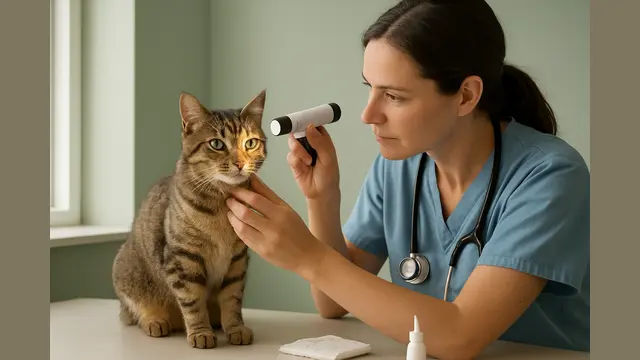
Tears and meows are two different things. Cats make tears to keep their eyes healthy, not to show sadness, as Cats Protection explains in its guide to crying. An eye that keeps watering or has sticky discharge is an eye concern in its own right.
Contact your vet promptly when you notice a new eye problem, especially if your cat is squinting or holding an eye shut. Those can be signs the eye hurts, even if your cat makes no sound. Tell the clinic which eye is affected, what the discharge looks like, and whether your cat keeps the eye open. PDSA’s guide to weepy eyes describes the changes to look for.
What to tell your vet about a change in crying
Call your regular vet about crying that’s new and persistent, keeps increasing, or comes with hiding or changes in movement, appetite, thirst, or litter box habits. You don’t need the right word for the sound. For example, knowing that a cat started calling two nights ago and stayed under the bed instead of coming out for breakfast gives the clinic more to work with than knowing the meow sounds sad.
Start with when it began, what your cat was doing at the time, and what they’re doing between episodes. Those details help your vet decide what to assess, such as difficulty moving in a cat avoiding jumps or medical causes of nighttime calling in an older cat. If you’re heading to an emergency vet for straining, lead with what you saw in the box: repeated attempts, only drops, or no urine you could confirm.
Talk it through with Vicky
If you’re unsure what has changed, you can tell Vicky what you’re seeing right now. Describe where your cat is when the cry starts and what they do next. Vicky will bring in Dr. Ravi (Virtual DVM), our feline-friendly general practice veterinarian, to help you sort through the pattern. For difficulty passing urine, go directly to an emergency vet.
Common questions
What does a cat in pain sound like? Can a cat hurt without crying?
An unfamiliar yowl can accompany pain, but there’s no particular sound you need to hear. A cat who feels unwell may be quiet. Hiding, standing hunched, or avoiding a usual jump still matters even if your cat never cries.
There’s pee in our shared litter box. Does that rule out a blockage?
No. Urine in a shared box doesn’t tell you that the cat who is straining produced it. If that cat keeps trying to pee and you see only drops or can’t tell whether anything is coming out, go to an emergency vet now.
Why does my cat yowl while carrying a favorite toy?
If this is a familiar routine and your cat brings the toy to you, try offering play or company. The toy gives you a clue, not a definite translation. Notice whether the call is still tied to that game or has started happening at other times.
Could my unspayed cat be crying because she’s in heat?
Yes. An unspayed female may yowl during heat, the part of her reproductive cycle when she can mate. Don’t use heat to explain away other changes, such as hiding or eating less; tell your vet about those too.
Should I ignore nighttime crying so my cat doesn’t learn to wake me?
First distinguish a familiar request from a change in behavior. If the calling is new, persistent, or paired with wandering or confusion, arrange a medical check rather than treating it as a habit to ignore.
Sources
- Meowing and Yowling — ASPCA
- Feline Lower Urinary Tract Disease — Cornell Feline Health Center
- Urethral Obstruction in Cats — Schwarzman Animal Medical Center
- Recognizing Signs of Illness in Your Cat — VCA Animal Hospitals
- Why Do Cats Cry? — Cats Protection
- 6 Reasons Your Kitten Is Crying — PetMD
- Cognitive Dysfunction — Cornell Feline Health Center
- Weepy Eyes in Cats — PDSA
- Cats Protection — What to Expect on the First Night with Your New Cat
- PDSA — Eye Problems in Cats